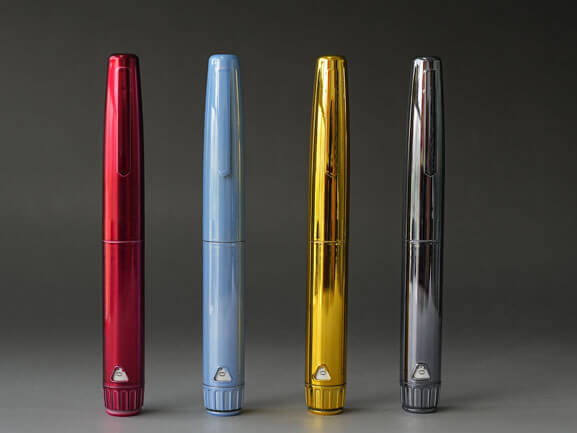
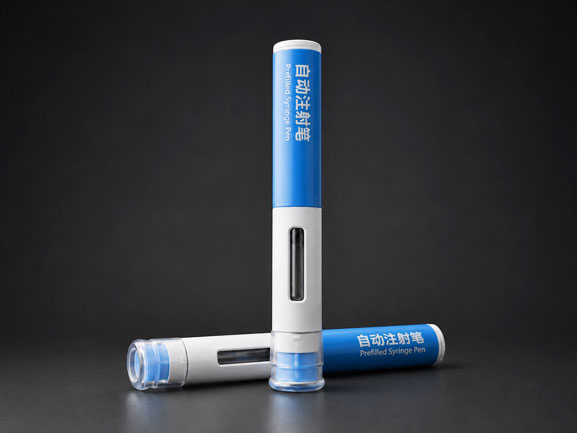
Two peptide programs can use the same nominal cartridge size and still require completely different pen platforms. One may need a prefilled device that stays with a single cartridge until it is empty. The other may depend on a durable pen body supported by a continuing supply of replacement cartridges. The difference is not simply disposable versus reusable hardware. It changes the development program around the drug.
For R&D teams, brand owners and contract development partners, the platform decision affects filling and assembly, dose design, user tasks, packaging, verification and commercial supply. Looking at two representative project paths makes those differences easier to see.
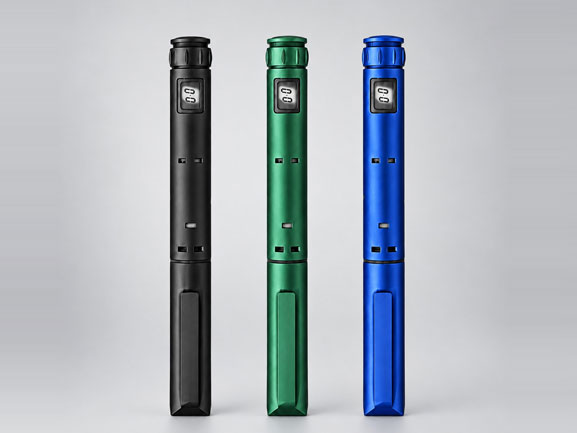
Project A The Cartridge and Device Stay Together
Project A is developing a ready-to-inject liquid peptide in a cartridge that will be installed in a disposable pen. The cartridge is not intended to be removed by the user. Depending on the mechanism and dose plan, the pen may deliver one dose or several doses, but the complete device is discarded after the available medicine has been used.
This project direction keeps the medicine container and pen mechanism paired throughout the product lifecycle. The user does not need to identify, load or remove a replacement cartridge. That can simplify the handling sequence, but it moves more responsibility into manufacturing. The filling, inspection, cartridge installation, device assembly, labeling and packaging strategy must come together as one controlled product presentation.
An early sample for Project A should therefore answer more than whether the pen looks appropriate. The team needs to understand how the selected cartridge enters the device, how assembly will be controlled, which dose settings are required and what evidence will be generated using the representative formulation and components.
Project B The Pen Remains While Cartridges Change
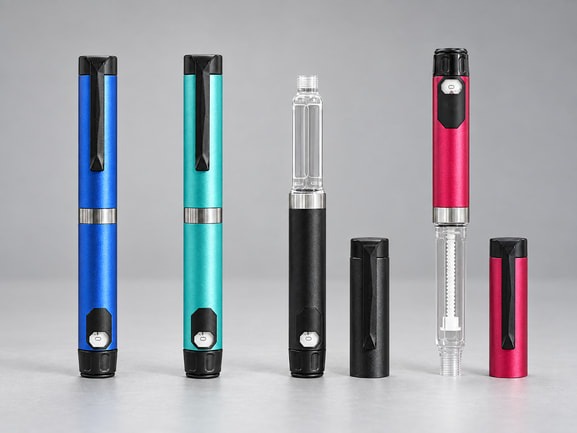
Project B is developing a repeatedly dosed peptide product supported by replacement cartridges. The reusable pen is supplied once and remains in service across multiple cartridge cycles. When one cartridge is empty, the user or trained operator removes it and loads the next cartridge according to the defined instructions.
The durable device creates a different development workload. Cartridge replacement, orientation, priming, dose correction, storage and service life become part of the use sequence. The brand also needs a reliable refill model. A technically suitable pen will not create a workable product if replacement cartridges are difficult to obtain or if customers do not know what to do when the device is lost, damaged or reaches the end of its intended life.
Project B may place greater value on housing material, finish and long-term brand recognition because the same pen remains with the customer. Those appearance decisions matter, but they follow the cartridge and dose architecture. A reusable pen should not be selected only because it looks more substantial than a disposable device.
The Platform Choice Begins with the Product Lifecycle
The expected number of doses and cartridges is one of the first useful distinctions. A product used for a short course or a limited number of injections may not benefit from a separate durable device. A product expected to continue through many cartridges may create a stronger case for reuse, provided that the refill supply and customer support can be maintained.
Treatment duration alone does not make the decision. A long-term product can still use disposable pens, and a reusable platform can support different dose schedules. The development team should describe the full lifecycle: how the first device is supplied, how many doses each cartridge contains, how later cartridges reach the user and how the device is replaced when necessary.
Dose Architecture Does Not Belong to Only One Platform
Disposable pens are sometimes described as fixed-dose devices and reusable pens as variable-dose devices. That shortcut is unreliable. Either platform can be developed around fixed or variable dosing depending on the mechanism and project requirements.
The useful inputs are formulation concentration, minimum dose, maximum dose, dose increment, priming allowance and expected doses per cartridge. The pen ultimately delivers a liquid volume, so a dose expressed in milligrams, micrograms or units must be translated into mechanism movement and stopper travel. If concentration or titration strategy is still changing, both platform selection and scale customization may need to remain provisional.
The Same Cartridge Label Can Hide Different Interfaces
Both Project A and Project B may refer to a 3 mL cartridge, but nominal capacity does not define the full device interface. Overall dimensions, tolerances, neck and closure geometry, stopper design, starting position and available travel must be reviewed using the actual component drawings.
For a disposable pen, the cartridge must fit the planned device assembly and remain correctly positioned for the full product lifecycle. For a reusable pen, the same compatibility questions apply repeatedly as cartridges are loaded and removed. The loading interface also has to reduce the likelihood of incorrect orientation or incomplete assembly. Physical fit is only an early check; it does not establish drug stability or final delivery performance.
Formulation Conditions Follow Both Projects
Peptide viscosity, delivered volume, use temperature, stopper friction and needle flow path can influence injection force and delivery time in either platform. A disposable mechanism does not remove these questions, and a reusable mechanism does not solve them automatically. Testing should use representative formulations, cartridges, stoppers, needles and device configurations.
If the peptide cannot remain stable as a ready-to-inject liquid, the project may need to step outside this conventional comparison. A lyophilized product requiring separation from its diluent may call for a vial-based workflow or a dual-chamber cartridge direction with defined reconstitution steps. In that situation, the first decision is how the formulation will be stored and prepared, not whether the outer pen body is disposable or reusable.
Manufacturing Changes with the Platform
Project A places the complete device into the recurring production flow. Every medicine cartridge is associated with a pen mechanism, so device supply, assembly capacity, inspection and secondary packaging scale with each finished unit. The team should discuss how the cartridge is loaded, when the device is labeled and how the assembled product moves through final release.
Project B separates durable-device production from cartridge replenishment. The initial starter kit and later refill packs may follow different packaging and forecasting patterns. This can reduce the number of pen bodies supplied per cartridge cycle, but it introduces device inventory, replacement policies and customer-support responsibilities that do not disappear after the first shipment.
Neither route is inherently easier. The better route is the one that the selected fill-finish, assembly and distribution partners can execute consistently at the expected volume.
The User Performs Different Work
A disposable platform can remove cartridge replacement from the user sequence. The user may still need to inspect the medicine, attach a needle where applicable, prime the pen, set or confirm a dose and complete the injection. The exact sequence depends on the selected platform.
A reusable platform adds the cartridge-change cycle. Instructions must make it clear how to open the device, identify and orient the cartridge, close the housing, prime the system and recognize when a cartridge is empty. The device may also remain in storage between uses, making care, transport and service-life communication relevant.
These differences should be evaluated with intended users and representative instructions. Removing one handling step is not automatically better if the resulting product creates other problems in packaging, supply or dose presentation.
Customization Plays a Different Role
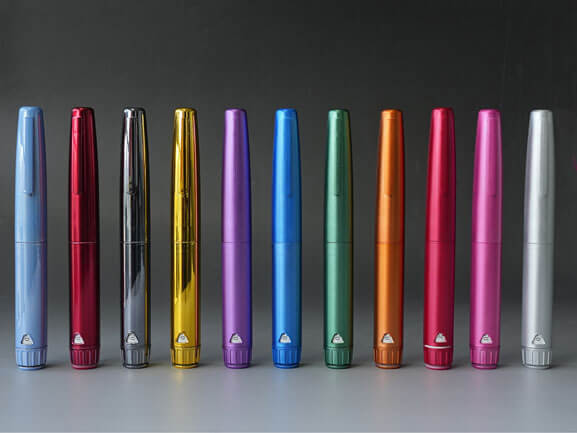
Both platforms can support colors, logos, labels and packaging, but the brand value is expressed differently. A disposable pen is part of every cartridge presentation and can use color coding or labeling to distinguish products and doses. A reusable pen remains visible for longer and may justify more attention to housing material, tactile character, carrying case and surface durability.
For reusable platforms, brands can evaluate engineering-plastic housings, metallic-finish plastic or actual metal bodies. The material should be named accurately. Metallic-finish does not mean metal, and galvanized should not be used unless a genuine zinc-coating process is involved. Appearance choices should be kept separate from performance claims.
Samples Should Be Requested for Different Reasons
A useful sample request states what the current project needs to learn. An appearance sample can support decisions about size, finish and branding. A platform sample can demonstrate the general operating sequence. A cartridge-fit sample can support an initial interface discussion. A functional development sample is prepared around a defined configuration and test purpose.
The same sample should not be expected to answer every question. In Project A, an early team may focus on cartridge installation and integrated assembly. In Project B, the first priority may be cartridge replacement and the repeated-use workflow. Neither sample establishes final dose accuracy, injection force, drug compatibility or usability without the corresponding project evidence.
A Decision Meeting Should End with One Platform Direction
Before requesting customized samples, the project team should be able to answer several practical questions:
Will the cartridge remain inside one device, or will users replace it?
How many doses and cartridges are expected across the product lifecycle?
Is the concentration and dose range stable enough to define the mechanism direction?
Who will fill, assemble, label and release the final cartridge and device presentation?
Can the sales channel support a starter kit and later cartridge refills?
Which user tasks must be evaluated for the selected platform?
Does the formulation require ready-to-inject liquid storage or a reconstitution system?
What must the first sample demonstrate before the project advances?
Two Platforms for Different Peptide Programs
Disposable and reusable pens are not competing answers to the same project. A disposable direction fits a product strategy in which the medicine cartridge and device remain together. A reusable direction fits a strategy in which the device remains in service and replacement cartridges support continued use. Both require defined dose inputs, cartridge review, representative testing and a workable supply model.


Copyright © Shijiazhuang Xinfuda Medical Packaging Co., Ltd. All Rights
MAKE AN ENQUIRY