Peptide drug development is becoming one of the most active areas in the pharmaceutical supply chain. As more peptide projects move from laboratory development to pilot production, CDMO transfer and commercial planning, packaging is no longer a decision left only to the final filling stage.
For many peptide projects, the primary container is now part of early technical evaluation. It may influence how materials are stored, transferred, inspected and discussed between R&D, quality, procurement and manufacturing teams. This is especially important when the project involves high-value peptide APIs, lyophilized samples, small-batch development or finished formulation packaging.
In this context, COP vials are receiving more attention as an alternative packaging option for peptide-related projects.
Peptide Growth Is Changing Packaging Priorities
In the past, packaging discussions for peptide projects often started after formulation work had already progressed. The first priorities were synthesis route, purification process, impurity profile and analytical method development. Packaging was sometimes treated as a later operational choice.
That approach is changing.
Peptide materials can be expensive, technically sensitive and produced in batches where sample loss is not easy to ignore. A container that works for a simple liquid sample may not be the best choice for API storage, freeze-dried material, formulation screening or low-temperature transfer. As a result, project teams are paying more attention to container material, vial size, closure matching and storage condition at an earlier stage.
The key question is no longer only "Which vial can hold the product?" It has become "Which container can support the whole peptide project route?"
Packaging Needs Differ Across Peptide Project Stages
Peptide projects may pass through several packaging scenarios before a final commercial container is selected.
At the API or intermediate material stage, the focus is usually on storage stability, material recovery, moisture control and container interaction. Even a small adsorption concern may become important when the material is high value or the batch size is limited.
At the lyophilized sample stage, packaging needs become more complex. The container may need to support freeze-drying evaluation, cake appearance observation, stopper compatibility, moisture protection and later reconstitution discussion.
At the finished formulation stage, the focus may shift again. Filling volume, visual inspection, closure system, transport handling, cold-chain storage and documentation support may all become part of the packaging decision.
This is why peptide packaging should not be viewed as a single-use container decision. It is a project-stage decision.
Why Container Interaction Is a Real Concern
Peptides and other biologic-related materials may be sensitive to surface interaction, temperature change, moisture exposure and handling conditions. The level of concern depends on the formulation and development stage, but the container surface is often part of the evaluation.
Traditional glass vials are still widely used in pharmaceutical packaging and remain suitable for many projects. However, some companies are also evaluating polymer vials when they want to discuss lower breakage risk, low adsorption concern, transparent inspection and low-temperature handling.
COP, or cyclo olefin polymer, is one of the materials considered in these discussions. COP vials are known for high transparency, break resistance and low extractable concern compared with many conventional plastic materials. For peptide projects, the most important point is not that COP replaces glass in every case. The value is that it gives technical teams another container option when the project requires comparison, evaluation and risk reduction.
Why 10ml COP Vials Are Often Discussed
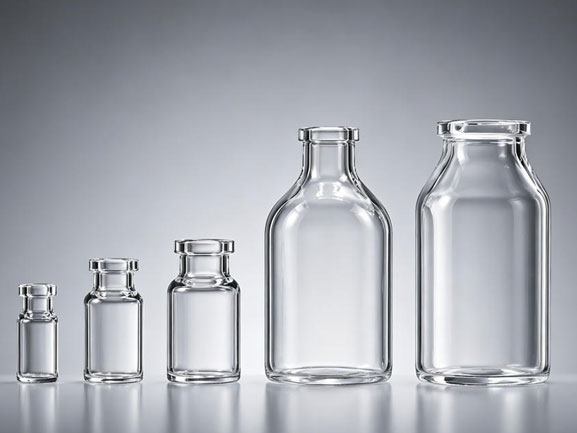
In peptide-related packaging discussions, 10ml vials are often mentioned because they can fit several practical project needs. They may be used for API sample storage, development batches, lyophilized material evaluation, formulation screening or internal transfer between project teams.
A 10ml vial can provide more handling space than very small vial formats, while still remaining practical for laboratory, pilot and sample packaging use. For CDMO and B2B packaging projects, this format can also make communication easier when teams need to evaluate filling volume, headspace, stopper matching and storage condition together.
This does not mean 10ml is the only suitable size for peptide packaging. In many projects, 2ml, 5ml and 10ml options may all need to be compared. But when customers are discussing peptide API storage, lyophilized samples or finished formulation evaluation, 10ml is a format worth including in the packaging conversation.
Cold Storage Does Not Mean One Fixed Condition
One common misunderstanding is that all finished peptide products require the same storage condition. In reality, storage requirements depend on the molecule, formulation, dosage form, moisture sensitivity, stabilizer system and stability study results.
Some peptide materials may be evaluated under refrigerated conditions. Some lyophilized samples may require moisture protection and controlled storage. Some development materials may be transferred under low-temperature conditions. Other finished formulations may have different requirements after full validation.
For packaging selection, this means the vial should be evaluated together with the intended storage profile. The container material, closure system and sterilization format should be discussed as part of the broader development plan, not as an isolated purchase item.
What Makes COP Vials Relevant to Peptide Packaging?
COP vials are relevant to peptide packaging because they match several concerns that often appear in peptide projects:
transparent container body for visual inspection;
reduced breakage risk during sample handling and transport;
low adsorption concern for sensitive material evaluation;
compatibility discussion for refrigerated or low-temperature storage;
suitability for sample packaging, development batches and B2B project evaluation;
availability in practical vial sizes such as 2ml, 5ml and 10ml;
potential RTU sterile formats for filling workflow discussions.
These points are not a substitute for customer-side validation. Pharmaceutical companies, biotech teams and CDMOs still need to evaluate container performance according to their own formulation, filling process and regulatory documentation needs. But COP vials can help expand the available packaging options during early technical selection.
Packaging Is Becoming Part of Peptide Project Strategy
For peptide projects, container selection is becoming more strategic because it connects multiple departments. R&D teams care about formulation and sample stability. Quality teams care about documentation and supplier qualification. Manufacturing teams care about filling, closure and storage workflow. Procurement teams care about reliable supply and project scalability.
When these teams discuss packaging earlier, they can reduce the risk of changing containers too late in the project. They can also compare glass and polymer options more systematically instead of making the choice only based on habit.
This is the real reason COP vials are gaining attention in peptide packaging. The discussion is not only about material. It is about supporting a smoother path from API material to lyophilized samples and finished formulation packaging.


Copyright © Shijiazhuang Xinfuda Medical Packaging Co., Ltd. All Rights
MAKE AN ENQUIRY