As peptide brands move from early product development toward a more complete market presentation, the delivery device becomes part of the product strategy. A vial and syringe may be suitable during an early stage, while a cartridge-based pen can offer a more defined format for repeated dosing. The question is whether the brand should use a disposable pen or build the product around a reusable device with replacement cartridges.
A reusable injection pen is not automatically the better or more premium option. It works best when the medicine, cartridge supply and customer workflow are designed to support repeated use of the same device. For peptide brands considering this direction, the decision should connect commercial planning with formulation, packaging and device development.
How a Reusable Injection Pen Platform Works
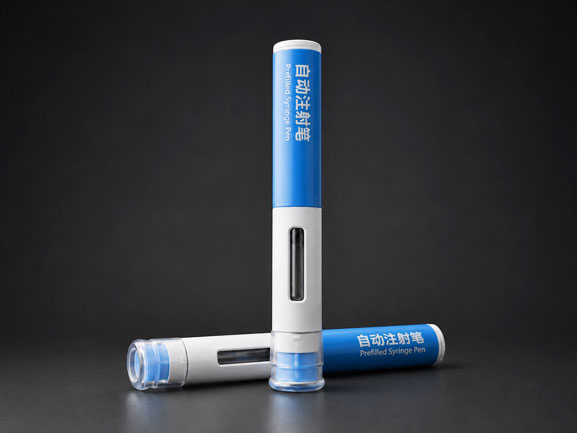
A reusable injection pen separates the durable pen body from the medicine-containing cartridge. The pen remains in service while an empty cartridge is removed and replaced according to the intended treatment plan. This differs from a disposable pen, where the cartridge and device normally remain together and the complete unit is discarded after the available medicine has been used.
For the peptide brand, this creates two connected products. The first is the reusable device, often supplied as part of a starter kit. The second is the ongoing cartridge presentation. Packaging, instructions and distribution must support both. The pen cannot be planned separately from the way replacement cartridges will be filled, packed, supplied and identified.
Why Peptide Brands Consider a Reusable Pen
The reusable model is particularly relevant to products used repeatedly over an extended period. When customers are expected to use several cartridges, retaining one pen can create a consistent operating experience from one refill to the next. The device also remains visible throughout the product lifecycle, giving the brand a durable physical element rather than a package that disappears after a single cartridge.
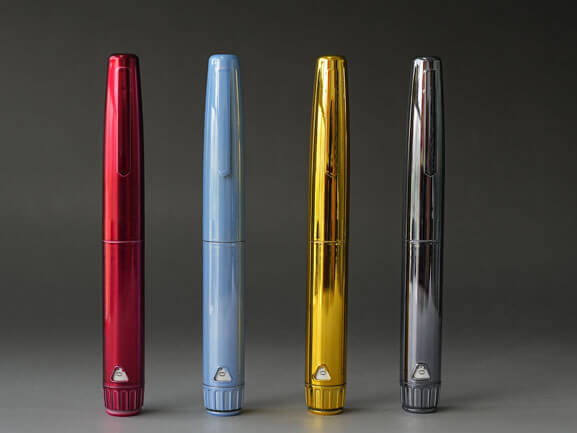
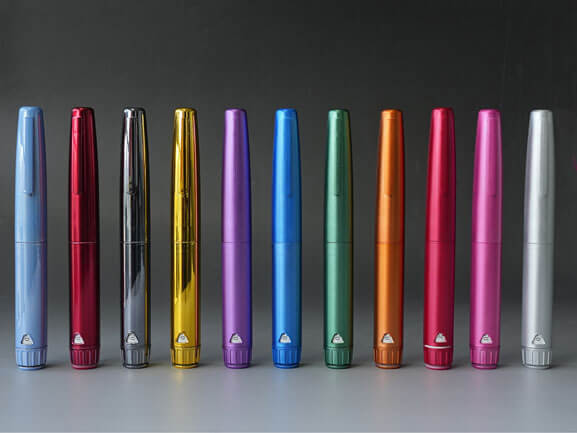
This longer relationship with the device creates more room for brand differentiation. Housing color, surface finish, logo position, dose-window appearance, cap design and storage case can be coordinated with the wider product identity. A brand may choose a lightweight engineering-plastic housing, a metallic-finish plastic appearance or an actual metal reusable pen, depending on the desired weight, tactile character, cost and development direction.
The replacement-cartridge model may also support a starter-kit and refill structure. The first package introduces the device and operating sequence, while later purchases focus on medicine cartridges and related consumables. Whether this creates value depends on reliable refill availability. A reusable pen loses much of its purpose if customers cannot obtain compatible cartridges through the intended sales channel.
The Cartridge Must Be Defined Before the Pen
A common enquiry begins with the statement that the product uses a 3 mL cartridge. Nominal capacity is useful, but it is not enough to establish device compatibility. The development team should review the actual cartridge drawing, dimensional tolerances, stopper, closure, target fill and available stopper travel. Two cartridges described by the same volume may not create the same mechanical interface.
The cartridge remains the primary container for the peptide formulation. Its material, closure system, stopper behavior and drug-contact suitability belong to the pharmaceutical development program. A pen sample can support a preliminary fit discussion, but physical assembly alone does not prove container-closure compatibility, drug stability or delivery performance.
Dose Requirements Shape the Device Configuration
Peptide products are often described by a dose in milligrams, micrograms or units, while the pen mechanism delivers a liquid volume. The device discussion therefore needs the formulation concentration, minimum and maximum dose, dose increment, expected doses per cartridge and any planned priming allowance. These inputs determine how much stopper movement is required and how the dose scale should be presented.
Variable-dose products may require a different mechanism and user interface from fixed-dose products. If the concentration or dose schedule is still changing, it may be too early to finalize a private-label scale or mechanism. Resolving the dose architecture first can prevent the brand from approving an attractive sample that later fails to match the product.
Formulation and Needle Selection Also Matter
Delivery behavior depends on more than the pen body. Formulation viscosity, use temperature, delivered volume, stopper friction, needle dimensions and mechanism design interact during injection. A viscosity value should be provided together with the temperature at which it was measured. The proposed needle should be identified by its actual technical specification rather than by gauge alone.
These factors influence the evaluation of injection force, delivery time and dose completion. They should be tested with representative components and the defined device configuration. A metal housing or stronger-looking mechanism does not by itself establish better delivery performance.
Customization Should Follow the Product Strategy
Customization can begin after the basic platform direction is credible. For a private-label peptide pen, the discussion may cover housing color, metallic-looking finishes, logo application, dose-window contrast, cap and clip details, grip texture, packaging and instructions. Different colors can also be evaluated for separating products, concentrations or markets, provided the final system remains clear to the intended user.
Terminology matters when describing materials. Metallic-finish reusable injection pen is appropriate for a plastic device designed to look metallic. Galvanized pen should not be used unless the product genuinely receives a zinc-coating process. An actual metal reusable pen should be identified separately, because its material, weight, manufacturing process and cost profile differ from those of a plastic housing.
Brand appearance should also be separated from technical claims. A premium finish may improve visual differentiation, but it does not prove dose accuracy, low injection force or a particular service life. Those statements must be supported by evidence for the applicable model and configuration.
Quality Documentation Is Part of Supplier Selection
A peptide brand evaluating a reusable pen supplier should review the documents behind the platform. An ISO 13485 certificate relates to the manufacturer's medical-device quality management system. The brand should confirm the certified organization, scope, issuing body and validity instead of relying only on an ISO logo.
ISO 11608 addresses requirements and test methods for needle-based injection systems. When a supplier refers to ISO 11608, the project team should ask which edition and applicable parts were used, which pen model and configuration were tested, and what the report actually concludes. Product specifications, drawings, material information, test summaries, sample records and change-control arrangements may also be required as the project develops.
When a Disposable Pen May Be More Suitable
Some peptide products do not need a reusable platform. An integrated disposable pen may provide a simpler direction when the cartridge should remain inside the device, the user should not perform cartridge replacement, or the expected treatment period involves relatively few cartridges. It may also be more practical when the brand cannot support a separate refill and device-replacement system.
The formulation may create another reason to consider a different platform. A product that must remain lyophilized until use, for example, may require a dual-chamber cartridge and a defined reconstitution sequence rather than a conventional ready-to-inject reusable pen. Selecting the device category should follow the formulation and workflow instead of forcing every peptide product into the same pen format.
Information to Prepare for a First Project Discussion
A useful supplier discussion can begin before every detail is final, but the current status of each input should be clear. Peptide brands should prepare the following information where available:
Intended market and product-development stage.
Cartridge and stopper drawings, target fill and component status.
Formulation concentration, viscosity range and relevant temperature conditions.
Minimum dose, maximum dose, dose increment and expected doses per cartridge.
Proposed needle specification and intended operating sequence.
Estimated sample quantity, future demand and replacement-cartridge supply plan.
Preferred housing material, color, finish, logo and packaging direction.
Quality documents and test evidence required for the next internal review.
Building the Right Reusable Peptide Pen Project
A reusable injection pen can be a strong platform for a peptide brand when repeated dosing, replacement-cartridge availability and a long-term device experience are part of the same strategy. The most successful starting point is not a logo drawing or a color request. It is a product brief that connects the formulation, cartridge, dose, customer workflow and commercial plan.


Copyright © Shijiazhuang Xinfuda Medical Packaging Co., Ltd. All Rights
MAKE AN ENQUIRY