A Troubleshooting Guide for Pen Injector Performance
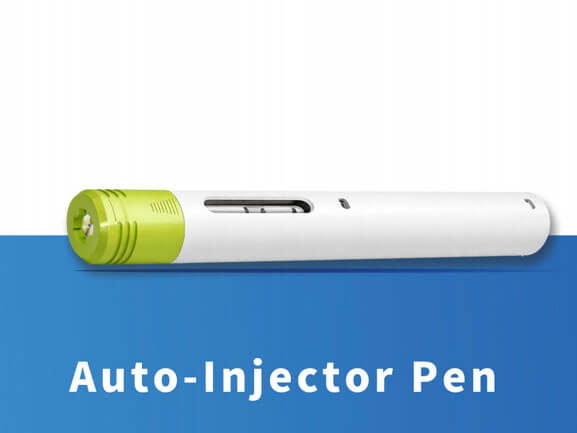
Injection pens are designed to deliver medication smoothly, accurately, and with minimal force. However, during use some patients or healthcare professionals may experience a situation where the pen injector appears to freeze or stall during injection.
This issue typically results from mechanical resistance or inconsistent force transmission within the device–cartridge system. To identify the root cause, manufacturers and engineers usually investigate several key factors: drug viscosity, needle resistance, cartridge movement, spring performance, lubrication, and assembly consistency.
Below is a structured troubleshooting approach.
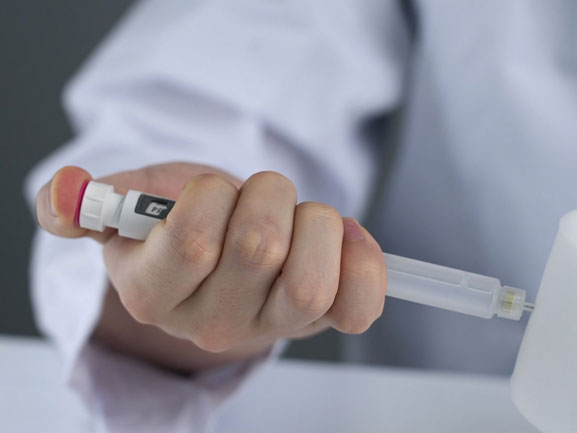
1. Drug Solution Viscosity
Why it matters
The viscosity of the drug solution directly affects the force required to push the medication through the needle. Highly viscous formulations can significantly increase injection resistance.
Potential problems
Highly concentrated biologics or peptide formulations
Low storage temperatures increasing fluid viscosity
Incomplete reconstitution of lyophilized drugs
Indicators
Injection becomes harder toward the end of delivery
Device works normally with water-like test fluids but stalls with the drug product
Recommended checks
Measure viscosity at room temperature and refrigerated conditions
Evaluate force vs. flow rate curves
Confirm formulation stability and reconstitution quality
2. Needle Flow Resistance
Why it matters
The needle gauge, length, and internal surface quality determine the pressure required for fluid delivery.
Potential problems
Very small gauge needles (e.g., 32G–34G)
Needle internal coating defects
Blocked or partially obstructed needle lumen
Indicators
High initial injection force
Normal function when using a different needle brand
Recommended checks
Test multiple needle suppliers
Measure pressure drop across the needle
Verify compatibility with ISO-standard pen needles
3. Cartridge (Cartridge Barrel) Sliding Resistance
Why it matters
Inside the pen injector, the piston of the cartridge must slide smoothly along the barrel. If friction increases, the drive mechanism may stall.
Potential problems
Excess friction between rubber stopper and glass/COP barrel
Poor silicone coating in the cartridge
Dimensional variation in the cartridge
Indicators
Jerky or uneven injection
Sudden stopping during injection
Increased drive force required
Recommended checks
Evaluate glide force of cartridge stoppers
Verify silicone lubrication uniformity
Inspect cartridge dimensional tolerances
4. Spring Force Performance
Why it matters
In many injection pens, a spring or mechanical drive system provides the force needed to push the cartridge piston.
Potential problems
Insufficient spring force
Spring fatigue or deformation
Incorrect spring calibration
Indicators
Pen works at low doses but freezes at higher doses
Inconsistent injection speed
Recommended checks
Measure spring compression force curves
Conduct lifecycle testing
Verify spring material and heat treatment quality
5. Lubrication of Mechanical Components
Why it matters
Internal pen mechanisms such as drive screws, pistons, and gears require proper lubrication to maintain smooth movement.
Potential problems
Insufficient lubricant application
Incompatible lubricant materials
Lubricant migration over time
Indicators
Increased friction during dose delivery
Audible grinding or resistance during injection
Recommended checks
Verify lubrication quantity and location
Conduct aging and environmental stability tests
Evaluate lubricant compatibility with drug packaging materials
6. Assembly Consistency
Why it matters
Even if all components meet specifications individually, assembly variation can affect the mechanical alignment and force transmission of the injector.
Potential problems
Misalignment of drive mechanisms
Variation in torque during assembly
Inconsistent component tolerances
Indicators
Some pens function normally while others stall
Performance variability between production batches
Recommended checks
Implement tight assembly process controls
Use automated inspection systems
Perform functional testing on finished devices
Conclusion
When an injection pen freezes during use, the root cause is usually related to excessive resistance within the drug delivery pathway or insufficient driving force. A systematic investigation should focus on six critical factors:
Drug viscosity
Needle flow resistance
Cartridge sliding friction
Spring performance
Mechanical lubrication
Assembly consistency
By carefully evaluating these parameters, manufacturers can identify the source of the issue and ensure reliable, smooth injection performance for patients.


Copyright © Shijiazhuang Xinfuda Medical Packaging Co., Ltd. All Rights
MAKE AN ENQUIRY