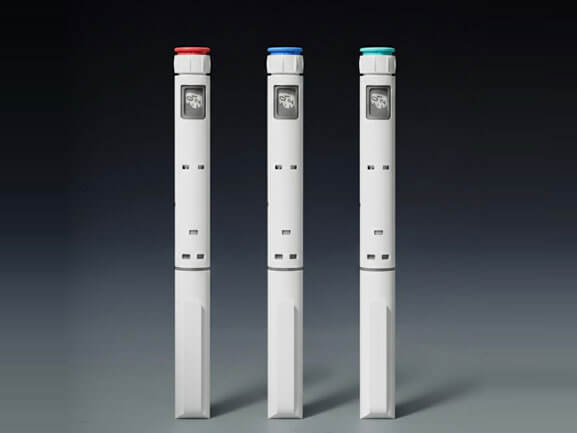
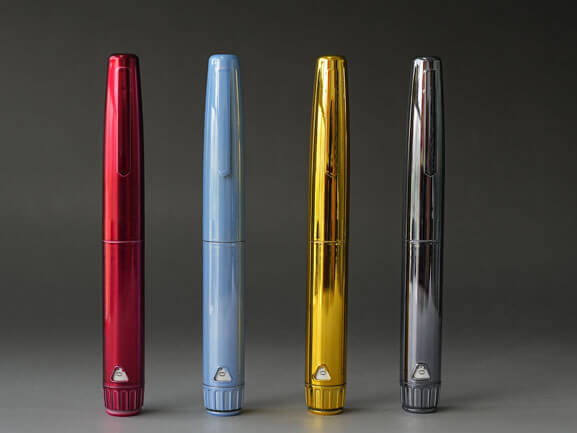
An injection pen is not just a product, but a sophisticated system.
In the daily use of injectable medications such as insulin and GLP-1, a crucial fact is often overlooked: an injection pen is not a single, independent product, but a complete drug delivery system comprised of the pen, needle, and cartridge.
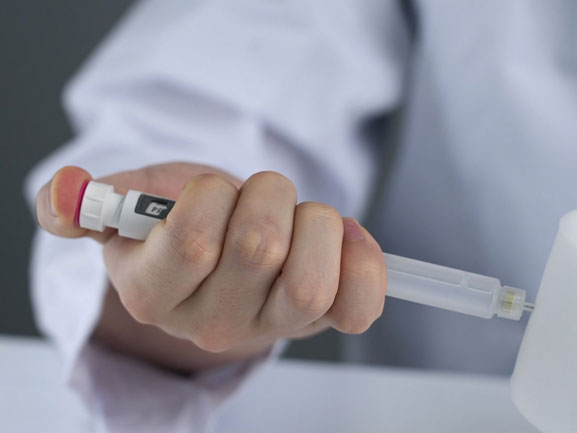
This is like the engine, gearbox, and tires of a car—they must work together to make the vehicle run smoothly. The same applies to injection pens:
Injection pen: Provides the propulsion for the medication.
Cartridge: Contains the medication and provides a sealing and sliding interface.
Needle: Controls the flow path and speed of the medication.
The compatibility of these three components directly determines dosage accuracy, injection safety, and patient experience. This article will delve into the working principles of this system, revealing why "usable" does not equate to "optimal compatibility."
1. Injection Pen: The Power Source
1.1 The Precision Mechanism of Force Generation
The core function of an injection pen is to provide precisely controlled thrust that pushes the medication from the cartridge through the needle into the patient's body. This process involves:
| Pen Component | Function | Impact on System |
| Dose Setting Mechanism | Determines the plunger stroke length | Defines theoretical delivery dose |
| Spring/Drive System | Stores and releases energy | Provides continuous thrust |
| Plunger Rod | Directly contacts the piston | Final link in force transmission |
| Threaded Drive Mechanism | Converts rotational to linear motion | Controls advancement precision |
1.2 Thrust Characteristics of Injection Pens
Different injection pens have distinct thrust characteristics:
Peak Force: Typically between 8-15N, affects ease of use for patients
Force Profile: Some pens deliver consistent force; others show increasing force with stroke
Maximum Stroke: Corresponds to dose range, determines whether cartridge can be fully emptied
Key Data Point: A well-designed injection pen should maintain stable thrust throughout the entire dose range, with variation not exceeding ±15%.
2. Cartridge: The Dual Mission of Sliding and Sealing
2.1 The Three Functions of a Cartridge
The cartridge is not merely a container for medication—it is a precision execution component within the drug delivery system:
| Function | Implementation | Consequences of Failure |
| Medication containment | Glass or plastic cartridge body | Breakage leads to drug contamination |
| Sealing protection | Rubber piston + aluminum cap + septum | Leakage, contamination, system failure |
| Sliding delivery | Piston movement within the cartridge | Jamming causes injection interruption |
2.2 The Precision Engineering of Pistons
The piston is one of the most精密 (precision-engineered) components in the entire drug delivery system:
Sliding Resistance
Ideal Range: 3-8N (depending on drug viscosity and injection speed)
Too Low: May cause unintended movement or leakage
Too High: Increases injection difficulty; patients may be unable to complete the injection
Sealing Performance
Static Seal: Prevents drug leakage during storage
Dynamic Seal: Maintains sealing during injection while allowing smooth sliding
Rebound Performance: Piston should rebound slightly after injection to prevent needle tip dripping
Lubrication Coating
Silicone Oil Coating: Reduces friction but may affect certain protein-based drugs
Silicone-Free Technology: Suitable for silicone-sensitive medications
Coating Uniformity: Directly affects sliding stability
3. Needle: The Final Gate Controlling Flow
3.1 The Fluid Dynamics of Needles
Seemingly simple, the needle is actually one of the most technologically sophisticated components in the drug delivery system:
Factors Determining Flow Rate
According to fluid dynamics formulas (the Hagen-Poiseuille equation), flow rate is related to the following factors:
Fourth Power of Inner Diameter: Minor changes in needle inner diameter lead to significant differences in flow rate
Inverse Relationship with Length: The longer the needle, the greater the resistance
Drug Viscosity: High-viscosity medications require larger inner diameters
| Needle Gauge | Inner Diameter (mm) | Relative Flow Rate* | Suitable Medications |
| 31G | 0.133 | 1.0x | Standard insulin |
| 32G | 0.108 | 0.44x | Low-viscosity medications |
| 33G | 0.084 | 0.16x | Ultra-fine needle, but flow-limited |
3.2 The Multiple Impacts of Needles on Injection Experience
Injection Pain
Needle Tip Geometry: Designs such as five-bevel and three-bevel cuts affect penetration sensation
Lubrication Coating: Siliconization reduces tissue resistance
Penetration Speed: Matching between needle design and injection speed
Injection Time
Fine Needles: Small flow rate, longer injection time (potentially 15-30 seconds)
Coarser Needles: Large flow rate, faster injection, but may increase pain sensation
Drug Viscosity: High-viscosity medications require coarser needles or longer injection times
Leakage Risk
Needle hub seal: The connection must be completely sealed.
Dead space volume: Affects whether the needle tip drips after injection.
Backflow phenomenon: Improper needle design may damage capillaries.
Any mismatch in any part of the system can affect the final dose:
| Problematic Component | Phenomenon | Dose Error |
| Insufficient pen thrust | Piston cannot overcome resistance | Dose deficiency up to 30% |
| Excessive piston resistance | Injection interrupted, cannot complete | Dose loss up to 100% |
| Needle too fine | Injection time too long, patient withdraws early | Partial dose loss |
| Poor needle seal | Medication leaks from connection | Dose loss up to 10-20% |
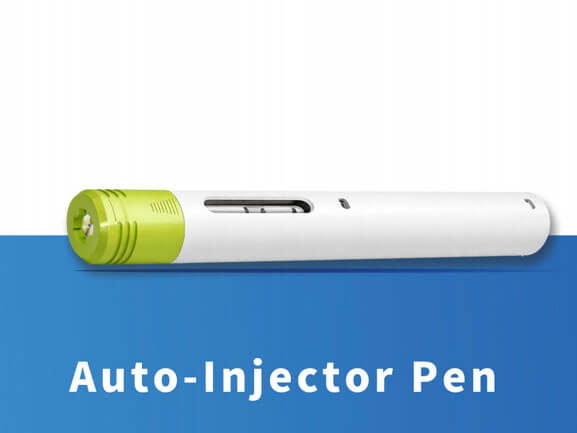
The power of a system is greater than the sum of its parts.
An excellent injection pen, paired with an incompatible needle or vial, is like a Ferrari fitted with tractor tires—it might still "work," but it will never reach its full potential.
The overall performance of a drug delivery system, comprised of the injection pen, needle, and vial, far exceeds the sum of the performance of its individual components. Only when these three components are perfectly matched can the following be achieved:
The most accurate dosage: Precise and accurate injections every time.
The safest treatment: No leaks, no interruptions, no accidents.
The best experience: Easy, comfortable, and reliable.
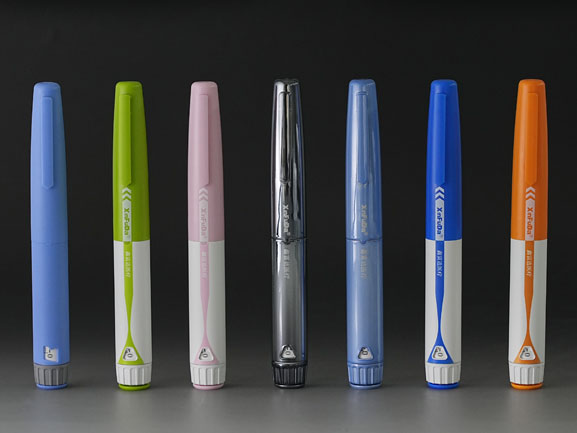
With over 20 years of experience in pharmaceutical services, Xinfuda deeply understands the importance of this systemic matching. We not only manufacture precision injection pens but also ensure their perfect synergy with the entire drug delivery ecosystem, providing truly reliable solutions for pharmaceutical companies and end-users.


Copyright © Shijiazhuang Xinfuda Medical Packaging Co., Ltd. All Rights
MAKE AN ENQUIRY