A reusable injection pen can give a peptide product a more established and differentiated presentation, but the pen cannot solve an undefined product strategy. U.S. distributors and private-label brands often begin with color, logo and minimum order quantity. Those questions matter, but they come after the cartridge, dose, user workflow and supply responsibilities have been defined.
The most useful sourcing discussion begins by separating three things: the medicine or research material, the primary container that holds it, and the reusable device that delivers it. When those responsibilities are clear, a supplier can discuss a realistic pen platform, sample stage and customization plan.
First Define the Business Model
A distributor supplying empty devices has a different role from a brand owner planning a filled cartridge product. A trading company coordinating between a peptide supplier, filling partner and device manufacturer has another set of responsibilities. Before requesting a quotation, identify which model applies.
Empty-device distribution: The buyer supplies reusable pen hardware to qualified business customers and clearly defines what cartridges and uses the device is intended to support.
Private-label device program: The brand customizes an established pen platform and coordinates the cartridge, filling, labeling, packaging and market pathway with the responsible partners.
Nonclinical research supply: The device is supplied for a genuine laboratory or nonclinical purpose that is documented and is not promoted as an unapproved human-use product.
A vague statement such as research use does not answer who will fill the cartridge, how the pen will be used or who owns the final product decision. These points should be resolved before branding work begins.
Choose the Reusable Platform Around the Customer Offer
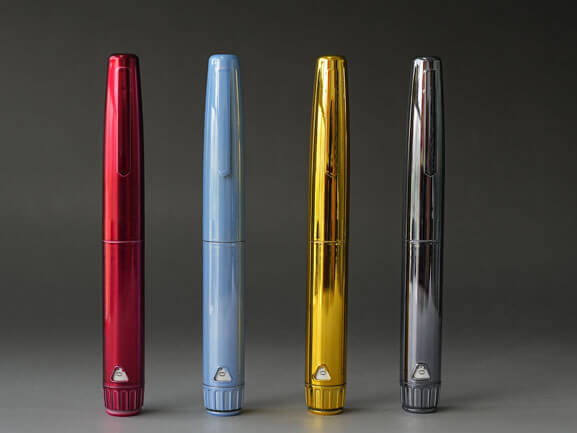
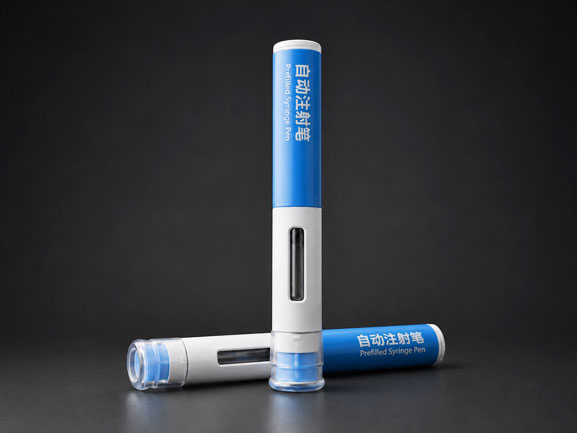
Reusable pens can support different commercial positions. A lightweight plastic platform may fit a cost-sensitive program or broad distributor catalog. A plastic housing with a metallic-look finish can create a more premium appearance without becoming an actual metal device. A metal reusable pen may suit a brand that wants a durable, higher-end presentation and is prepared for the corresponding cost and supply model.
Plastic reusable pen: Lightweight platform with custom body colors, labels and brand graphics.
Metallic-look reusable pen: Plastic housing with a plated or metallic-effect finish for a more premium visual direction.
Metal reusable pen: Actual metal housing for programs prioritizing durability, weight and a premium device feel.
The right choice is not determined by appearance alone. Target price, expected service life, cartridge replacement frequency, shipping weight and after-sales expectations should be considered with the brand position.
The Cartridge Is the Commercial Anchor
A reusable pen depends on continuing access to a compatible medicine cartridge. For a distributor, that means the future cartridge supply is part of the business model. For a private-label brand, it means the selected cartridge and filling partner must be involved before the exterior design is finalized.
A useful cartridge package includes:
Controlled cartridge drawing and tolerances.
Cartridge material, stopper and closure information.
Target fill volume, headspace and expected stopper positions.
Expected number of doses per cartridge, including priming and residual-volume assumptions.
Representative empty components for early fit work and later representative filled units for performance evaluation.
Calling a cartridge standard 3 mL is not enough to establish device fit. The device supplier must review the actual geometry and the travel required by the dose strategy.
Convert the Peptide Offer into a Dose Requirement
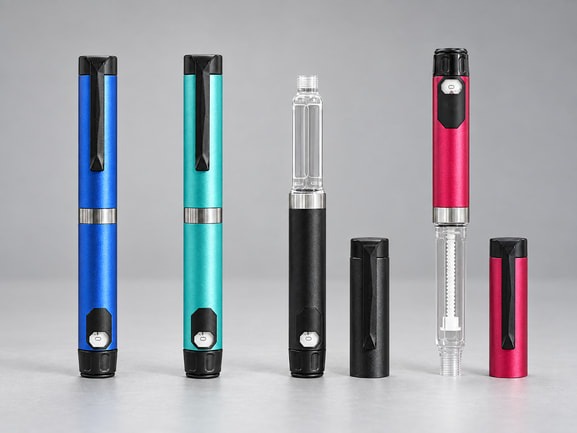
A reusable pen mechanism delivers liquid volume. A brand may market its product in milligrams, units or another labeling convention, but the device discussion must connect that presentation to concentration, minimum delivered volume, maximum delivered volume and dose increment.
Dose range: The smallest and largest liquid volumes the proposed product must deliver.
Minimum increment: The smallest mechanical and labeled step required by the product concept.
Dose scale: The relationship between the displayed value and the actual delivered volume.
Delivery conditions: Viscosity range with temperature, intended needle and any target operating-force or injection-time requirements.
A logo can be changed late in the project. A dose mechanism cannot be chosen responsibly while these inputs are still moving.
Private Label Differentiation Beyond Logo Printing
A private-label pen should be recognizable without relying on an oversized logo. Brand differentiation can be developed through a coordinated set of decisions rather than one decorative feature.
Housing material and weight.
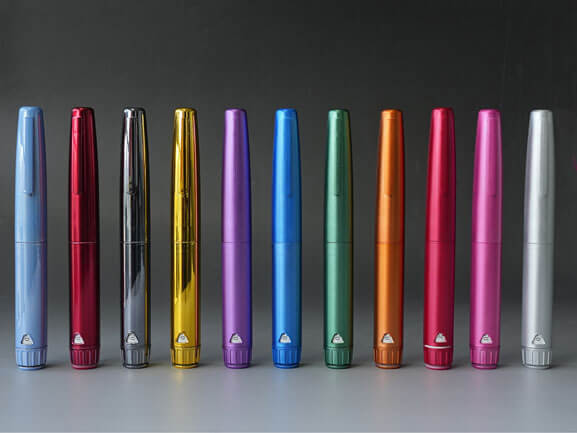
Body color, gloss level and metallic or matte finish.
Cap, clip and grip treatment.
Dose-window contrast and scale presentation.
Standard cap or needle-concealment sleeve direction where the platform supports it.
Label, carton, carrying case and instruction-material coordination.
These choices should remain within the verified platform and project scope. Cosmetic differentiation should not hide changes that affect cartridge fit, dose setting or the user sequence.
Use a Sample Plan Instead of Asking for One Sample
Appearance sample: Reviews size, color, finish, branding area and the general feel of the platform.
Cartridge-fit sample: Reviews the proposed cartridge and component geometry inside the selected pen direction.
Functional development sample: Supports defined engineering work with a recorded configuration and representative project inputs.
Commercial reference sample: Represents an agreed visual and configuration reference for later production discussion; it is not a substitute for final system verification.
A distributor should record which sample was sent to each customer and what the sample was intended to demonstrate. This prevents an appearance sample from being resold or described as a finished drug-device product.
What to Send with a Reusable Pen Enquiry
Send the customer type, intended use, target market, cartridge drawing, stopper and closure information, fill volume, dose range, minimum increment, available viscosity data, proposed needle, preferred platform material, branding requirements, sample purpose, target quantity and expected launch stage. Identify the organizations responsible for the peptide, filling, labeling and final product decisions.


Copyright © Shijiazhuang Xinfuda Medical Packaging Co., Ltd. All Rights
MAKE AN ENQUIRY