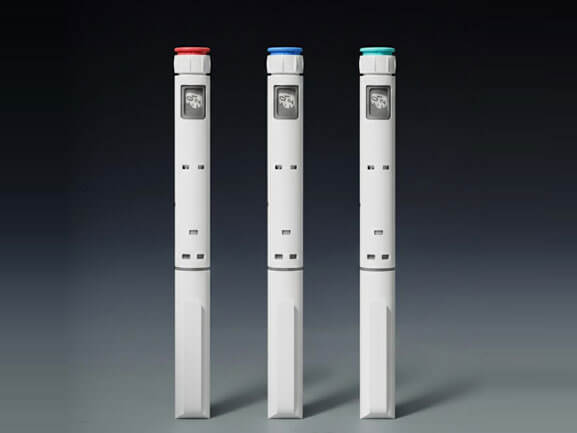
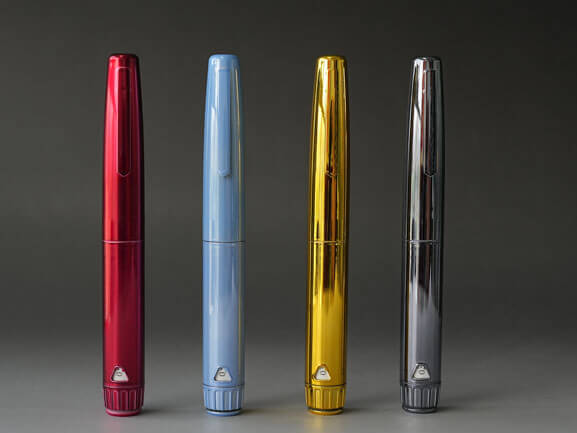
On September 17, 2026, the European Medicines Agency's Committee for Medicinal Products for Human Use (CHMP) adopted positive opinions for 12 new medicines. Among them, three products are expected to be presented in prefilled injection pen formats: Frehemgo, Klygefa and Zeydovio.
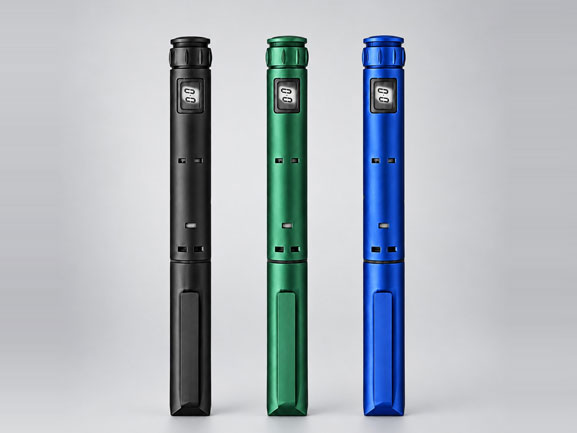
These medicines address haemophilia A, generalized myasthenia gravis and short bowel syndrome. Their inclusion in the same CHMP review cycle provides another indication that prefilled injection pens are expanding beyond their established use in diabetes, obesity and other metabolic therapies.
The CHMP opinions are recommendations rather than final European Commission marketing authorizations. Nevertheless, the device presentations disclosed by EMA provide useful signals for pharmaceutical and biotechnology companies planning future injectable products.
Three Different Therapies, One Important Delivery Trend
| Product | Active Substance | Intended Indication | Disclosed Presentation |
| Frehemgo | Denecimig | Routine prophylaxis of bleeding episodes in haemophilia A | 1.6 mg, 4 mg, 9 mg, 20 mg and 46 mg solutions for injection in prefilled pens |
| Klygefa | Gefurulimab | Add-on treatment for adults with AChR antibody-positive generalized myasthenia gravis | 300 mg solution for injection in a prefilled pen or prefilled syringe |
| Zeydovio | Glepaglutide | Treatment of adults with short bowel syndrome | 10 mg solution for injection in a prefilled pen |
The three products are not technically interchangeable, and their drug delivery requirements should not be assumed to be the same. However, they demonstrate how pen-based delivery is being considered across increasingly diverse therapeutic areas.
Frehemgo: Multiple Strengths Require a Coordinated Device Strategy
Frehemgo, developed by Novo Nordisk, contains denecimig and is intended for the prevention of bleeding episodes in patients with haemophilia A.
EMA states that the product will be available in five strengths, ranging from 1.6 mg to 46 mg, as solutions for injection in prefilled pens.
For pharmaceutical companies, a multi-strength portfolio creates more than a labeling question. The drug and device teams must determine how different strengths will be distinguished while controlling the risk of selection or dosing errors.
• Device color and visual differentiation
• Dose-window and label design
• Fixed-dose or adjustable-dose mechanisms
• Cartridge fill volume and stopper position
• Packaging configuration and instructions for use
• Manufacturing and assembly controls
The delivery platform should therefore be evaluated as part of the complete product family rather than as an isolated pen component.
Klygefa: Pen and PFS Presentations Address Different Product Needs
Klygefa, from Alexion Europe, contains gefurulimab and is intended as an add-on treatment for adults with AChR antibody-positive generalized myasthenia gravis.
EMA identifies both a 300 mg prefilled pen and a prefilled syringe presentation.
Providing pen and PFS options can allow a pharmaceutical company to address different administration environments and user requirements. However, each presentation introduces its own device integration, usability, packaging and lifecycle considerations.
The choice cannot be based on appearance alone. Development teams must compare container compatibility, injection force, injection time, needle configuration, dose completion feedback and intended user capabilities.
Zeydovio: A Peptide Pen Outside the GLP-1 Market
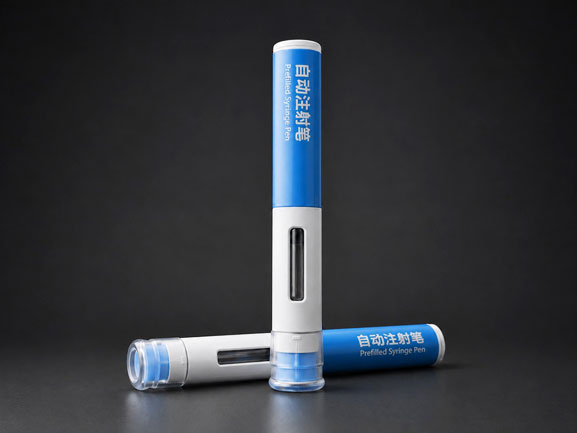
Zeydovio, developed by Zealand Pharma, contains glepaglutide, a long-acting analogue of glucagon-like peptide-2, or GLP-2. It is intended for adults with short bowel syndrome and will be available as a 10 mg solution for injection in a prefilled pen.
Glepaglutide should not be confused with GLP-1 medicines used in diabetes and weight management. Its therapeutic target and indication are different.
From a drug delivery perspective, however, Zeydovio shows that peptide pen opportunities are not limited to semaglutide, tirzepatide or other metabolic products. Pen platforms may also be evaluated for specialized gastrointestinal, endocrine, hormone and rare-disease therapies when their formulation and treatment requirements support this direction.
What These Opinions Mean for Pharmaceutical Companies
1. Injection pen demand is becoming less dependent on one therapy category
Diabetes and GLP-1 products remain highly visible, but they no longer define the complete injection pen market. Pharmaceutical companies developing peptides, antibodies and other injectable therapies are also evaluating more integrated delivery formats.
2. Primary-container decisions must be made early
A pen cannot be selected independently from its primary container. Cartridge dimensions, stopper position, closure configuration, fill volume and dimensional tolerances can all affect mechanical fit and delivered-dose performance.
3. Formulation properties influence device performance
Higher viscosity can increase injection force or extend delivery time. The drive system, plunger movement, needle interface and intended injection profile must be evaluated using representative project conditions.
4. Human factors extend beyond ease of operation
A prefilled pen may reduce selected preparation steps, but it also creates questions concerning dose recognition, priming, activation, injection feedback and disposal.
5. Device development must support the regulatory lifecycle
A commercial pen project requires compatibility assessment, risk management, design verification, usability evaluation, assembly controls and post-approval change management. Drug-specific verification remains necessary.
Selecting a Pen Platform for a New Injectable Therapy
| Project Input | Development Question |
|---|---|
| Drug and formulation | What are the viscosity, stability and temperature requirements? |
| Primary container | Is the project using a 3 mL cartridge, PFS or another container format? |
| Dose strategy | Is the product fixed-dose, variable-dose, single-dose or multi-dose? |
| Delivery volume | What is the minimum and maximum delivered volume? |
| Injection profile | What force and injection time are acceptable? |
| Intended users | Will the device be used by patients, caregivers or healthcare professionals? |
| Target market | Which regulatory, labeling and language requirements apply? |
| Commercial plan | What are the expected clinical, launch and annual production volumes? |
These inputs help determine whether the project is better suited to a disposable injection pen, reusable cartridge pen, PFS autoinjector or another delivery format.


Copyright © Shijiazhuang Xinfuda Medical Packaging Co., Ltd. All Rights
MAKE AN ENQUIRY