A project-screening guide for peptide suppliers, preclinical teams and drug-device developers
A peptide team usually does not begin with a device specification. It begins with a formulation, a dose concept and a question: could this product eventually be delivered in a pen? The disposable pen often looks like the simplest route because the cartridge stays with the device and the user does not need to replace it. That simplicity can be valuable, but only when it matches the project.
For some projects, a disposable pen reduces handling steps and keeps one cartridge, one mechanism and one labeled device together. For others, it adds cost and validation work before the formulation, cartridge or dose schedule is stable enough to support a useful device decision. The right time to consider a disposable pen is therefore defined by project readiness, not by the popularity of the format.
First Clarify What Disposable Means
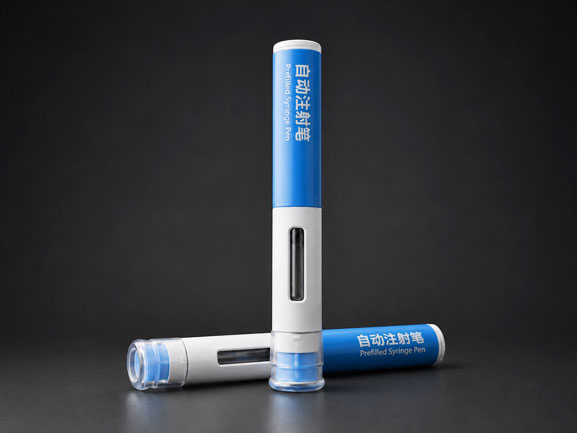
A disposable injection pen is generally discarded after its integrated or non-replaceable cartridge has been used. It does not necessarily mean that the pen delivers only one injection. Depending on the design, one disposable pen may provide a fixed dose, several fixed doses or a variable-dose sequence from the same cartridge.
This distinction matters during early discussions. A project described only as single use may be interpreted as one device per injection, while the customer may actually want a multi-dose prefilled pen that is discarded when empty. The intended number of doses, dose range and cartridge strategy should be written down before samples are selected.
A Disposable Pen Is a Strong Candidate When
The cartridge is intended to remain inside one device rather than being replaced by the user.
The concentration, dose range and expected number of doses per cartridge are sufficiently defined for device review.
The project benefits from a closed product presentation in which the labeled pen and cartridge remain together throughout use.
The planned manufacturing and filling route can support assembly of the cartridge and device at the required scale.
The intended workflow favors fewer cartridge-handling steps and does not require the user to keep the device for later refills.
The project owner is prepared to evaluate the complete drug, cartridge, needle and pen configuration rather than treating the pen as an independent accessory.
Where It Can Fit a Research or Preclinical Program
A laboratory does not need a custom injection pen simply because it works with peptides. Conventional syringes may remain more practical when researchers change compounds frequently, prepare small numbers of doses or need wide flexibility in delivered volume. A pen becomes relevant when the delivery system itself is part of the research question.
Examples include a preclinical program evaluating a defined cartridge-based administration sequence, a formulation team comparing delivery conditions, or a device group preparing for a future combination-product direction. In those cases, an unfilled or project-configured sample can help the team study handling, cartridge fit and operating sequence before later-stage development.
The intended use must remain explicit. A device supplied for laboratory-animal or other non-human investigations should be handled and labeled according to the applicable project and market requirements. A research statement should not be used to disguise promotion for unapproved human use.
What an Unfilled Device Sample Can and Cannot Prove
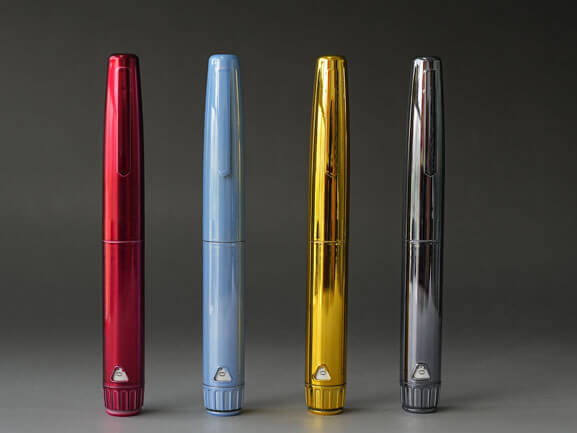
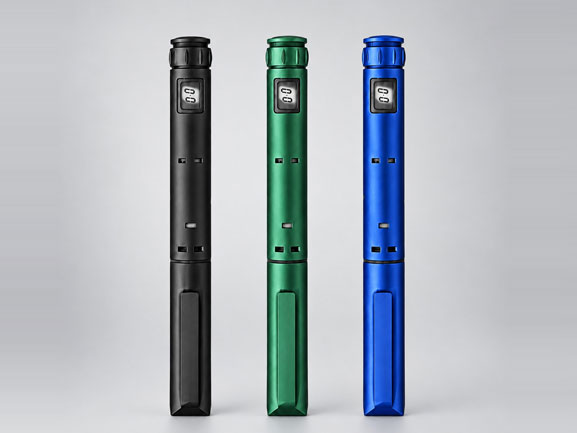
An unfilled disposable pen sample can support an early review of size, grip, cap removal, dose-setting logic, display readability, branding space and general operating sequence. When supplied with the proposed cartridge components, it may also support a preliminary fit and assembly discussion.
It cannot establish final dose accuracy, injection force, delivery time, drug stability, container-closure suitability or usability for the intended population. Those conclusions depend on representative components, the defined formulation, manufacturing conditions and a project-specific verification plan. A sample should therefore be labeled by purpose: appearance sample, platform sample, cartridge-fit sample or functional development sample.
What an Unfilled Device Sample Can and Cannot Prove
An unfilled disposable pen sample can support an early review of size, grip, cap removal, dose-setting logic, display readability, branding space and general operating sequence. When supplied with the proposed cartridge components, it may also support a preliminary fit and assembly discussion.
It cannot establish final dose accuracy, injection force, delivery time, drug stability, container-closure suitability or usability for the intended population. Those conclusions depend on representative components, the defined formulation, manufacturing conditions and a project-specific verification plan. A sample should therefore be labeled by purpose: appearance sample, platform sample, cartridge-fit sample or functional development sample.
Disposable or Reusable Is a Workflow Decision
Cartridge handling
Disposable pen: The cartridge remains with the device and the complete pen is discarded when finished.
Reusable pen: The device is retained and the user replaces the cartridge.
User sequence
Disposable pen: There is no cartridge-replacement step during the product lifecycle.
Reusable pen: Loading, removal and orientation of replacement cartridges must be addressed.
Commercial model
Disposable pen: Each cartridge is supplied with a complete pen mechanism.
Reusable pen: A durable device is supported by a continuing cartridge supply.
Development focus
Disposable pen: Integrated assembly, filled-device presentation and end-of-life disposal.
Reusable pen: Repeated handling, cartridge exchange and device service life.
Typical reason to evaluate
Disposable pen: A self-contained presentation with controlled device and cartridge pairing.
Reusable pen: A repeated-use platform where keeping the device supports the product model.
Documentation Should Follow the Actual Configuration
A supplier qualification package may include product specifications, drawings, material information, quality-system certificates and available test summaries. The team should confirm which pen model, cartridge configuration and intended use are covered by each document. A certificate logo on a webpage is not a substitute for checking scope, issuing body, validity and the configuration represented by the evidence.
For a needle-based injection system intended for medical use, applicable ISO 11608 requirements and project-specific verification should be discussed against the final system. For an early research project, the immediate objective may be narrower: define the sample purpose, record the configuration and identify what must be tested before the device can support the next development stage.
A Practical Decision Rule
A disposable injection pen is worth evaluating when the peptide project has a defined cartridge and dose direction, the cartridge is not intended to be replaced by the user, and the device contributes to a repeatable research, development or future product workflow. It is too early when the formulation, container or intended use changes from one discussion to the next.


Copyright © Shijiazhuang Xinfuda Medical Packaging Co., Ltd. All Rights
MAKE AN ENQUIRY