Why Container Closure Information Matters in Generic Drug Development
FDA's ANDA Submissions - Content and Format* guidance places container closure information in section 3.2.P.7 of the quality documentation. The review is not limited to whether a supplier calls a bottle "pharmaceutical grade." The proposed system should be described in enough detail to identify what will contact and protect the drug product throughout its shelf life and use.
For moisture-sensitive tablets, including oral peptide and oral GLP-1 development projects, packaging decisions may also affect the stability configurations, water-vapor protection strategy and instructions for storage and repeated opening.
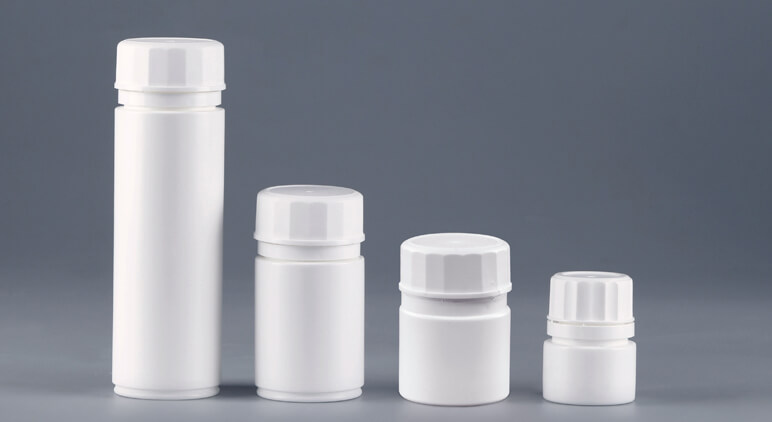
desiccant bottle with silica gel
Core Information Commonly Prepared for Section 3.2.P.7
| Information Area | Typical ANDA Packaging Content | What the Development Team Should Confirm |
| Complete system description | Primary and relevant secondary packaging components | Bottle, closure, liner, seal, desiccant and any protective secondary package are clearly identified |
| Materials of construction | Bottle and closure materials, resin information and relevant additives | Material grades and component composition are traceable to approved specifications |
| Drawings and dimensions | Technical drawings and dimensional requirements for each component | Bottle finish, cap fit, liner dimensions and other critical interfaces are controlled |
| Component specifications | Incoming specifications and test methods for bottle, cap, liner, seal and desiccant | Acceptance criteria can be used by quality control and purchasing teams |
| Packaging configurations | Proposed bottle size, tablet count, pack size and configuration | Every commercial configuration is linked to the appropriate stability and packaging data |
| Closure status and markings | Child-resistant or non-child-resistant status and relevant closure markings | Target-market requirements and labeling are defined for each pack |
| Container performance data | Applicable compendial and package-performance information | Water permeation, light transmission and other applicable tests are selected for the system |
| Supplier information | Component manufacturer, supply source and address | The applicant can identify the qualified source for each packaging component |
| Stability connection | Cross-reference to drug-product stability in the proposed market package | The package used in development is connected to the proposed commercial system |
Must the Generic Package Be Identical to the RLD Package?
Not necessarily. FDA's quality-related controlled correspondence Q&A states that a proposed generic drug product is not automatically required to use the same container closure system as the reference listed drug, or RLD. However, FDA evaluates the proposed system and any differences from the RLD during review.
For an oral solid dosage project, development teams should document differences such as:
bottle or blister format;
bottle material and nominal capacity;
closure construction and liner;
induction-seal configuration;
desiccant format and location;
tablet count and package headspace;
child-resistant features;
storage statements and user handling.
A different package should not be described as equivalent or more protective without appropriate evidence. The applicant is responsible for determining what comparative, performance and stability information is needed for the proposed product.
Additional Focus for Moisture-Sensitive Oral GLP-1 and Peptide Tablets
Oral GLP-1 and peptide formulations should not be treated as one uniform packaging category. Moisture sensitivity depends on the active ingredient, excipients, tablet structure, coating, manufacturing process and storage conditions.
When moisture protection is a development concern, teams may need to compare several package variables.
| Development Question | Packaging Variables to Compare | Possible Evidence Source |
| How much external moisture can enter the package? | Bottle wall, closure seal, liner and induction seal | Package performance and water-vapor permeation evaluation |
| How much moisture is present at packing? | Tablet moisture, component conditioning and packaging environment | Manufacturing and packaging-process data |
| Is active moisture adsorption needed? | No desiccant, silica gel, molecular sieve or another evaluated option | Formulation-specific stability screening |
| Does pack size change the moisture risk? | Bottle capacity, tablet count and headspace | Bracketing or matrixing strategy where scientifically justified |
| What happens during patient use? | Opening frequency, use period and closure replacement | In-use or simulated-use stability design |
| Is child resistance required? | CRC closure, opening force, liner and seal compatibility | Target-market and package qualification requirements |
What Should Be Requested from the Packaging Supplier?
A packaging supplier does not prepare the applicant's ANDA or establish drug-product stability. It can, however, provide controlled component information that supports the applicant's development and supplier-qualification work.
Useful supplier deliverables may include:
bottle, cap and related component drawings;
material and resin identification;
component specifications and available test methods;
dimensional and fit information;
available water-vapor or package-performance data;
child-resistant closure information where applicable;
desiccant type, nominal loading and component description;
production-site and supply-source information;
certificates or batch documentation available for commercial supply;
change-notification procedures;
samples for packaging-line and stability evaluation;
DMF-related support or a letter of authorization where applicable and available.
A DMF should not be assumed to replace all applicant responsibilities. The applicant should confirm which information can be submitted directly, which information may be referenced and which product-specific studies remain necessary.
Connect Packaging Selection with the Stability Program
The package described in section 3.2.P.7 should align with the configurations represented in the drug-product stability program. Development teams should identify bottle sizes, tablet counts, closure systems, desiccant configurations and seals before exhibit and registration batches are committed.
When several pack sizes are planned, the team should determine whether every configuration needs direct data or whether a justified bracketing or matrixing approach may be appropriate. That decision belongs to the applicant and its regulatory and stability specialists.
Changing a bottle, closure, resin, liner, desiccant or supplier after stability work has started may require a documented impact assessment and, depending on the change, additional supporting data.
Information to Prepare Before Requesting Packaging Samples
Before contacting a bottle supplier, a generic development team should prepare:
dosage form and tablet dimensions;
proposed tablet count and commercial pack sizes;
known moisture, oxygen or light sensitivity;
relevant RLD package characteristics;
proposed bottle material and capacity;
closure, CRC and tamper-evident requirements;
liner or induction-seal requirements;
preferred desiccant direction, if already defined;
target market and storage conditions;
packaging-line and sample-quantity requirements.
This information allows the supplier to recommend a relevant sample configuration instead of sending a standard bottle that may not match the development program.


Copyright © Shijiazhuang Xinfuda Medical Packaging Co., Ltd. All Rights
MAKE AN ENQUIRY