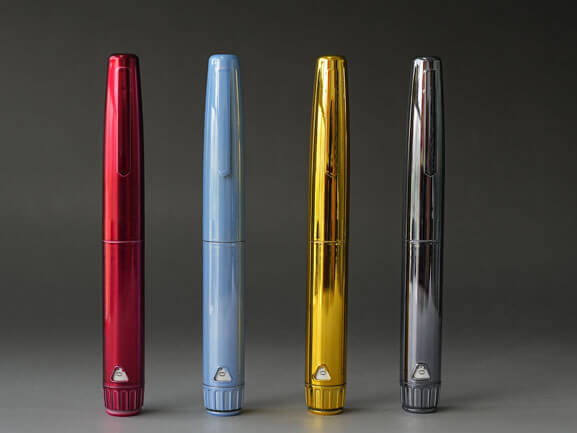
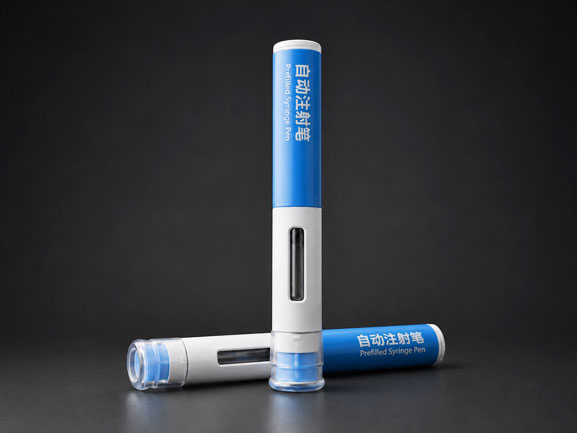
An autoinjector should not be selected by device appearance or nominal syringe size alone. The drive system must work with the actual drug formulation, prefilled syringe, needle and target injection time.
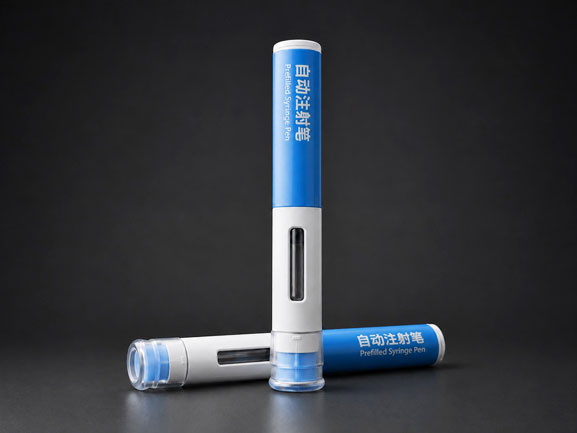
This is why customizable drive force can be important during autoinjector development. The objective is not simply to use a stronger spring. It is to establish a controlled delivery profile that can complete the intended dose while maintaining suitable device function and component performance.
Drive Force Is Not the Same as Activation Force
Drive force is the internal mechanical force used to move the PFS plunger and deliver the drug. Activation force is the force or action required from the user to start the device. These two parameters are related to the overall design, but they should not be treated as the same specification.
For pharma teams, the key question is whether the drive system can deliver the required volume through the selected needle within the target time across the expected operating conditions and component tolerances.
What Determines the Required Drive Force?
Several project inputs influence the force and energy needed for dose delivery:
| Project Input | Why It Matters |
|---|---|
| Formulation viscosity | Higher viscosity can increase resistance during delivery, especially at lower use temperatures. |
| PFS and stopper performance | Break-loose and glide behavior can vary with the syringe, stopper, siliconization and storage condition. |
| Needle configuration | Needle inner diameter and length influence flow resistance and injection time. |
| Delivered volume | A larger volume can require a longer delivery period or a different drive-system configuration. |
| Target injection time | A shorter target time may require greater driving energy, but must be balanced against system loads and user needs. |
| Component tolerances | Device performance should be assessed across relevant PFS, stopper, needle and mechanism variation. |
Why More Force Is Not Always Better
Insufficient drive force may lead to an excessively long injection time or incomplete delivery under demanding conditions. Excessive force can increase loads on the syringe and device components and may produce a delivery profile that is unsuitable for the intended product.
The better development question is therefore:
What drive-force configuration provides reliable dose completion for this specific PFS and formulation?
That question leads to a project-based evaluation rather than a one-size-fits-all device selection.
A Project-Matched Development Approach
For a new autoinjector project, Xinfuda can discuss the drive-system direction together with the pharma or device-development team. The evaluation may include:
1. Reviewing the PFS drawing or physical samples.
2. Confirming fill volume, delivered volume and formulation viscosity range.
3. Reviewing the needle configuration and target injection time.
4. Selecting and evaluating a suitable drive-force direction.
5. Testing dose delivery, injection time and automated functions with the intended configuration.
6. Refining the device for project-specific PFS or capacity requirements where development is feasible.
Xinfuda's current autoinjector platform is designed for a 1 mL PFS, with a current platform injection-time range of 5 to 10 seconds. The final target and device configuration should be confirmed against the actual project inputs. Other capacities can be discussed as joint development projects rather than assumed to use the same mechanism unchanged.
What Pharma Teams Should Provide First
An initial technical discussion is more productive when the following information is available:
- PFS drawing, specification or samples;
- nominal fill volume and required delivered volume;
- formulation viscosity range and relevant temperature conditions;
- needle gauge, length and configuration;
- target injection time;
- intended users, use environment and target markets;
- development stage and expected annual demand.
Final performance should be verified using the intended drug, PFS and device configuration. Applicable requirements of ISO 11608-1 and ISO 11608-5, human-factors needs and market-specific regulatory expectations should also be considered during development.
Discuss Your Autoinjector Project
If your project requires a different injection time, PFS configuration, drug viscosity range or device capacity, send us the available technical inputs. Our team can review whether the current platform can be adapted or whether a joint-development direction should be evaluated.
Prefilled Syringe vs Cartridge vs Vial: How to Select an Injectable Drug Container
View More >Test Strip Packaging: Desiccant Cap vs Integrated Desiccant Vial
View More >COP Vials for Peptide Packaging: Why Container Selection Matters from API to Finished Formulation
View More >


Copyright © Shijiazhuang Xinfuda Medical Packaging Co., Ltd. All Rights
MAKE AN ENQUIRY