A sample is useful only when it represents the project
A request such as “Please send a 50 mL desiccant bottle” sounds complete, but it leaves most of the packaging decision unanswered. Two products can occupy the same nominal bottle volume and still need different headspace, closure, moisture-control capacity and line-handling conditions.
This is why the first sample should not be treated as a color and shape approval. It should be the beginning of a fit, function and stability evaluation.
Before a packaging supplier recommends a bottle, it helps to share the information below. Not every project will have final answers at the beginning. Approximate or target values are still more useful than an empty specification.
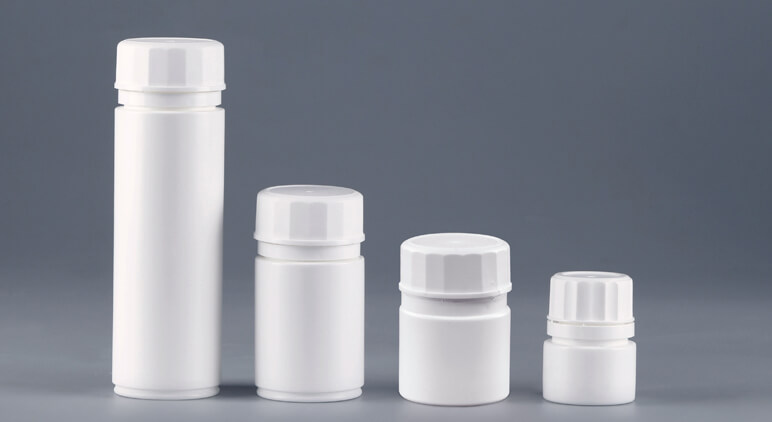
desiccant bottle with silica gel
Start with the product, not the bottle catalogue
The most helpful first description is short and factual:
Dosage form: tablet, capsule, powder, probiotic, diagnostic strip or another solid product
Number of units per bottle
Approximate dimensions and weight of each unit
Whether the product is moisture-sensitive, hygroscopic or prone to physical change
Intended shelf life and principal storage markets
Whether the formula is already in stability studies or still under development
The supplier does not need a confidential formulation to begin a packaging discussion. However, the supplier does need to understand the packaging problem. “Moisture-sensitive tablet” is more useful than “healthcare product,” and “30 capsules, approximately 18 mm long” is more useful than “medium bottle.”
Describe how the bottle will be used after opening
Moisture protection is not only a warehouse question. A multi-dose bottle may be opened once a day, several times a day or only occasionally. Each opening exchanges part of the air inside the bottle with the surrounding environment.
Tell the supplier:
Expected treatment or consumption period after first opening
Approximate opening frequency
Whether the bottle may be used in humid climates
Whether an induction seal or another secondary seal is planned
Whether the closure must be child-resistant
This information helps distinguish an unopened shelf-life requirement from an in-use requirement. The two should not be assumed to be identical.
Provide the filling and line constraints early
A bottle that protects the product but cannot run reliably on the intended line is not a finished solution. Sample selection should therefore include the manufacturing team, not only purchasing.
At minimum, share the preferred bottle opening, overall height and diameter limits, closure application method, target line speed and any existing handling equipment. If the project is moving from another package, photographs and drawings of the current format can also help.
For an early manual trial, dimensional samples may be enough. For an engineering or line trial, the team may need defined lots, drawings, closure application guidance and a larger quantity of components.
What should be checked when the samples arrive
Do not limit the review to appearance. A useful first evaluation normally includes product fit, headspace, closure engagement, cap opening force, label area, bottle stability on the conveyor and compatibility with the intended sealing operation.
If a desiccant cap or an integrated desiccant structure is being evaluated, confirm how the moisture-control component is retained and separated from the product. The final package should then be assessed with the actual drug product under a justified stability protocol.
USP General Chapter <671> describes moisture-vapor transmission testing for plastic packaging systems. ICH Q1A(R2) also states that stability testing should be conducted using the dosage form in the container closure system proposed for marketing. These principles are a useful reminder: a supplier sample can support selection, but it cannot replace the applicant's package qualification and stability evidence.
Make the first shipment answer a real question
The best sample request is not necessarily the longest. It is the one that tells the supplier what decision the sample must support.
For example: “We need to check whether 30 capsules fit, whether the CRC desiccant closure can be applied on our line and whether the assembled package should enter preliminary stability screening.” That statement gives the supplier a much better starting point than a request for “one moisture-proof bottle.”
Xinfuda offers pharmaceutical desiccant bottle options from 25 mL to 175 mL, including HDPE bottles with desiccant caps, child-resistant closure options and integrated moisture-control formats. To discuss a sample set, send the product dimensions, fill count, closure requirement and intended evaluation stage.


Copyright © Shijiazhuang Xinfuda Medical Packaging Co., Ltd. All Rights
MAKE AN ENQUIRY