The package faces more than one humidity event
An unopened bottle has a relatively simple job: limit moisture ingress during storage and distribution. A multi-dose bottle has a second job after the patient removes the first dose.
From that point onward, the headspace is repeatedly exposed to room air. The patient may open the bottle in a dry bedroom, a humid kitchen or a bathroom. The cap may be replaced immediately, or it may remain off while several tablets are counted. A desiccant can help manage this changing environment, but its performance depends on the whole system and the way the package is used.
That makes repeated opening an in-use packaging question, not merely a cap feature.
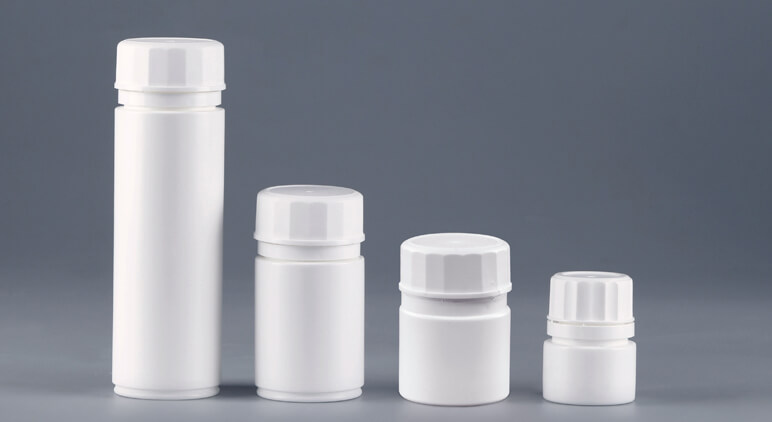
desiccant bottle with silica gel
What happens during one opening cycle
Think of a single opening as a short sequence.
First, the sealed bottle is opened and part of its internal air is exchanged with ambient air. Next, the product is exposed while a dose is removed. Finally, the cap is replaced and the moisture-control system begins responding to the new conditions inside the package.
One cycle may add only a small moisture load. A thirty-day or ninety-day regimen repeats the event many times. The cumulative effect depends on factors that cannot be reduced to bottle volume alone:
Ambient relative humidity and temperature
Time the closure remains off
Number of openings per day
Headspace after each dose is removed
Moisture permeability of the bottle and closure
Seal consistency after reclosing
Sorption behavior and remaining capacity of the desiccant
Moisture sensitivity of the drug product
The package therefore needs to be considered as a dynamic system. A larger desiccant charge is not an automatic answer if the closure is poorly reapplied or the in-use period has not been defined.
The bottle changes as doses are removed
At the beginning of use, tablets or capsules occupy part of the bottle volume. As doses are removed, the headspace generally increases. More room air can enter during later opening cycles, although the exact exchange depends on package geometry and user behavior.
This is easy to miss in a one-time laboratory check. A package may look satisfactory immediately after filling yet experience a different internal environment near the end of the treatment period.
For this reason, a meaningful in-use study should reproduce the intended dose-removal pattern rather than repeatedly opening a full bottle without removing product.
A realistic protocol begins with the label and the user
Before selecting test conditions, write down the expected use scenario in plain language. For example:
“The bottle contains 60 tablets. The patient removes two tablets once daily. The expected in-use period is 30 days. The closure is replaced after each dose.”
That sentence defines a more useful starting point than “open bottle daily.” The development team can then decide what humidity exposure, open time, dose-removal schedule and sampling points are scientifically appropriate.
Three mistakes that make an in-use study less useful
Testing the package without the product
Moisture-vapor transmission or package screening can compare systems, but the final decision must consider how the actual formulation responds. ICH Q1A(R2) emphasizes stability testing in the proposed market container closure system.
Treating the first and last day as equivalent
Headspace, desiccant loading and user history change over the in-use period. Sampling only at the beginning can miss the condition the patient sees near the final doses.
Assuming every reclosure is perfect
The closure should be evaluated under realistic handling. If the design includes a CRC mechanism, opening and reclosing behavior may also influence user performance and should be considered in the study design.
What packaging teams can decide before stability data are complete
Early comparisons can still be productive. Teams can screen bottle sizes, cap formats, desiccant locations and seal options. They can also identify packages that create excessive headspace or are difficult to reclose consistently.
Those screens help narrow the candidates that enter formal studies. They should be documented as development evidence, not presented as proof of shelf life.
Xinfuda supplies desiccant bottle configurations for moisture-sensitive tablets, capsules, probiotics, oral peptide products and diagnostic applications. Project discussions can cover bottle capacity, desiccant cap or integrated-wall direction, CRC requirements, sample evaluation and packaging-line compatibility.
Prefilled Syringe vs Cartridge vs Vial: How to Select an Injectable Drug Container
View More >Test Strip Packaging: Desiccant Cap vs Integrated Desiccant Vial
View More >COP Vials for Peptide Packaging: Why Container Selection Matters from API to Finished Formulation
View More >


Copyright © Shijiazhuang Xinfuda Medical Packaging Co., Ltd. All Rights
MAKE AN ENQUIRY