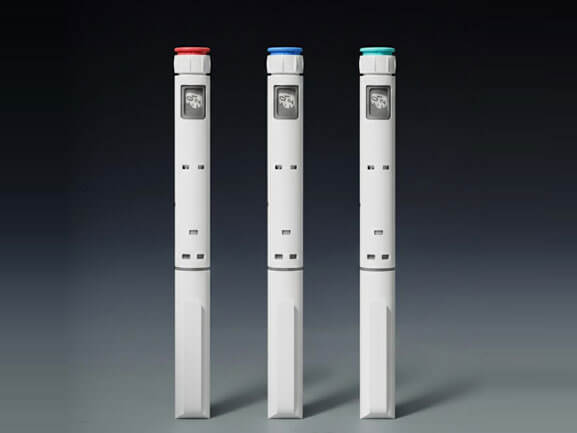
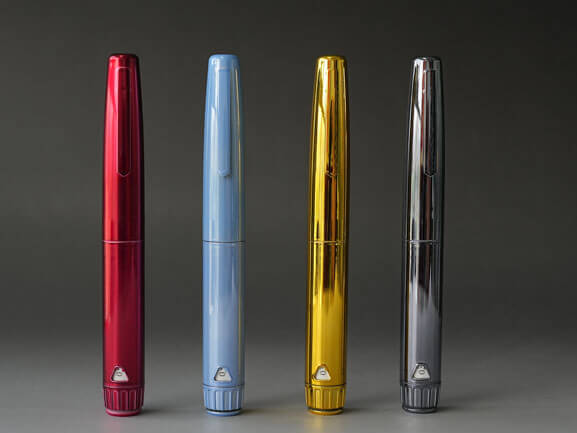
Customers evaluating a dual-chamber pen often begin with a familiar question: does it use the same standard 3 mL cartridge found in a conventional injection pen?
In common configurations, it usually does not. Most familiar 3 mL pen cartridges are single-chamber containers for ready-to-inject liquids, while a reconstitution pen normally requires a purpose-designed dual-chamber cartridge. However, cartridge capacity alone is not an industry-wide rule. Custom 3 mL or other dual-chamber formats may exist and should be evaluated according to their actual drawings and device designs.
Xinfuda's current disposable and reusable dual-chamber pen directions are both designed around a 4 mL dual-chamber cartridge, subject to confirmation against the customer's cartridge drawing and project requirements. The 4 mL description identifies the cartridge direction, but it does not mean that every cartridge labeled 4 mL will automatically fit either device.
This guide explains the difference and the information required before selecting a dual-chamber pen.
First, What Is a Standard 3 mL Pen Cartridge?
The conventional 3 mL cartridge is widely associated with reusable and disposable injection pens for ready-to-inject liquid formulations. Its internal space is normally used as one product chamber, with a stopper or piston moving forward as the pen delivers the selected dose.
A typical single-chamber pen workflow is straightforward:
1. The liquid medicine is already prepared inside the cartridge.
2. The cartridge is installed in the pen or assembled into the device.
3. The user prepares the pen, selects the dose where applicable and injects.
The cartridge does not need to transfer a diluent into a second chamber before injection. There is no middle stopper separating two components and no bypass section designed for internal reconstitution.
This is why a standard 3 mL single-chamber cartridge may be appropriate for a stable liquid peptide, insulin, hormone or other injectable product, but it is not normally a direct match for a project that requires two separated components and in-cartridge reconstitution. A specially designed 3 mL dual-chamber system would be a separate project direction and would need its own device evaluation.
What Makes a 4 mL Dual-Chamber Cartridge Different?
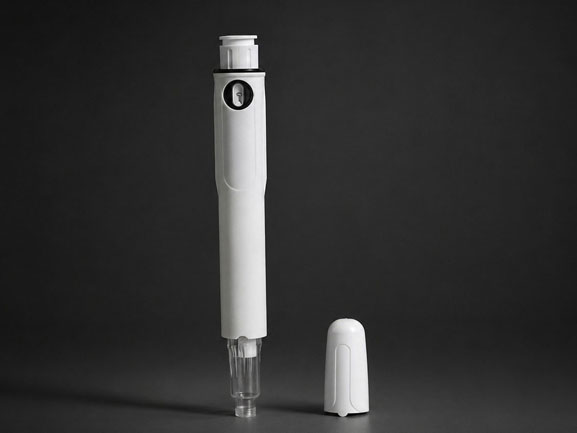
A 4 mL dual-chamber cartridge is designed to hold two components separately inside one primary container. A common project direction is a lyophilized drug in one chamber and a liquid diluent in the other. Some projects may evaluate two compatible liquid components that must remain separated until use.
The cartridge typically includes several functional areas:
- a chamber for the drug component;
- a chamber for the diluent or second component;
- an intermediate stopper separating the two chambers;
- a bypass section that supports transfer during activation;
- front and rear closure components; and
- sufficient internal travel for reconstitution and later dose delivery.
When the pen is activated, the device applies controlled movement to the cartridge system. At the required position, the bypass allows the diluent or second component to move into the drug chamber. The components can then combine according to the project's defined mixing and waiting procedure.
Only after this sequence has been completed and the product has met the required inspection criteria is the system ready for dose preparation and injection.
The additional chamber, stopper and bypass functions make the dual-chamber cartridge mechanically and operationally different from an ordinary 3 mL single-chamber cartridge.
Does 4 mL Mean the Patient Receives 4 mL?
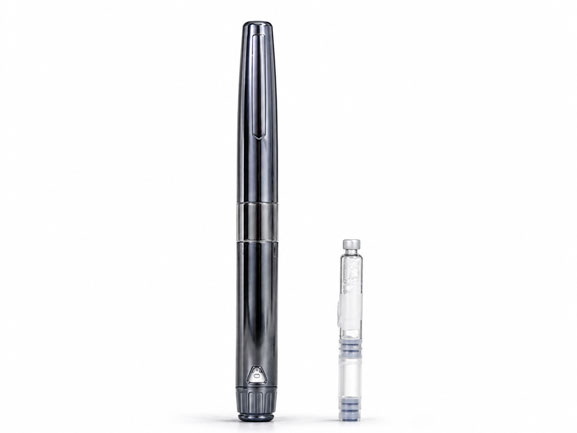
No. The cartridge designation should not be confused with the delivered injection volume.
The internal cartridge capacity must accommodate more than the final dose. Depending on the project, it may include:
- the drug component;
- the diluent;
- headspace;
- stopper positions and travel;
- the bypass region;
- residual volume; and
- the space required for the reconstitution sequence.
The final delivered dose may therefore be much smaller than the nominal cartridge capacity. It must be defined from the formulation concentration, reconstituted volume, intended dose and device configuration.
A statement such as "4 mL dual-chamber cartridge" does not by itself establish dose range, dose increment or delivered volume.
Why Cartridge Type Matters More Than the 3 mL or 4 mL Label
The difference is not solved by changing a holder or making the pen body slightly longer. The device mechanism must correspond to the internal geometry and movement of the dual-chamber cartridge.
In Xinfuda's current 4 mL platform configuration, replacing the matched dual-chamber cartridge with a conventional 3 mL single-chamber cartridge would remove the features needed for separated storage and in-cartridge reconstitution. A common single-chamber cartridge does not provide the same chamber allocation, middle-stopper


Copyright © Shijiazhuang Xinfuda Medical Packaging Co., Ltd. All Rights
MAKE AN ENQUIRY