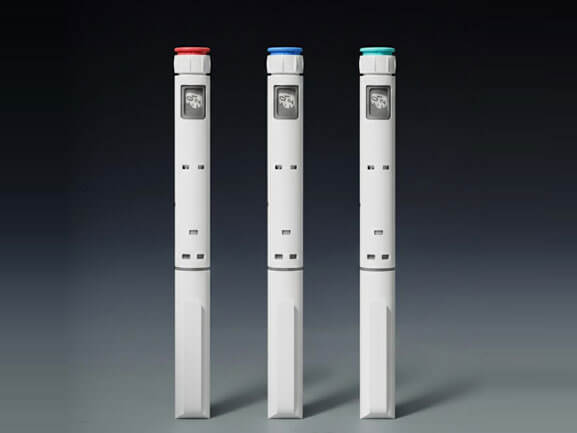
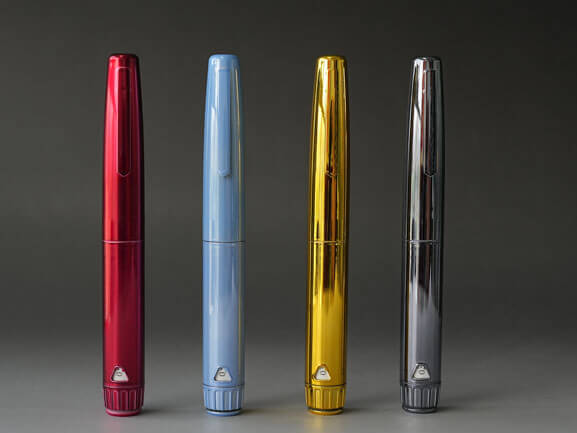
A dual-chamber cartridge can look similar to an ordinary pen cartridge from the outside. The important difference is inside the container.
Instead of holding one ready-to-inject liquid, a typical dual-chamber cartridge keeps two compatible components in separate sections until the product is prepared for use. One chamber may contain a lyophilized drug and the other a liquid diluent. Other projects may use two liquid components that need to remain separated during storage.
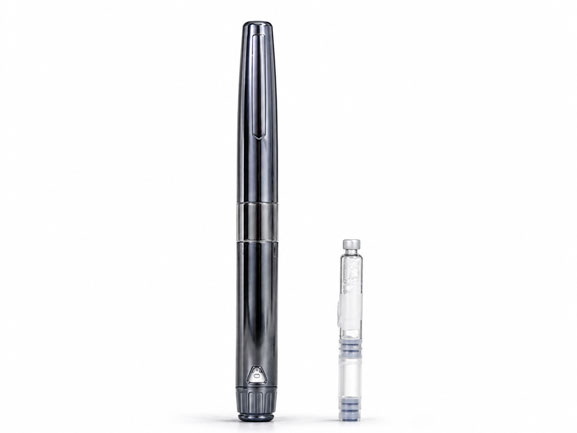
The cartridge does more than provide extra volume. Its chambers, stoppers and bypass must work as a connected system. The pen or other delivery device then supplies the movement needed to activate that system.
This guide follows the internal structure of a typical dual-chamber cartridge and explains what happens during reconstitution.
The Five Parts to Recognize
Although designs vary by cartridge supplier and application, a common dual-chamber cartridge includes five functional elements.
1. The Front Chamber
The front chamber is located toward the cartridge outlet. In many lyophilized-drug configurations, this chamber contains the dry drug product. In a liquid-liquid system, it may hold the first liquid component.
Its usable space must be considered together with the drug cake, headspace, closure design and final reconstituted volume. The nominal cartridge capacity does not describe these details on its own.
2. The Middle Stopper
The middle stopper separates the two product chambers during storage. It forms part of the container-closure system and must remain in the intended position until activation begins.
During a typical reconstitution sequence, movement of the stopper brings it into the bypass region. This allows the liquid behind it to move around the stopper and enter the front chamber.
The stopper is therefore not simply a divider. Its dimensions, material, starting position, movement and interaction with the glass barrel all influence the transfer sequence.
3. The Rear Chamber
The rear chamber commonly contains the liquid diluent. Its fill volume, headspace and relationship with the middle and rear stoppers affect how pressure is transmitted during activation.
The chamber must contain enough liquid for the intended reconstitution process while remaining consistent with the final dose and residual-volume strategy.
4. The Bypass
The bypass is a specially formed channel or region in the cartridge barrel. When the middle stopper reaches the correct position, the bypass provides a route around the stopper.
This route allows the diluent or second liquid component to move from the rear chamber into the front chamber. The bypass position and length may be adapted for the intended cartridge design and transfer sequence.
Without alignment between the stopper and bypass, the two chambers remain separated. This is why bypass geometry cannot be considered independently from stopper position and device travel.
5. The Rear Stopper
The rear stopper closes the back of the liquid chamber and receives movement from the pen mechanism or another actuator. As it advances, pressure is transferred through the liquid and the internal components begin their designed movement.
The rear stopper later remains part of the dose-delivery system. Its travel must therefore support both reconstitution and the subsequent injection sequence.
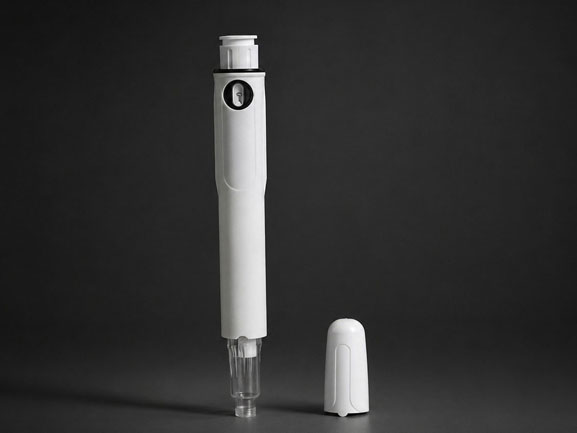
What Happens During Reconstitution?
The exact sequence depends on the cartridge and device design. In a common lyophilized-drug configuration, the process can be understood in six stages.
Stage 1: The Components Remain Separated
Before activation, the drug component and diluent occupy different chambers. The middle stopper maintains the separation required by the product design.
At this stage, the cartridge should not be described as ready for injection. The drug has not yet been reconstituted.
Stage 2: The Device Begins to Apply Movement
The pen mechanism advances the rear stopper through a rotation, button action or another project-specific activation method. Movement at the back of the cartridge creates the mechanical and hydraulic conditions needed to begin the internal sequence.
The cartridge does not activate itself. Its operation depends on a device that provides the correct travel and force in the correct order.
Stage 3: The Middle Stopper Reaches the Bypass
As the internal components move, the middle stopper enters the bypass region. The bypass creates a temporary flow path around the stopper.
The timing of this alignment matters. If the device travel is not matched to the cartridge design, transfer may begin at the wrong point or may not be completed as intended.
Stage 4: The Diluent Moves into the Front Chamber
Continued activation pushes the liquid through the bypass and into the front chamber. In a lyophilized formulation, the diluent contacts the dry drug product. In a liquid-liquid configuration, the second component enters the chamber containing the first.
The flow behavior is influenced by fill volume, headspace, bypass design, stopper movement and the resistance of the product system.
Stage 5: The Product Is Mixed or Allowed to Dissolve
Transfer is not the same as complete reconstitution. The formulation may require a defined waiting period, gentle movement or another validated preparation step.
The product owner must establish how the user should handle the cartridge after transfer. Vigorous shaking may not be appropriate for some peptide or biologic formulations because it can contribute to foam or bubbles.
Stage 6: The Reconstituted Product Is Inspected and Prepared for Injection
The final instructions may require the user to check solution appearance, visible particles, foam or incomplete dissolution before proceeding. Priming, dose setting and injection then follow according to the finished device configuration.
The pen mechanism starting the transfer does not by itself confirm that the formulation has fully dissolved or that the product is ready for administration.
The Cartridge and Pen Must Be Evaluated Together
A dual-chamber cartridge is a primary container. A dual-chamber pen is the delivery mechanism that activates and uses that container. Neither should be selected in isolation.
The cartridge contributes:
- separated storage;
- chamber volume;
- stopper and bypass configuration;
- closure and drug-contact components; and
- the internal path for transfer.
The pen contributes:
- cartridge location and retention;
- activation movement;
- user feedback;
- plunger travel;
- dose preparation; and
- the final injection workflow.
The formulation adds a third set of requirements, including dissolution behavior, mixing time, viscosity, delivered volume and visual inspection criteria.
Compatibility therefore means more than placing the cartridge into the device. It means the cartridge, formulation and mechanism can complete the intended sequence under the project's defined conditions.
Lyophilized-Liquid and Liquid-Liquid Uses Are Not Identical
The same broad dual-chamber concept can support different project directions.
Lyophilized Drug Plus Diluent
One chamber contains a freeze-dried drug product and the other contains a liquid diluent. The transfer step brings the diluent into contact with the drug before injection.
Important questions include dissolution time, foam, particles, final concentration and viscosity after reconstitution.
Two Liquid Components
Both chambers contain liquids that must remain separated during storage. Depending on the product and device design, they may be combined before injection or delivered sequentially.
The project must define whether the liquids are intended to mix, remain sequential, or follow another controlled delivery sequence. A device developed for lyophilized-drug reconstitution should not automatically be assumed suitable for every liquid-liquid application.
Common Misunderstandings
"The Cartridge Is 4 mL, So the Dose Is 4 mL"
Nominal cartridge capacity is not the same as delivered dose. The container must also accommodate two components, headspace, stopper travel, the bypass region and residual volume.
"Once the Diluent Transfers, the Drug Is Ready"
Transfer only brings the components together. Complete dissolution, mixing and readiness for injection must be defined and verified for the specific formulation.
"Any Cartridge with the Same Capacity Should Fit"
Capacity is only one descriptor. Overall dimensions, chamber allocation, stopper positions, bypass geometry, closure, tolerances and plunger interface may differ.
"The Pen Determines the Reconstitution Process"
The pen provides the activation movement, but the formulation owner defines mixing, waiting and inspection requirements. The final workflow is a drug-cartridge-device decision.


Copyright © Shijiazhuang Xinfuda Medical Packaging Co., Ltd. All Rights
MAKE AN ENQUIRY