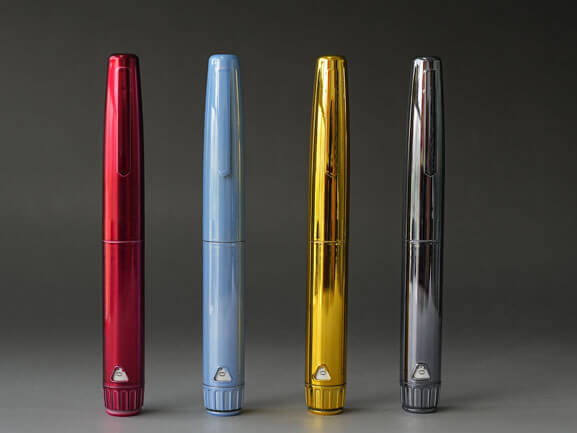
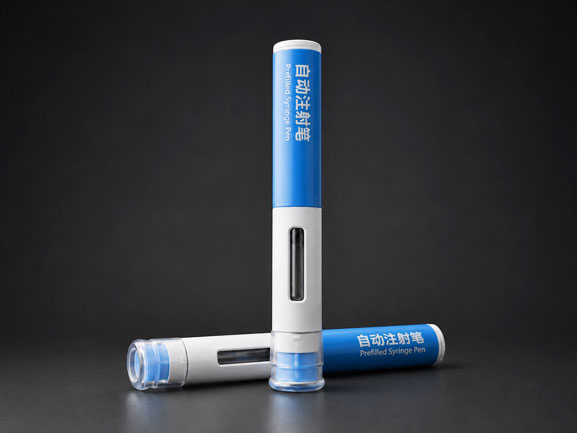
As biologics, peptides and long-acting injectable therapies continue to expand, drug delivery devices are facing a practical engineering challenge: many modern formulations are more viscous than traditional small-molecule injections. For pharmaceutical companies developing self-injection products, viscosity is no longer only a formulation issue. It directly affects injection force, injection time, patient comfort and device reliability.
In spring-driven autoinjectors and automatic injection pens, the spring system is one of the key components that determines how smoothly the drug is delivered. When the formulation has higher viscosity, the device needs enough driving force to push the drug through the needle and complete dose delivery within the expected time. At the same time, excessive force or poorly matched injection speed may affect user experience, primary container stress and overall device performance.
High-viscosity formulations create new delivery requirements
High-viscosity drugs are often associated with biologics, peptide therapies and high-concentration formulations. In many development projects, companies must balance several factors at the same time:
Drug viscosity
Injection volume
Needle gauge and needle wall design
Prefilled syringe or cartridge dimensions
Required injection time
Patient comfort and usability
Spring force and plunger movement consistency
A formulation with higher viscosity usually needs greater force or a longer injection time. If the device is not properly matched to the drug characteristics, users may experience slow delivery, incomplete injection, high activation resistance or inconsistent injection performance.
The role of adjustable spring design
For automatic injection pens, spring design is not simply about “stronger force”. The more important engineering question is how to match the spring force profile with the drug, container and intended user operation.
Xinfuda supports automatic pen projects where the spring system can be adjusted according to project requirements. By tuning spring force and injection time, the device can be better matched to the viscosity, dose volume and container system used by the customer.
This type of adjustment may help pharmaceutical and medical device teams evaluate:
Whether the device can complete delivery within the target injection time
Whether the injection process remains smooth and consistent
Whether the force level is suitable for the intended patient group
Whether the spring-driven movement works reliably with the selected container
Whether further optimization is needed before clinical or commercial evaluation
Injection time is part of user experience
For self-injection devices, injection time is not only a mechanical parameter. It affects how patients feel and operate the device.
If injection time is too long, patients may lift the device too early or feel uncertain about whether the dose has been fully delivered. If injection force is too aggressive, the device may feel uncomfortable or create unnecessary stress on the container system. A suitable automatic pen should therefore balance force, time and usability.
This is especially important for therapies intended for home use, where patients may not have professional medical support during each injection.
Xinfuda's project evaluation approach
Xinfuda does not treat automatic injection pens as one-size-fits-all products. For projects involving higher-viscosity formulations, our team discusses the drug-device requirements before recommending a device configuration.
Key discussion points include:
Evaluation Item Why It Matters
Drug viscosity Affects required driving force and injection time
Injection volume Influences delivery duration and device structure
Container format Prefilled syringe or cartridge dimensions must match the device
Needle selection Needle gauge and inner diameter affect flow resistance
Spring force Determines plunger movement and delivery performance
Target injection time Helps define the user experience and device configuration
Patient group Impacts activation design, holding time and usability expectations
Through this project-based evaluation, Xinfuda can support customers in selecting or customizing automatic injection pen solutions for biologics, peptides and other injectable therapies.
From device selection to combination product discussion
As injectable therapies become more complex, pharmaceutical companies need more than a standard device catalog. They need early technical communication around formulation, container compatibility, injection force, injection time and user operation.
For high-viscosity drug delivery projects, spring adjustment provides an important engineering pathway. It allows the automatic pen to be better aligned with real formulation needs instead of forcing the drug to fit a fixed device design.
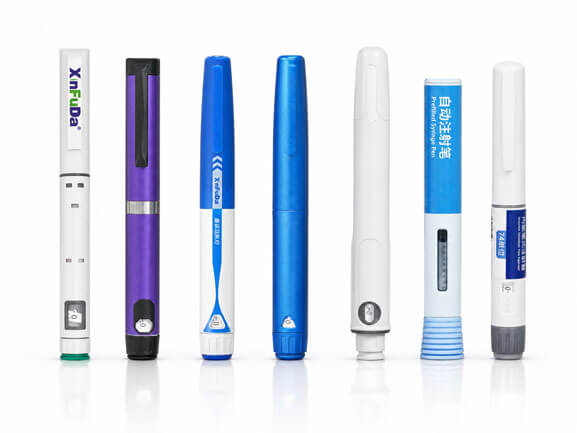
injecion pen types
Xinfuda provides automatic injection pen and injection pen customization support for pharmaceutical and medical device projects, helping customers evaluate device structure, spring-driven delivery performance, container matching and OEM requirements.
For projects involving biologics, peptides, GLP-1 therapies or other injectable formulations, early discussion of viscosity, injection time and spring force can reduce development risk and support a more reliable self-injection experience.


Copyright © Shijiazhuang Xinfuda Medical Packaging Co., Ltd. All Rights
MAKE AN ENQUIRY