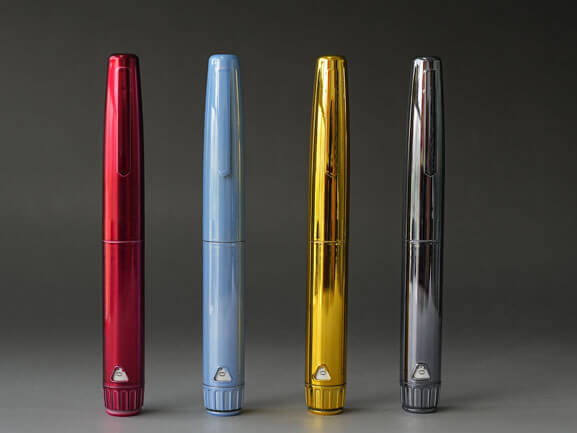
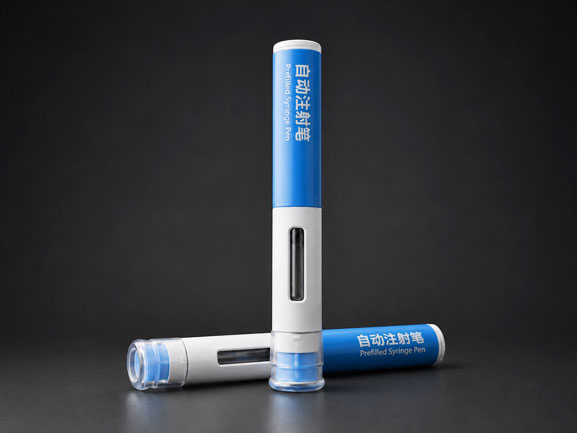
Both devices can use a reusable pen body and replaceable medicine cartridges, but they solve different formulation and preparation problems. The main distinction is not the appearance of the pen. It is what happens inside the cartridge before injection.
A conventional reusable injection pen is generally evaluated for a drug that is already in a ready-to-inject liquid form. A reusable dual-chamber pen is evaluated when two components must remain separated and be combined through a defined reconstitution sequence before the dose is prepared and delivered.
The Primary Container Is Different
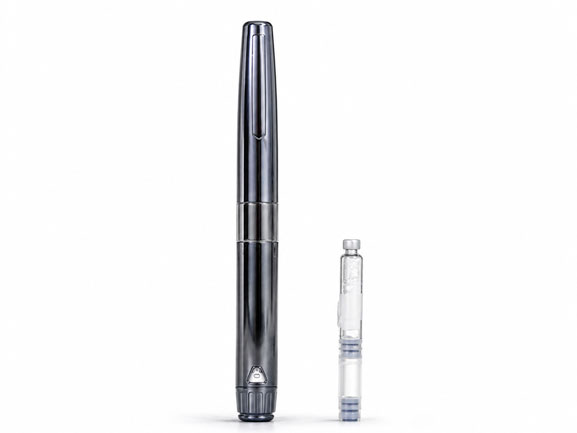
A conventional reusable pen commonly works with a single-chamber cartridge containing the final liquid formulation. The development focus includes cartridge fit, dose setting, needle compatibility, plunger movement and injection performance.
A reusable dual-chamber pen uses a cartridge with two chambers, intermediate stopper functions and a bypass or other project-specific transfer geometry. Development must account for both the container closure system and the mechanism that moves the components into the required mixing position.
The User Workflow Adds Reconstitution
For a conventional reusable pen, the typical workflow centers on loading the cartridge, attaching the needle, priming, selecting the dose and injecting according to the final instructions for use.
For a reusable dual chamber cartridge pen, the workflow may include:
1. loading the compatible dual-chamber cartridge;
2. activating the reconstitution mechanism;
3. allowing the components to combine;
4. inspecting the reconstituted solution;
5. completing any required preparation or priming step; and
6. setting and delivering the dose.
The exact sequence depends on the final cartridge and device design. It should be established through project-specific engineering, formulation and usability work.
The Formulation Decision Comes First
If the drug is sufficiently stable as a ready-to-inject liquid, a conventional reusable pen may offer the more direct project pathway. If the formulation requires a lyophilized component and diluent, or two separately stored liquids, a dual-chamber direction may be relevant.
This does not mean that every lyophilized drug fits a dual-chamber pen. Reconstitution time, foaming, particles, post-mixing viscosity, delivered volume and inspection requirements can affect whether the concept is practical.
Project Inputs Are Not Interchangeable
Both device types require dose and cartridge information, but a reusable dual-chamber project needs additional inputs.
| Evaluation Point | Conventional Reusable Pen | Reusable Dual-Chamber Pen |
|---|---|---|
| Formulation | Ready-to-inject liquid | Two components requiring separation before use |
| Cartridge | Single chamber | Dual chamber with project-matched stopper and bypass configuration |
| Preparation | Load, prime and prepare dose | Load, reconstitute, inspect, prepare dose and inject |
| Key technical inputs | Cartridge dimensions, dose, viscosity and needle | Conventional inputs plus chamber allocation and reconstitution behavior |
| Main usability focus | Cartridge replacement, priming and dose setting | Cartridge replacement plus activation, mixing and inspection |
The correct choice depends on the formulation and product strategy. A conventional reusable pen should not be forced onto a formulation that requires separated storage. A dual-chamber system should not be added to a stable liquid product without a clear technical and commercial reason.
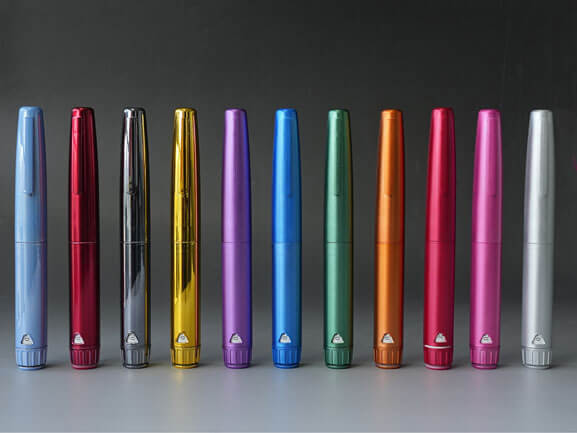
Pharmaceutical teams should define the formulation presentation, dose, treatment frequency, user population and target market before comparing device samples. This creates a more useful discussion than selecting a pen by appearance alone.


Copyright © Shijiazhuang Xinfuda Medical Packaging Co., Ltd. All Rights
MAKE AN ENQUIRY