In the precision-driven world of biopharmaceuticals—particularly regarding highly potent, low-dose peptide drugs—every microgram of the active ingredient is critical, directly impacting both therapeutic efficacy and patient safety. However, a long-underestimated "silent killer"—the adsorption of peptides onto the inner surfaces of primary packaging containers—quietly depletes the effective drug dosage. This leads to fluctuations in clinical efficacy, batch-to-batch inconsistencies, and even safety concerns. Traditional glass vials, due to their inherent surface characteristics, have become a primary source of this problem. Today, Cyclic Olefin Polymer (COP) vials, leveraging revolutionary material science, are emerging as the ultimate solution to eliminate this "invisible loss" of peptides and ensure precise, accurate dosing.
I. How Peptide Adsorption Compromises Drug Quality and Patient Safety
Peptide molecules possess both hydrophilic and hydrophobic regions and often carry an electrical charge; this makes them highly prone to adsorbing onto the inner surfaces of packaging containers through hydrophobic interactions, electrostatic attraction, or hydrogen bonding. This adsorption is not static but a dynamic process that can lead to:
Reduction in effective content: A portion of the active ingredient adheres irreversibly to the vial walls, causing the actual administered dose to fall below the labeled amount. This directly impacts efficacy and poses a critical risk, especially for peptide drugs with narrow therapeutic windows.
Dose inconsistency: The extent of adsorption is influenced by various factors—such as formulation (pH, ionic strength, excipients), concentration, and contact time—leading to unpredictable dose variations between different batches or even between individual vials within the same batch.
Stability interference: Adsorption can alter the local concentration and microenvironment of the peptide, potentially accelerating aggregation, precipitation, or chemical degradation, thereby compromising long-term product stability.
Analytical errors: During quality control testing, adsorption can bias sample representativeness, affecting the accuracy of measurements for key parameters such as content and purity.
II. Why Are Traditional Glass Vials a "Hotspot" for Peptide Adsorption?
Glass surfaces are not absolutely inert. Its primary chemical component, silicon dioxide (SiO₂), forms a negatively charged silanol (-SiOH) surface in aqueous solutions. Many therapeutic peptides carry a positive charge at physiological pH, leading to strong electrostatic adsorption onto the glass surface. Furthermore, the presence of metal ion impurities or microscopic surface roughness on the glass can exacerbate adsorption caused by coordination bonding or physical entrapment.
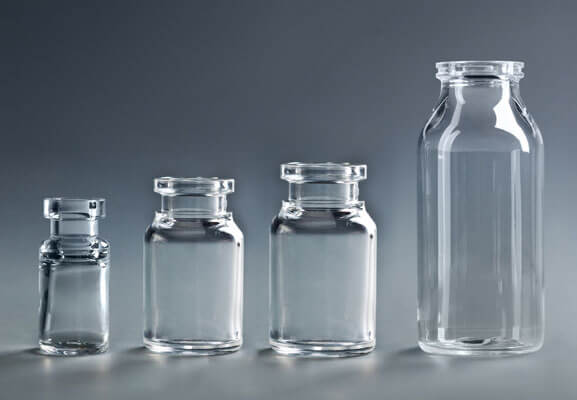
III. Low Adsorption Characteristics of COP Vials
As a high-performance synthetic material, cyclic olefin polymer (COP) possesses a molecular structure and surface properties that fundamentally overcome the drawbacks associated with glass:
Exceptional Inertness and Low Surface Energy: COP is polymerized from high-purity hydrocarbons; its surface is rich in inert carbon-hydrogen bonds and virtually devoid of polar functional groups or ionizable moieties. This results in extremely low surface energy, significantly reducing polar interactions, hydrogen bonding, and electrostatic attraction with peptide molecules.
Ultra-smooth, Non-polar Surface: COP allows for the creation of inner surfaces with atomic-level smoothness and uniform chemical properties via injection molding. This smooth, hydrophobic, and non-polar surface exhibits minimal affinity for hydrophilic and amphiphilic peptide molecules, thereby minimizing adsorption sites from both physical and chemical perspectives.
Superior Chemical Purity: The COP manufacturing process is highly controlled and free from the risk of leaching metal ions (such as sodium, calcium, aluminum, or boron) commonly found in glass, thereby completely eliminating pathways for metal-ion-mediated coordination adsorption of peptides.
IV. Test Data
Extensive comparative research data confirms the superior performance of COP:
Model Peptide Adsorption Experiments: Studies using model proteins/peptides, such as lysozyme and insulin, demonstrate that adsorption on COP surfaces can be reduced by an order of magnitude (over 90%) compared to Type I glass surfaces.
Real-world Formulation Validation: In accelerated and long-term stability studies involving specific therapeutic peptides (e.g., GLP-1 analogs, antimicrobial peptides), samples packaged in COP consistently exhibited higher content recovery rates and lower coefficients of variation (CV%) between batches. Distinct advantages at low concentrations: For ultra-high-potency peptides with concentrations in the µg/mL or even ng/mL range, COP vials virtually eliminate dosage loss due to adsorption, ensuring precision in clinical administration.


Copyright © Shijiazhuang Xinfuda Medical Packaging Co., Ltd. All Rights
MAKE AN ENQUIRY