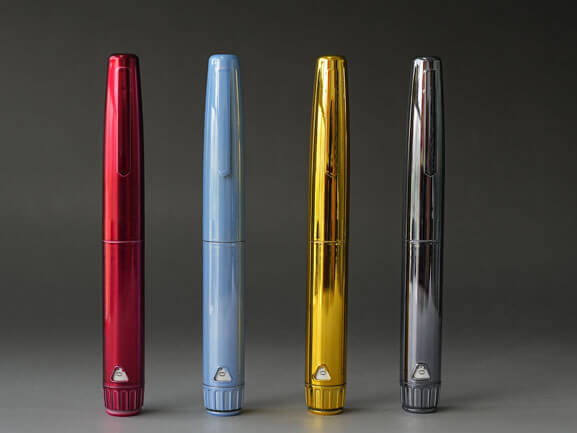
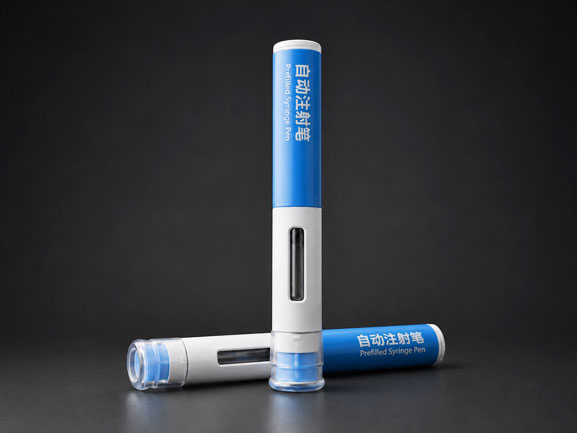
For a peptide brand founder, choosing a metal reusable pen can look like a straightforward premium-positioning decision. In practice, the housing material is only one part of a wider drug-device strategy.
A metal pen makes strategic sense when the reusable format supports the treatment model, the cartridge program is technically feasible and the device contributes something customers can recognize beyond a heavier or shinier housing.
First Decide Whether the Product Needs a Reusable Platform
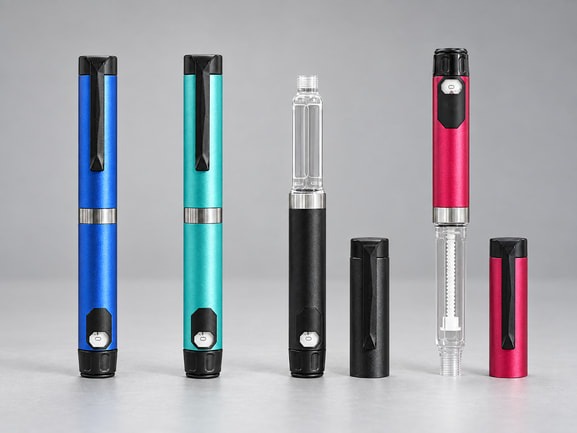
A reusable pen retains the main device while the medicine cartridge is replaced. This model may support repeated treatment and a durable brand touchpoint, but it also requires a cartridge supply model, user training and a defined replacement workflow.
If the product is intended as a single prefilled course, if users cannot obtain replacement cartridges, or if the dose is better served by a fixed-dose disposable device, a metal reusable pen may not be the right starting point.
Four Situations Where a Metal Pen May Add Strategic Value
The peptide therapy is designed for repeated use and a replaceable-cartridge model is practical in the target market.
The brand wants a durable device that remains with the user across multiple cartridge cycles.
The project needs clear physical and visual differentiation from low-cost generic pen presentations.
The company has the technical and commercial resources to evaluate a drug-device platform rather than purchase a finished-looking shell only.
Four Situations Where the Team Should Pause
The cartridge, formulation and dose direction are still undefined.
The business model does not include a reliable replacement-cartridge channel.
The team expects metal housing alone to prove better accuracy, lower force or improved safety.
The project budget covers appearance samples but not compatibility, usability and performance verification.
Founder Decision Scorecard
| Decision Area | Positive Signal | Question That Still Needs an Answer |
| Treatment model | Repeated dosing with replaceable cartridges | How many cartridges and injections will the device support |
| Product positioning | Device experience is part of the premium offer | Which device feature creates real customer value |
| Technical readiness | Cartridge and dose inputs are available | Has compatibility been reviewed with the actual components |
| Target user | User can manage cartridge and needle steps | What training and critical tasks must be evaluated |
| Commercial channel | Replacement cartridges can reach users reliably | Who owns supply, support and complaint handling |
| Customization | Brand has a defined visual system | Which changes are cosmetic and which trigger new verification |
Metal Housing and Metallic-Look Plastic Are Different Decisions
Some brands want a metallic appearance rather than an actual metal housing. A metallic-look plastic pen may provide color and finish differentiation with a lighter plastic platform. An actual metal reusable pen supports a different tactile, structural and cost direction.
The request should state the intended housing material clearly so the supplier does not quote a surface finish when the brand expects a metal body.
What High-End Should Mean in a Device Brief
High-end should be translated into measurable or reviewable requirements rather than adjectives. The brief may define:
Housing material and target weight range
Surface finish and color references
Grip and dose-dial expectations
Dose-display readability
Standard-cap or needle-concealment direction
Expected service life
Packaging and device-protection requirements
Branding areas and artwork approval process
The Strategic Decision Is Cross-Functional
The founder can define the market promise and investment level, but R&D must confirm that the cartridge, dose and workflow are feasible. Quality and regulatory teams should clarify evidence expectations, while commercial teams confirm how replacement cartridges and user support will operate.


Copyright © Shijiazhuang Xinfuda Medical Packaging Co., Ltd. All Rights
MAKE AN ENQUIRY