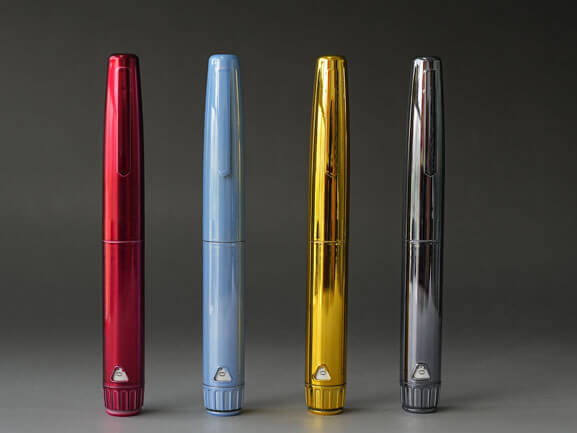
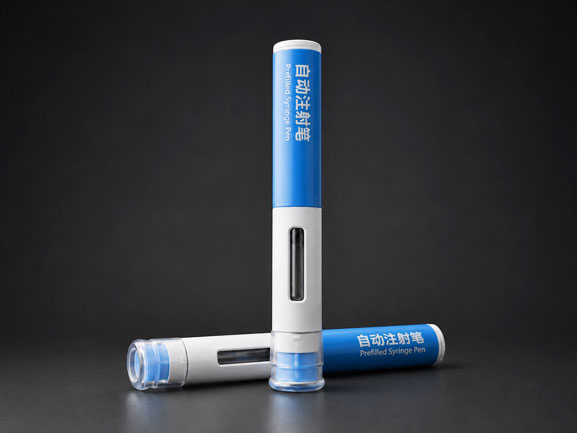
In the fields of biopharmaceuticals and diabetes management, injection pens have become the mainstream choice for patient self-administration. Faced with a dazzling array of injection pen products on the market, understanding their classifications and characteristics is crucial for pharmaceutical companies to select suitable delivery devices.
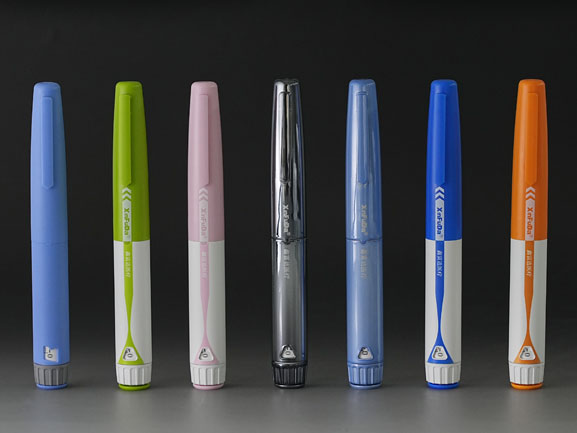
As a manufacturer with 24 years of experience in pharmaceutical packaging, Xinfuda provides a systematic overview of the main types of injection pens and their technical characteristics.
I. Classification by Usage: Reusable vs. Disposable
This is the most basic and important classification dimension for injection pens.
1.1 Reusable Pen Injector
Definition: The pen body can be reused repeatedly; only the internal cartridge (cassette) and needle need to be replaced.
Key Features:
Economical and Environmentally Friendly: Significantly reduces plastic waste. Studies have shown that switching from disposable pens to reusable insulin pens can reduce plastic usage by 84-95%.
Long-term cost advantage: Patients only need to purchase the pen body once, and subsequently only the insulin cartridge.
Suitable for long-term medication patients: such as those with chronic diseases like diabetes and rheumatoid arthritis.
Representative product: Xinfuda 60-unit reusable insulin pen, using a high-precision injection screw, ensuring accuracy across the entire 1-60 unit range, compatible with standard 3mL insulin cartridges.
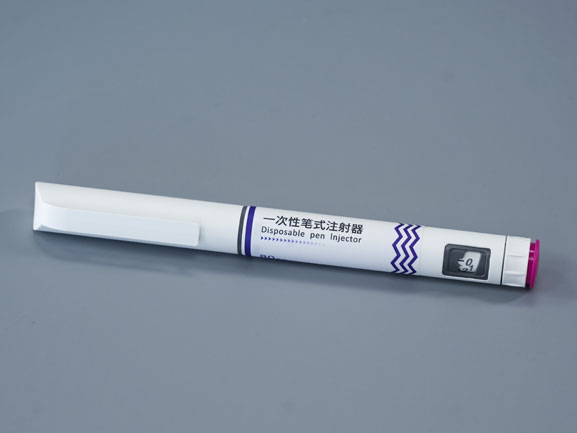
1.2 Disposable Pen Injector
Definition: The medication is pre-filled in the pen; the entire pen is discarded after use.
Key Features:
Easy to Use: No need to replace the cartridge; ready to use immediately.
Sterility Guarantee: Each use uses a brand new pen, eliminating the need for cleaning and sterilization, avoiding cross-contamination.
Suitable for short-term treatment or first-time users: such as GLP-1 weight loss drugs, growth hormones, etc.
Technical Specifications: The dosage range of disposable pen injections is typically 1-60 IU or 1-80 IU, with a pressing pressure <30N, and a smooth injection process.
II. Classification by Driving Method: Mechanical vs. Electronic
With technological advancements, the driving methods of injection pens have become increasingly diverse.
2.1 Mechanical Injection Pen
Working Principle: Injection is completed using a spring or manual force.
Features:
Simple structure, high reliability
Lower cost
Relies on mechanical feedback (clicking sound, tactile feedback)
Injection speed is determined by the spring and is not adjustable
Suitable Scenarios: Routine drug administration needs such as insulin and growth hormone.
2.2 Electronic Injection Pen
Working Principle: Driven by a motor, with built-in sensors and a control system.
Features:
Intelligent Feedback: On-screen operation guidance and light indicators show injection status.
Error Handling: Detects user errors and prompts for correction.
Adjustable Injection Speed: Users can choose the speed according to their comfort level.
Dose Memory: Automatically records injection history and can be synchronized with a mobile app.
Built-in Hold Time: Ensures complete injection of medication, reducing the risk of leakage.
Suitable Scenarios: Patients requiring precise dose recording and intelligent medication management, and data collection for real-world studies.
III. Classification by Dosage Adjustment Method
3.1 Fixed-dose Pen
Features: Fixed dose per injection, not adjustable. Suitable for standard dosage treatment regimens.
3.2 Variable-dose Pen
Features: Users can adjust the dose per injection as needed; typically features a dose knob and digital display window.
Xinfuda Product: Supports continuous adjustment from 1-60 units, bidirectional adjustment (overdose preset can be corrected).
IV. Classification by Applicable Drug
5.1 Insulin Pens
Specifically designed for insulin administration, compatible with U-100 insulin cartridges. Can be categorized as:
Disposable pre-filled insulin pens
Replaceable cartridge insulin pens
5.2 Other Drug Pens
Besides insulin, these pens can also be used for:
GLP-1 receptor agonists: semaglutide, telpoxetine, etc.
Human growth hormone
Follicle-stimulating hormone
Parthyroid hormone
Monoclovir/antibody drugs
Interferon
Peptide preparations
Choosing the Right Injection Pen to Enhance Drug Commercial Value
Injection pens are not just drug delivery tools, but also "brand ambassadors" that patients encounter daily, directly impacting treatment adherence and drug market performance.
For biopharmaceutical companies, understanding the characteristics of different types of injection pens and selecting the most suitable delivery device based on their drug dosage requirements, target patient groups, and usage scenarios is a strategic move to enhance product competitiveness.
Xinfuda provides a one-stop injection pen solution, from standardized products to deeply customized solutions, helping your innovative drugs reach patients worldwide in the best possible way.


Copyright © Shijiazhuang Xinfuda Medical Packaging Co., Ltd. All Rights
MAKE AN ENQUIRY