The commercial success of stem cell therapy depends not only on breakthroughs in laboratory technology but also on the seamless and foolproof execution of the entire cold chain, from production and storage to transportation. In this demanding chain, the primary packaging container (packaging material) is the last physical barrier directly protecting cell viability. It must withstand the drastic temperature changes and physical shocks during long-distance cold chain transportation, from -196°C liquid nitrogen freezing to room temperature thawing. The limitations of traditional packaging in terms of mechanical strength and temperature adaptability have become potential risks restricting the large-scale production and safety of stem cell formulations. This article will delve into the extreme challenges posed to packaging materials by the entire cold chain and reveal how cyclic olefin polymer (COP) vials, with their superior mechanical properties and wide temperature adaptability, become ideal "end-to-end protectors" for stem cell formulations.
I. The Stringent Challenges of a "Cold Chain Throughout the Process": Extreme Testing of Packaging Materials
The "cold chain throughout the process" for stem cell preparations is a dynamic process spanning extreme temperature zones, posing a multi-dimensional and comprehensive challenge to packaging materials:
The "brittleness" challenge of deep cryogenic storage: Long-term storage in liquid nitrogen at -196°C or in the gas phase at -150°C can cause materials to lose their toughness due to low-temperature embrittlement. Traditional glass bottles or certain plastic containers are at risk of breakage, which could lead to irreversible loss of precious cell samples due to liquid nitrogen contamination or complete destruction.
The "fatigue" challenge of freeze-thaw cycles: Removing from deep cryogenic storage, transferring to a programmed cooling system, and then storing again, or undergoing repeated freeze-thaw studies, packaging containers are subjected to cyclical thermal expansion and contraction stresses. If the material's coefficient of thermal expansion is mismatched or its fatigue resistance is poor, it can easily lead to seal failure or microcracks, compromising the container's seal integrity (CCI).
The risks of vibration and stacking in cold chain transportation: During air or land transport, packaging containers must withstand continuous vibration, bumps, and stacking pressure within cold chain containers. Containers with insufficient mechanical strength may deform, crack, or have loose caps, directly threatening the sterility and physical integrity of the product.
The requirements of thermal shock and uniformity for rapid thawing: During thawing, vials must be immersed directly from -196°C to a 37°C water bath, withstanding instantaneous temperature differences exceeding 230°C. Materials must be able to resist thermal shock while possessing excellent thermal conductivity to ensure rapid and uniform thawing of the contents, avoiding localized overheating that could damage cells.
II. COP Vials: A Material Solution for a Complete Cold Chain
The design of COP vials directly addresses each of the above challenges from a materials science and engineering perspective:
1. Superior Mechanical Strength
Ultra-high Tensile and Impact Strength: COP material boasts a tensile strength exceeding 45 MPa, more than three times that of traditional Class I borosilicate glass, while also possessing high toughness. This makes COP vials less prone to breakage under external impact or internal pressure from the expansion of the cryopreservation fluid, resulting in only deformation and providing greater safety margin for cells.
Excellent Stacking Resistance: Its high strength allows for safe stacking during cold chain transportation, with a compressive strength exceeding 50 MPa, far surpassing ordinary frozen bags (3-5 N/mm²), effectively preventing damage and cell loss due to compression during transport.
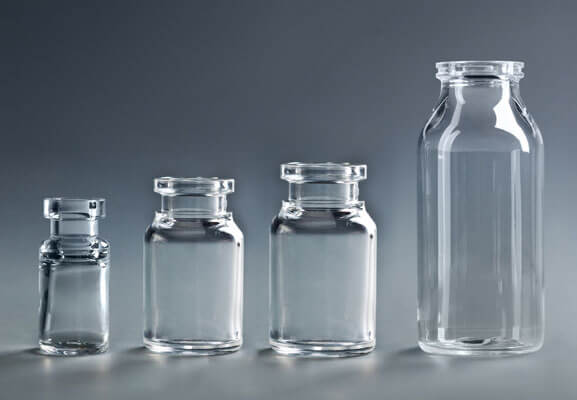
Stable Dimensions and Rigidity: COP vials feature fixed, uniform dimensions and excellent rigidity. This not only facilitates the gripping and conveying of containers in automated filling lines, but also ensures a tight and stable arrangement within cold chain storage racks, maximizing storage space utilization and avoiding difficulties in handling or label wear caused by container deformation.
2. Wide Temperature Adaptability
Extreme Temperature Tolerance Range: COP material can withstand extreme temperature ranges from -196°C (liquid nitrogen) to 121°C (autoclave), covering all temperature scenarios that stem cell formulations may experience.
Low Coefficient of Thermal Expansion and Optimized Sealing System: The coefficient of thermal expansion of COP (60-70×10⁻⁶/°C) provides an optimized match with commonly used brominated butyl rubber stoppers (190-220×10⁻⁶/°C). Under drastic temperature changes, the expansion and contraction of the bottle and the stopper are more synchronized, greatly reducing the risk of seal failure due to asynchronous deformation and ensuring reliable container seal integrity even after hundreds of freeze-thaw cycles.
Reliable Cryogenic Sealing Integrity: The proven rubber stopper-aluminum cap combination sealing system maintains excellent elasticity and sealing force even at -196°C. Helium mass spectrometry leak detection shows an extremely low leakage rate (≤1×10⁻⁶ mbar·L/s), effectively preventing liquid nitrogen ingress and sample cross-contamination, providing a solid guarantee for long-term storage.
3. Optimized Thermal Performance
Uniform Heat Conduction: The COP material has a moderate thermal conductivity (approximately 0.16 W/(m·K)). Combined with its regular, rigid bottle wall design, it ensures uniform heat transfer during programmed cooling and water bath thawing, avoiding excessive local temperature differences that could lead to destructive ice crystal formation or cell thermal damage. Data shows that COP vials achieve more uniform thawing during thawing, with excellent temperature gradient control.
III. From Risk Mitigation to Process Empowerment
Choosing COP vials as packaging for stem cell formulations offers value beyond mere container functionality:
Maximizing Product Safety and Yield: Through exceptional mechanical strength and sealing reliability, the risk of entire batches being scrapped due to packaging damage or leakage is significantly reduced, protecting every unit of high-value cell formulation.
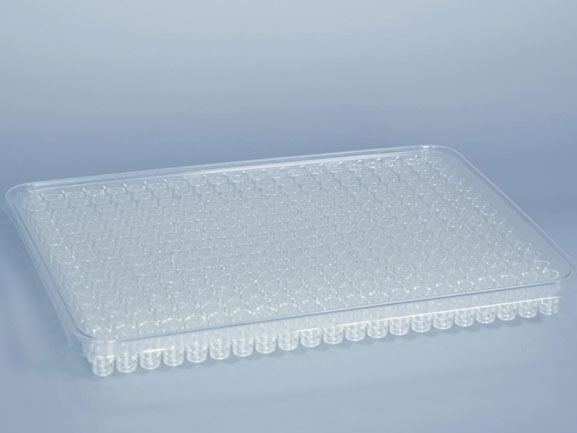
Enabling High-Density Storage and Automated Production: Their regular shape and strength support modular, high-density storage in gas-phase liquid nitrogen tanks, improving storage efficiency. Simultaneously, their superior rigidity makes them perfectly suited for high-speed automated filling lines, enabling full automation from filling and capping to sealing, improving production efficiency and batch-to-batch consistency.
Simplifying Process Validation and Compliance Reporting: Ready-to-use (RTU) pre-sterilized COP vials eliminate the need for end-user cleaning and sterilization validation. The complete extractable/leaching (E&L) studies, biosafety, and seal integrity validation data package provided by the supplier significantly simplifies pharmaceutical research and accelerates regulatory approval processes.
Enhancing Economic Efficiency Throughout the Lifecycle: While the cost per vial requires comprehensive evaluation, the overall cost optimization resulting from reduced cell loss, lower scrap rates, improved storage and filling efficiency, and simplified validation processes often demonstrates greater economic viability throughout the entire lifecycle.
The "end-to-end cold chain" for stem cell formulations is a journey fraught with variables and risks. As the closest physical environment to cells, the performance of the packaging container directly determines the success or failure of the journey. COP vials, with their superior mechanical strength to withstand physical shocks and their wide temperature adaptability to handle extreme temperature variations, provide comprehensive protection for stem cell formulations from production line to the patient's bedside. It is not merely a container, but a systematic solution based on deep engineering understanding.
For companies committed to bringing stem cell therapies to market, selecting and validating COP vials early in process development is a strategic decision that transforms a key "risk variable" in the supply chain into a "quality constant." This is not only a technological upgrade but also a solid endorsement of product safety, efficacy, and patient commitment. Let advanced materials science safeguard these precious seeds of life.


Copyright © Shijiazhuang Xinfuda Medical Packaging Co., Ltd. All Rights
MAKE AN ENQUIRY