From ICH Q1A to Q1D: How to Design Moisture-Proof Packaging Tests in Stability Studies
In drug development and registration, stability testing is the core scientific basis for demonstrating that active pharmaceutical ingredients (APIs) and formulations maintain their physical, chemical, biological, and microbiological properties under specified storage conditions. Among these, moisture-proof packaging challenge testing, as a key component of stability studies, directly impacts the accurate prediction of drug shelf life, the rationality of packaging system selection, and the final product's clinical safety and efficacy, depending on the scientific design and rigorous execution of the test. This article will systematically explain how to scientifically design and implement moisture-proof packaging challenge testing based on the ICH Q1 series of guidelines and in accordance with Chinese regulations such as the "Technical Guidelines for Stability Studies of Chemical Drugs."
I. Regulatory and Scientific Basis: Understanding the Fundamental Purpose of Testing
Moisture-proof packaging challenge testing is not isolated; it is rooted in the complete system of drug stability research. Core regulatory bases include:
ICH Q1A (R2): Stability Testing of New Active Pharmaceutical Ingredients and Formulations
Fundamental Purpose: To establish the retesting period for APIs, the shelf life of formulations, and recommended storage conditions.
Key Insights: Moisture-resistant packaging testing is a core method for assessing whether a packaging system can provide sufficient protection for pharmaceuticals throughout their shelf life under specified temperature and humidity conditions. Test conditions must simulate and challenge the most severe humidity environments a pharmaceutical product may encounter during its lifecycle (including transportation and storage).
ICH Q1B: "Photostability Testing"
Methodological Reference: While focusing on light exposure, its "influence factor testing" design philosophy—that is, exploring the intrinsic stability and degradation pathways of a product by intensifying a single environmental factor—is equally applicable to high humidity challenges. Moisture-resistant testing is essentially a systematic study of the influencing factor of "humidity."
ICH Q1D: "Bracket and Matrix Methods for Stability Testing"
Efficiency Optimization Tools: Under scientifically sound conditions, the bracket method (testing only extreme configurations, such as the largest and smallest sizes) or the matrix method (reducing the number of test samples at specific time points) can be used to reduce testing workload. This provides an optimized design approach for moisture-resistant studies involving multiple packaging sizes or configurations, but it must be based on sufficient prior scientific justification to demonstrate its rationale.
The core logic of scientific design lies in revealing the performance boundaries of packaging systems through controlled, accelerated, or extreme humidity challenges, thereby providing a reliable extrapolation basis for the protective capabilities of packaging under everyday storage conditions.
II. Core Elements and Scientific Decision-Making Path of Test Design A rigorous moisture-proof packaging challenge test should follow this systematic path:
Step 1: Risk Assessment and Test Strategy Formulation
API and Formulation Characteristic Analysis: Based on the hygroscopicity data of the active pharmaceutical ingredient (refer to General Chapter 9103 of the Chinese Pharmacopoeia), known degradation pathways (especially hydrolysis), and the formulation (e.g., whether it contains hygroscopic excipients), assess the product's inherent sensitivity to humidity.
Target Market Climate Zone Definition: According to ICH-defined climate-based stability testing conditions (e.g., long-term conditions of 25℃/60%RH or 30℃/65%RH), determine the climate zone (I-IV) of the region where the drug is intended to be marketed. This will directly affect the setting of long-term testing conditions.
Preliminary Packaging System Selection: Based on the above assessment, preliminary selection of packaging materials with corresponding water vapor barrier properties (such as HDPE bottles of specific thickness, combination caps with desiccant, aluminum-plastic composite blister packs, etc.) is made.
Step Two: Scientific Setting of Multi-Level Testing Conditions Moisture-proof testing should be a hierarchical system encompassing different levels of severity:
Long-term testing conditions: (e.g., 25℃±2℃/60%RH±5%RH) are the fundamental basis for determining shelf life. Under these conditions, a comparative study is conducted by simultaneously placing naked products (unpackaged), products to be marketed in packaged form, and products with only inner packaging, to visually evaluate the protective effect of the packaging.
Accelerated testing conditions: (40℃±2℃/75%RH±5%RH) are used to assess the impact on product quality when short-term deviations from label storage conditions (e.g., transportation, short-term storage in uncontrolled environments) occur, and to predict long-term stability trends.
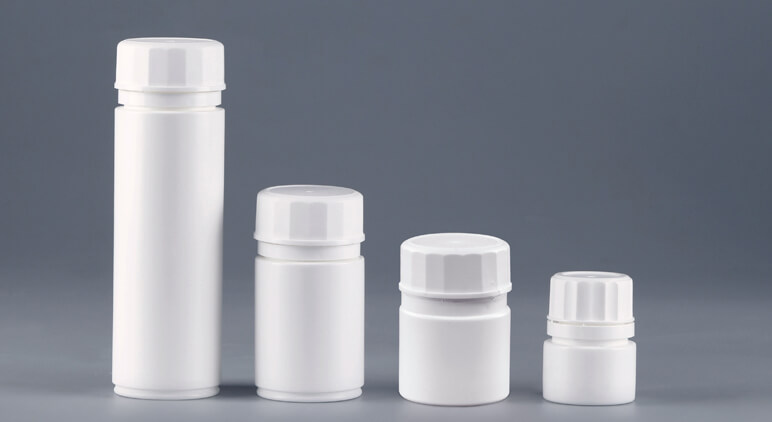
desiccant bottle with silica gel
Forced/Influencing Factor Testing Conditions (High Humidity Section): This is the core of the challenge testing. It typically includes:
High Temperature and High Humidity Challenge: such as 75℃/high humidity (short-term, used to explore degradation pathways).
Extreme Humidity Challenge: For products intended for sale in extremely humid regions (such as the tropics) or highly sensitive products, testing can be conducted at 25°C or 30°C under conditions of 75%RH or even 80%RH for 1-3 months to assess the packaging's protective limits in extreme environments.
Step 3: Monitoring of Key Performance Indicators and Packaging Evaluation
Critical Quality Attributes (CQAs) Monitoring: In addition to routine content, related substances, and dissolution rates, moisture content is one of the most critical monitoring indicators in moisture-proof testing. Furthermore, physical properties (such as hardness, friability, and appearance), microbial limits, etc., should also be included in the monitoring based on product characteristics.
Packaging System Performance Evaluation:
Water Vapor Transmission Rate Testing: For the packaging material itself, its initial water vapor transmission rate must be determined according to YBB standards (such as YBB 00092003). For systems with desiccants, the desiccant adsorption kinetics and saturated adsorption capacity must be determined.
Simulated Barrier Performance After Transportation: A crumpling tester is used to simulate the folding and friction that packaging may experience during filling and transportation. The change in water vapor transmission rate before and after crumpling is then tested to evaluate its performance retention in actual use.
Packaging Integrity Testing: The sealing integrity of the packaging (especially the cap sealing system and blister heat-sealed edges) is verified before and after testing using methods such as dyeing, high-voltage discharge, or vacuum decay.
III. Key Considerations and Countermeasures in Practice
How to handle "significant changes" in accelerated testing?
Countermeasure: Immediately initiate intermediate condition testing (e.g., 30℃±2℃/65%RH±5%RH). A 12-month study is required, providing data for at least 0, 6, 9, and 12 months to more accurately assess the product's behavior under storage conditions slightly above the label and to support shelf-life setting.
How to set a reasonable shelf life for semi-permeable containers (e.g., plastic bottles, bags)?
Countermeasure: In addition to high humidity challenges, the risk of water loss under low humidity conditions must also be assessed. Supplementary tests can be conducted under low relative humidity conditions (e.g., 15% RH) to demonstrate suitability in dry environments, and this should be clearly stated on the label.
How to apply the bracketing and matrix methods to optimize moisture-proof packaging testing?
Example: If a product has three strengths (50mg, 100mg, 200mg), using bottles of the same material and design (only different sizes), the bracketing method can be used to test only the two strengths with the largest fill volume (potentially the smallest internal surface area/volume ratio) and the smallest fill volume (potentially the largest internal surface area/volume ratio, potentially most significantly affected by humidity) under full conditions. However, it must be demonstrated beforehand that the stability of the intermediate strength can be extrapolated from the data of the two extreme strengths.
IV. Conclusion: From Compliance to Excellence The value of scientifically designing challenging moisture-proof packaging tests far exceeds simply meeting regulatory compliance requirements. It is a systematic engineering project integrating materials science, analytical chemistry, statistics, and risk management. Through forward-looking design, rigorous execution, and in-depth data analysis, companies can:
Accurately predict shelf life and optimize product launch strategies.
Scientifically selecting the most suitable packaging ensures optimal cost-effectiveness while guaranteeing product safety and efficacy.
A deep understanding of the interaction between product and packaging accumulates crucial knowledge for subsequent product development and lifecycle management.
With the increasing adoption of the design-driven philosophy of pharmaceutical quality and the application of novel high-barrier materials and smart packaging technologies, challenging tests for moisture-proof packaging will continue to evolve towards greater precision, efficiency, and predictability, becoming an indispensable technological pillar for ensuring the quality of pharmaceuticals throughout their entire lifecycle.


Copyright © Shijiazhuang Xinfuda Medical Packaging Co., Ltd. All Rights
MAKE AN ENQUIRY