COP Vials for Cell and Gene Therapy: What Packaging Teams Should Evaluate
For a cell or gene therapy program, selecting a vial rarely begins with the container material alone. Packaging teams usually start with a chain of project conditions: what will be filled, how much product the vial must hold, how it will be closed, the required storage temperature, the expected transport route and the way the container will be handled during filling and administration.
A vial that performs well at room temperature may need a different evaluation after frozen storage, repeated temperature changes or transport stress. For this reason, a COP vial should be reviewed as part of a complete container closure system rather than as an isolated component.
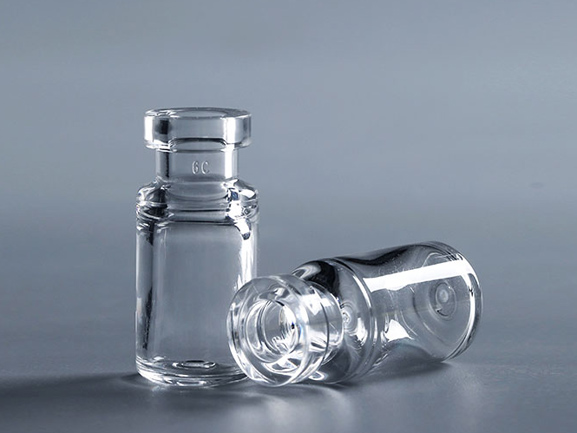
RTU(ready to use) 2ml COP vial
Why COP(Cyclic Olefin Polymer) Vials Are Considered for Advanced Therapy Programs
Cell and gene therapy materials can be valuable, sensitive and difficult to replace. Development teams may therefore evaluate COP polymer vials when breakage risk, visual inspection, surface interaction or low-temperature handling are important to the project.
Common reasons for including COP in a packaging feasibility study include:
- Lower breakage concern than conventional glass during handling and transport.
- High transparency for visual inspection of the filled container.
- An alternative material surface for formulations where adsorption or container interaction requires investigation.
- Potential use in refrigerated, frozen or cryogenic workflows, subject to project-specific testing.
- Availability in formats that can be discussed with stoppers, seals, trays, nests and ready-to-use processing requirements.
These characteristics make COP a material worth evaluating, but they do not prove suitability for a particular therapy. The final decision still depends on the drug product, the closure system, the filling process and the full storage lifecycle.
Start with the Storage Profile
The first practical question is not simply whether the project requires a “cryogenic vial.” The packaging team needs to define the actual conditions the filled system will experience.
Useful project information includes:
- Target storage temperature and acceptable temperature range.
- Expected storage duration.
- Number of freeze-thaw or temperature-transition cycles.
- Shipping temperature and transport configuration.
- Whether the vial will be stored upright, inverted or in another orientation.
- How the container will be thawed and handled before administration.
COP vials intended for low-temperature projects should be evaluated with the selected stopper and seal under the intended conditions. Material selection alone cannot confirm low-temperature performance.
Evaluate the Vial, Stopper and Seal as One System
Container closure integrity is not a property of the vial by itself. It depends on the dimensional relationship between the vial finish, elastomeric stopper and seal, as well as the assembly process and lifecycle conditions.
During an early evaluation, packaging teams should consider:
- Stopper dimensions and elastomer formulation.
- Stopper coating or surface treatment, where applicable.
- Seal and crimp configuration.
- Stoppering and crimping parameters.
- Dimensional tolerances across the selected components.
- Integrity after storage, transport and temperature cycling.
- The test method and acceptance criteria appropriate to the product lifecycle.
An existing stopper used with a glass vial should not be assumed to work with a polymer vial without confirmation. The full combination needs to be reviewed and tested.

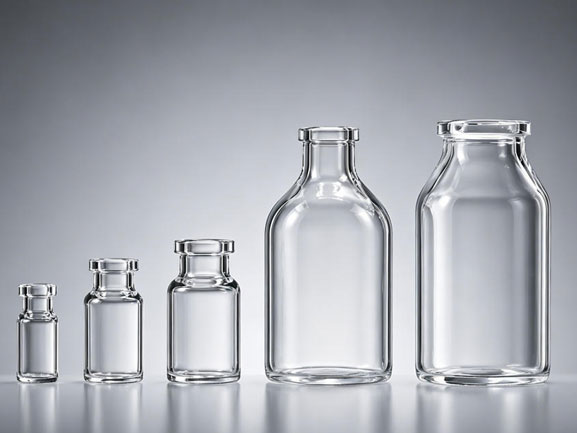
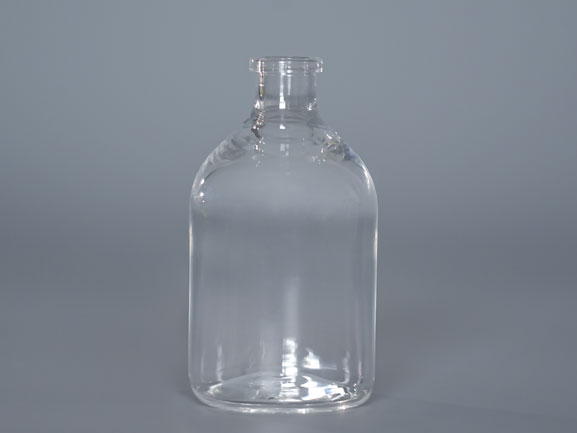
Polymer Vial 2ml 5ml 10ml for cell and gene therapies
Surface Interaction and Product Compatibility
Low adsorption is often discussed when polymer containers are considered for biologics and advanced therapies. In practice, adsorption and compatibility are formulation-specific. Protein concentration, excipients, pH, contact time, temperature and the surface area-to-volume ratio can all influence the result.
The evaluation may need to address:
- Loss of active material through surface adsorption.
- Visible and subvisible particles.
- Extractables and leachables from the complete packaging system.
- Permeation or barrier requirements relevant to the formulation.
- Product quality after the intended storage period.
- Compatibility with the selected stopper and other product-contact components.
COP should therefore be treated as an evaluation direction rather than a universal solution. Stability and compatibility studies remain necessary for the final filled product.
Where Ready-to-Use Formats May Fit
For some development programs, a ready-to-use format can reduce the number of container-preparation steps performed before filling. This can be relevant when teams want to evaluate a sterile configuration, nest or tray handling, or a filling workflow that does not begin with in-house vial washing.
However, “ready to use” should not be treated as a complete process description. The project still needs to confirm:
- Sterilization route and supporting information.
- Packaging configuration and sterile barrier.
- Particle and bioburden expectations.
- Nest or tray dimensions.
- Compatibility with the intended filling equipment.
- Stoppering, crimping and inspection workflow.
Teams working with small-volume formats can review the [RTU 2 mL COP vial], while projects focused on automated handling can review [RTU sterile COP vials in nest or tray].
COP or Glass: Avoid a Material-Only Decision
Glass remains an established primary packaging material for many injectable products. COP may offer advantages for particular handling, interaction or storage concerns, but the better choice depends on the project.
Instead of asking which material is universally better, packaging teams should compare both directions against the same requirements:
- Drug-container compatibility.
- Breakage and handling risk.
- Container closure integrity.
- Particle profile.
- Extractables and leachables strategy.
- Oxygen and moisture barrier requirements.
- Storage and transportation conditions.
- Fill-finish equipment compatibility.
- Supply continuity and scale-up needs.


Copyright © Shijiazhuang Xinfuda Medical Packaging Co., Ltd. All Rights
MAKE AN ENQUIRY