How RTU vials have become an inevitable choice in modern pharmaceuticals, especially in the field of high-end biologics.
I. Core Definition: A Paradigm Shift from "Raw Material" to "Component"
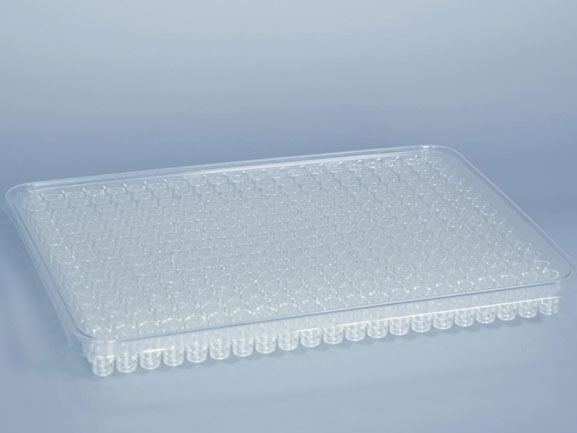
RTU vials are essentially a "ready-to-use" terminal aseptic packaging system. They are not simply empty bottles, but complete components manufactured in a cGMP-compliant clean environment, rigorously cleaned, and terminally sterilized (e.g., by gamma irradiation or electron beam irradiation) and sealed. Upon receipt, pharmaceutical companies do not need to perform any further cleaning, sterilization, or pyrogen removal within the factory; they can directly fill and cap drugs in a Class A clean environment.
This model shifts the responsibility for packaging quality and aseptic assurance from within the pharmaceutical plant to professional packaging material manufacturers, achieving a fundamental shift from "packaging raw materials" to "aseptic process components."
II. Traditional Pain Points: Underestimated "Hidden" Costs and Risks
To understand the revolutionary nature of RTUs, it's essential to first understand the heavy burden of traditional vial usage processes:
A lengthy pre-processing chain: unpacking, cleaning (multiple rinses with water for injection), siliconization (if required), dry heat sterilization (above 250°C), cooling, and transfer. The entire process can take several hours, significantly encroaching on core filling production time.
High fixed asset and operational costs: Companies must invest in expensive equipment such as cleaning machines, sterilizers, and WFI systems, and bear the ongoing costs of operation, maintenance, validation, and energy consumption.
Non-negligible quality and contamination risks: Complex in-plant processing increases the risk of cross-contamination and endotoxin contamination due to human intervention and equipment malfunctions. Each step requires rigorous process validation and continuous monitoring, placing a heavy burden on quality management.
Poor flexibility and difficulty in responding to rapid production demands: For personalized therapies requiring rapid turnaround, such as cell therapy, lengthy packaging preparation time can directly impact timely product delivery and efficacy.
III. Revolutionary Advantages: The Multidimensional Value Enhancement Brought by RTU Vials
RTU vials bring comprehensive improvements to enterprises by "eliminating all non-value-adding steps":
Ultimate Efficiency, Shortened Production Cycles: Directly eliminating pre-treatment steps such as cleaning and sterilization can reduce preparation time before filling lines by 30%-50% or even more, significantly accelerating time to market, especially suitable for rapidly iterating clinical sample preparation.
Significantly Reduced Total Cost of Ownership (TCO): Although the purchase cost per vial may be high, the total cost over its entire lifecycle is often more advantageous due to savings in equipment investment, reduced water, electricity, and steam consumption, reduced validation costs, optimized staffing, and a significant reduction in the risk of batch scrapping due to contamination.
Improved Sterility Assurance (SAL): RTU vials are sterilized by irradiation in specialized factories, achieving a sterility assurance level of 10^-6, or a contamination probability of one in a million. This is a high standard that is difficult to consistently achieve with general in-plant cleaning and sterilization. Simultaneously, the modular nest/pallet packaging reduces the risk of contact contamination during operation.
Enhanced Production Flexibility and Supply Chain Resilience: The ready-to-use nature allows companies to more flexibly plan production and respond quickly to market demands. Simultaneously, reliance on specialized, large-scale supplier production enhances the company's ability to manage supply chain risks.
IV. Material Evolution: Why is COP vial the "Golden Partner" for RTUs?
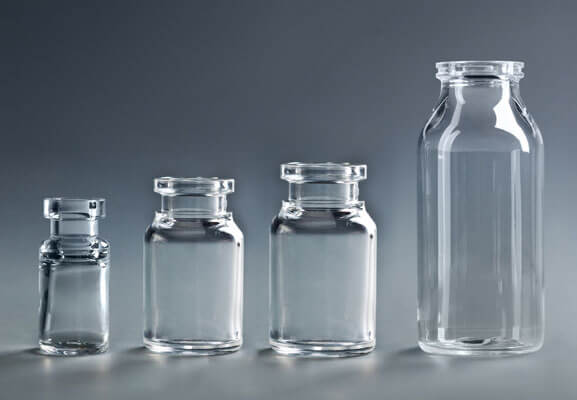
When the convenience of RTUs is combined with the superior material properties of cyclic olefin polymers (COPs), their value is further amplified, especially for high-value drugs that are highly sensitive to packaging:
Extremely Low Protein/Drug Adsorption: The inert surface of COP materials controls protein adsorption rates to extremely low levels (typically ≤0.05 μg/cm²), ensuring dosage accuracy and activity retention of biologics such as monoclonal antibodies, ADCs, and cell therapy drugs, reducing the ineffective loss of precious drugs.
Excellent Cryogenic Resistance and Mechanical Properties: COPs remain stable in an extreme temperature range of -196°C to +121°C. Their high impact strength effectively resists physical stress during liquid nitrogen cryopreservation and transportation, providing reliable protection for therapies requiring deep cryopreservation, such as stem cell and CAR-T therapies. Excellent Container Seal Integrity (CCI): The matching coefficient of thermal expansion between COP and the rubber stopper ensures excellent sealing even during severe freeze-thaw cycles, preventing leakage and contamination. Leakage rates can be as low as ≤1×10⁻⁸ mbar·L/s.
Perfect Compatibility with Irradiation Sterilization: COP material exhibits excellent radiation resistance, maintaining its physicochemical stability even after sterilization dose irradiation, making it an ideal carrier for RTU pre-sterilization processes.
V. Application Scenarios and Market Trends
RTU vials are becoming the preferred packaging solution in the following fields:
Cell and Gene Therapy (CGT): Such as CAR-T, stem cell, and TIL therapies, requiring extremely high production speed, aseptic assurance, and low-temperature stability.
High-End Biologics: Monoclonal antibodies, antibody-drug conjugates (ADCs), vaccines, etc.
Highly Active Pharmaceutical Ingredients (HPAPI) and Radiopharmaceuticals: Requiring minimizing operator exposure and cross-contamination risks.
Market data confirms this trend: the global pre-sterilized ready-to-use vial market was worth approximately $948 million in 2024 and is projected to grow to $2.3 billion by 2031, with a compound annual growth rate (CAGR) exceeding 12%, demonstrating strong growth momentum.
RTU vials are more than just a new type of packaging; they represent a more efficient, safer, and more economical modern pharmaceutical manufacturing philosophy. They liberate pharmaceutical companies from the heavy and high-risk pre-processing of packaging materials, allowing them to focus more on core drug research and development and manufacturing process optimization.
For biopharmaceutical companies, especially innovative drug companies in the rapid clinical trial or commercialization phase, early adoption of RTU COP vials is not only a powerful tool to address current pain points in production efficiency and aseptic assurance, but also a strategic choice to lay the foundation for future large-scale, continuous production and build long-term competitiveness.


Copyright © Shijiazhuang Xinfuda Medical Packaging Co., Ltd. All Rights
MAKE AN ENQUIRY