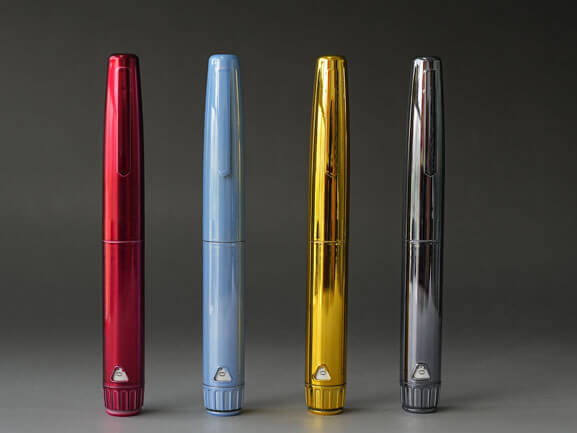
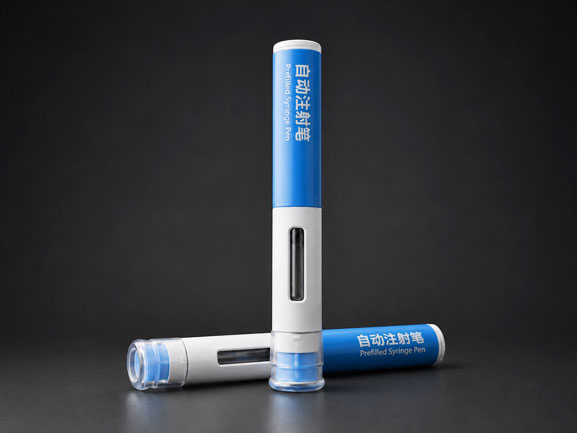
In the life-and-health-critical field of biopharmaceuticals, drug packaging is not merely a container, but also the "first line of defense" for drug stability. For decades, borosilicate glass has been the standard choice due to its excellent chemical inertness and high transparency. However, with the emergence of high-end drugs such as biologics, cell and gene therapies, the inherent defects of glass packaging—"delamination" and "breakage"—are becoming the Achilles' heel of the entire industry. How to solve this problem? New high-performance polymer materials are offering a disruptive solution.
1. Glass Delamination: The Invisible Internal Enemy
Mechanism: Glass is a metastable material. After prolonged contact with pharmaceutical solutions (especially alkaline buffer solutions) or repeated high-temperature sterilization, alkaline ions (such as sodium and potassium) in the glass network leach out, causing localized dissolution and recrystallization of the internal silica framework, forming flaky or granular flakes.
Consequences:
Visible/Subvisible Particles: Contaminate the pharmaceutical solution, potentially triggering thrombosis or immune responses.
1. Clogged Tubing: These particles pose a deadly threat to sophisticated self-injection pens, autoinjectors, and micro-flow infusion devices.
Drug Degradation: The shedding process alters the pH of the drug solution, compromising the stability of pH-sensitive proteins, vaccines, and cell products.
2. Glass Breakage: Unbearable Mechanical and Thermal Stress
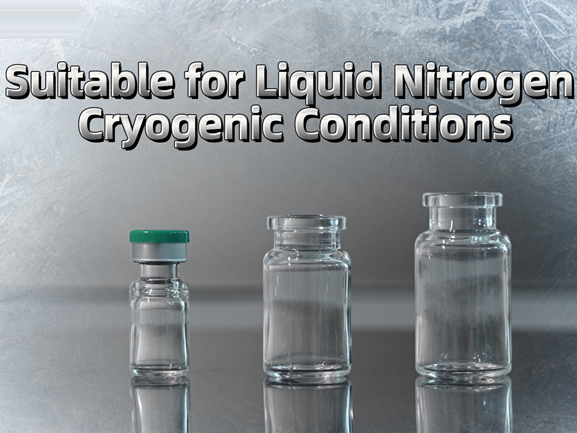
Mechanism: Glass is inherently brittle. Exposed to mechanical shocks on high-speed filling lines and subjected to jolting during transport, especially under low-temperature (-20°C) and ultra-low-temperature (-70°C to -196°C) storage conditions, the stress generated by internal and external temperature differences and ice crystal expansion far exceeds its tolerance limits.
Consequences:
Direct Economic Loss: An entire batch of high-end drugs worth millions of dollars can be destroyed in an instant.
Safety Risks: The generation of glass shards and particles contaminates the operating environment and other drugs in the same container.
Supply Chain Disruption: For personalized, life-saving cell therapy products, the breakage of a single vial can mean the failure of a patient's treatment.
Addressing the critical defects of glass, novel polymers, such as cyclic olefin polymers (COP) and cyclic olefin copolymers (COC), offer comprehensive solutions.
Solution 1: Fundamentally Eliminating Delamination and Ion Leaching
Chemical Inertness: COP/COC are highly purified hydrocarbon polymers, free of any metal ions or polar functional groups. Their interaction with drug solutions is physical, fundamentally eliminating the risks of ion leaching and pH drift, providing an extremely stable chemical environment for biopharmaceuticals.
Solution 2: Superior Toughness, Eliminating the Risk of Breakage
Mechanical Properties: The polymer materials possess excellent toughness and impact resistance. Whether in filling lines, during transportation, or directly handled in liquid nitrogen (-196°C), COP/COC packaging maintains its structural integrity, with a breakage rate approaching zero. This greatly ensures supply chain security and simplifies clinical procedures.
Solution 1: Superior Toughness, Eliminating the Risk of Breakage
Mechanical Properties: The polymer materials exhibit excellent toughness and impact resistance. Whether in filling lines, during transportation, or directly handled in liquid nitrogen (-196°C), COP/COC packaging maintains its structural integrity, with a breakage rate approaching zero. This greatly ensures supply chain security and simplifies clinical operations. Solution 3: Protective Performance Tailored for Advanced Therapies
Extremely Low Protein Adsorption: The extremely smooth and inert surface of COP/COC results in very low protein adsorption. This is crucial for high-concentration, low-dose monoclonal antibodies (mAbs) and protein drugs, ensuring precise dosage.
Excellent Low-Temperature Adaptability: At ultra-low temperatures, glass becomes brittle, while polymers maintain excellent flexibility. This makes COP/COC vials and cryovials the ideal choice for products requiring cryogenic storage, such as cell therapy, gene therapy, and mRNA vaccines.
High Transparency and Barrier Properties: Its transparency is comparable to glass, facilitating visual inspection. Simultaneously, its barrier properties against moisture and oxygen are far superior to other plastics, meeting the long-term storage requirements of most biopharmaceuticals.
"Glass delamination and breakage" are no longer a persistent problem for the biopharmaceutical industry. New polymer materials, especially COP/COC, offer a safer, more reliable, and future-proof packaging solution thanks to their superior chemical stability, mechanical toughness, and biocompatibility. As biopharmaceuticals become more complex and personalized, the shift from glass to high-performance polymers is no longer an option, but an inevitable trend to ensure drug efficacy and patient safety.
But how to choose COP and COC, pls read the next blog.


Copyright © Shijiazhuang Xinfuda Medical Packaging Co., Ltd. All Rights
MAKE AN ENQUIRY