Moisture is among the most pervasive and damaging threats to drug stability worldwide. For hygroscopic and moisture-sensitive drugs—spanning effervescent tablets, biologics, probiotics, and high-potency APIs—maintaining product integrity depends on advanced desiccant packaging solutions. As global regulatory agencies (FDA, EMA, PMDA, NMPA) increasingly treat packaging as a Critical Quality Attribute, desiccant systems have evolved from passive components to active stabilization platforms.
This article analyzes three dominant desiccant packaging systems for solid oral dosage forms—effervescent tubes, desiccant bottles, and desiccant-in-cap systems—from a global regulatory and technological perspective.
1. Effervescent Tubes: Precision Single-Dose Barriers
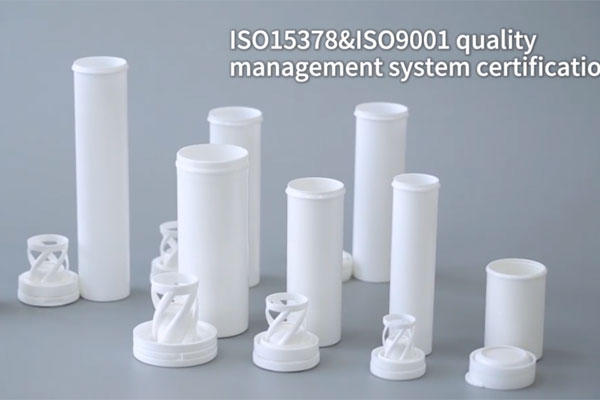
Effervescent tubes are specialized unit-dose packaging designed for moisture-sensitive effervescent tablets, orally disintegrating tablets (ODTs), and other reactive formulations.
Technical Core:
High-barrier laminate structures using cold-form aluminum blisters or aluminum-polymer laminates with ultra-low WVTR (<0.005 g/m²/day).
Inert gas flushing with nitrogen or argon to create an oxygen- and moisture-free microenvironment.
Hermetic sealing ensuring complete environmental isolation until use.
Global Applications:
Europe: Widely used for vitamin C, magnesium, and analgesic effervescent tablets under EMA’s strict quality requirements.
North America: Preferred for ODTs requiring USP-NF compliance and child-resistant features.
Asia: Growing adoption for single-dose traditional medicine granules and instant-drink formulations.
Advantages:
Maximum protection for highly hygroscopic formulations
Enhanced patient compliance through unit-dose convenience
Excellent portability and travel suitability
Regulatory Considerations:
Must comply with ISO 15378 for primary packaging materials
Require extractables studies on laminate layers
Need transport validation under ISTA/ASTM standards for global distribution
2. Desiccant Bottles: Flexible Multi-Dose Solutions
Desiccant bottles represent the traditional approach of placing separate desiccant units (sachets, canisters, or sticks) inside HDPE or PP containers.
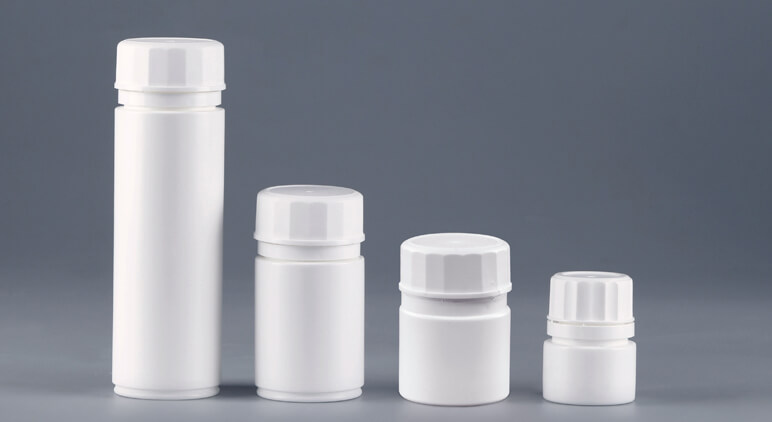
desiccant bottle with silica gel
Technical Core:
Engineered desiccants (silica gel, molecular sieves, clay) precisely dosed based on headspace volume, drug sensitivity, and shelf-life requirements.
Container optimization using moisture-barrier resins or multi-layer structures (e.g., PP/EVOH/PP).
Child-resistant closure systems compatible with desiccant placement.
Global Market Status:
Mature markets: Face increasing restrictions on loose desiccants due to accidental ingestion risks (particularly under FDA and EMA scrutiny).
Emerging markets: Remain popular due to lower cost and manufacturing simplicity.
Industrial applications: Still preferred for bulk pharmaceutical ingredients and hospital dispensing systems.
Risk Management Requirements:
Secure attachment of desiccants to prevent patient access
Comprehensive adsorption studies proving no API loss
Clear multilingual warnings meeting regional labeling regulations
3. Desiccant-in-Caps: The Integrated Safety Standard
Desiccant caps represent the most advanced evolution—integrating desiccant material within the closure system itself, completely isolated from drug product.
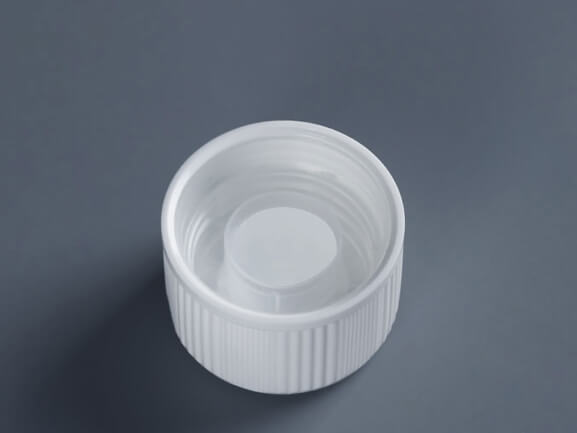
28mm Silica Gel Cap with Child Resistant
Technical Innovation:
Triple-layer design: Standard closure + desiccant chamber + high-performance permeable membrane (allowing moisture passage but blocking desiccant particles and microbes).
Custom desiccant formulations tailored to specific drug stability profiles.
Line-compatible with standard bottling equipment at high speeds.
Global Regulatory Leadership:
FDA perspective: Viewed favorably as a "inherently safer design" eliminating foreign object risks.
EMA compliance: Aligns with EU's Falsified Medicines Directive requirements for tamper-evidence and patient safety.
ICH alignment: Supports Q8/Q9/Q10 guidelines through design space approach to moisture control.
Premium Applications:
Oncology and specialty drugs requiring maximum stability assurance
Global products targeting multiple regulatory jurisdictions
Temperature-sensitive biologics in solid dosage forms
4. Global Selection Framework: Science, Regulation, and Supply Chain
| Parameter | Effervescent Tubes | Desiccant Bottles | Desiccant Caps |
| Protection Level | Maximum (hermetic + inert gas) | Moderate to high | High (targeted adsorption) |
| Patient Safety | High (no desiccant contact) | Requires risk controls | Highest (inherently safe) |
| Global Compliance | Well-established | Increasing restrictions | Emerging as gold standard |
| Cost Structure | High | Low to moderate | Moderate to high |
| Production Scale | Moderate speed | High speed | High speed |
| Sustainability | Multi-material, recycling challenges | Single-material options available | Design for disassembly emerging |
Global Packaging Partners
We provide integrated desiccant packaging solutions compliant with FDA, EMA, PMDA, and NMPA requirements. Our global network supports stability studies, regulatory submissions, and supply chain optimization across 40+ markets.


Copyright © Shijiazhuang Xinfuda Medical Packaging Co., Ltd. All Rights
MAKE AN ENQUIRY