In the commercialization of gene therapy products (such as adeno-associated virus (AAV) and lentiviral vectors (LV), controlling process-related impurities is a core challenge to ensure product safety and efficacy. Among these, host cell proteins (HCPs) and residual DNA are key process-related impurities, and their levels must be strictly monitored and reduced to extremely low levels. Traditional pharmaceutical packaging materials (such as glass), due to their surface characteristics, may become sites for the "secondary adsorption" of these impurities, not only affecting the accurate analysis of product purity but also potentially introducing unpredictable risks during storage or use due to the dynamic balance of adsorption-desorption. This article will explore in depth how cyclic olefin polymer (COP) RTU vials, leveraging their inherent material science advantages, can provide a clean and inert packaging solution for gene therapy products that minimizes the adsorption of HCPs and DNA.
I. Potential Risks of Adsorption: How HCPs and DNA Affect Product Quality Through Packaging
HCPs and residual DNA originate from host cells (such as HEK293 cells) used in the production process. Even after multi-step purification, trace amounts may still exist, potentially posing safety risks such as immunogenicity. The problems can become more complex when the final drug solution comes into contact with the primary packaging:
Analytical interference and dosage distortion: HCP and DNA molecules (especially negatively charged DNA fragments) may adsorb onto the inner walls of containers with high surface energy or charge, such as glass. This can lead to:
Low detection values: Detection methods such as ELISA may fail to detect adsorbed impurities, resulting in overly optimistic purity assessments that mask the true risks.
Inflated active ingredient concentrations: Some adsorption may be reversible, with desorption occurring during storage or administration, altering the impurity composition of the actual administered dose and introducing unpredictable variables.
Long-term stability risks: Biomolecules adsorbed on the container surface may become "nucleation sites" for aggregation or undergo conformational changes through interfacial shear forces, potentially affecting the long-term physical stability of the viral vector particles themselves.
Amplified leachate risks: Leachates from certain packaging materials (such as metal ions) may interact with HCP or DNA, forming more complex complexes and increasing concerns about immunogenicity.
II. Deconstructing COP RTU Vials: Creating a "Low Adsorption" Interface for Biomolecules
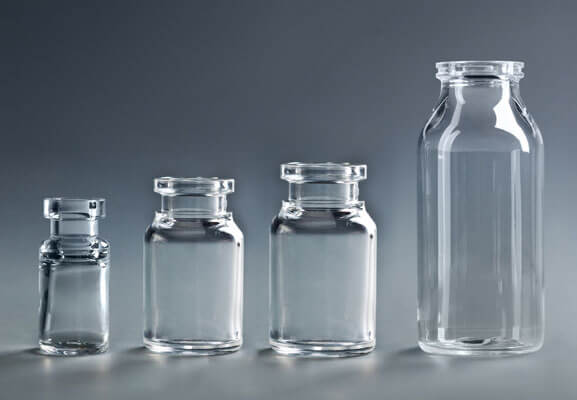
The molecular structure and surface engineering of COP materials give them a fundamental advantage over traditional materials in addressing HCP and DNA adsorption problems:
COP is composed of saturated hydrocarbon chains, and its surface lacks active functional groups (such as silanol groups on glass surfaces) that readily form strong interactions with the amino and carboxyl groups of proteins (HCP) or the phosphate backbone of DNA. Its extremely low surface energy (approximately 30-35 mN/m) significantly weakens hydrophobic interactions—the main driving force leading to non-specific protein adsorption at the interface. This creates an "inert" contact surface for HCP and DNA.
Controllable, Uniform Surface Charge
Through advanced plasma treatment technology, the hydrophilicity of the inner surface of COP vials can be precisely controlled, resulting in uniform and stable surface properties. This treatment reduces localized accumulation of surface charge, thereby significantly reducing non-specific electrostatic adsorption with negatively charged DNA molecules. In contrast, the charge distribution on glass surfaces may be more uneven, making them more prone to capturing charged impurities.
Superior Purity and Low Leachables
COP materials possess high purity and require no metal catalysts during synthesis. Their extractable spectra are simple and extremely low. This ensures that no metal ions (such as aluminum, silicon, and boron) from the packaging dissolve during drug storage, thus preventing these ions from coordinating with DNA phosphate groups or catalyzing HCP degradation. This chemical purity is a crucial prerequisite for maintaining the stability of the microenvironment of gene therapy products.
III. Data Validation: Quantitative Performance of COP RTU Vials in Controlling Impurity Adsorption
Theory requires data support. Targeted studies have demonstrated that COP materials have significant advantages in controlling the adsorption of biomacromolecules:
Model Protein Adsorption Comparison: In standardized bovine serum albumin (BSA, as a model of complex HCP mixtures) adsorption tests, the protein adsorption capacity of COP materials can be stably controlled at ≤0.1 μg/cm². In contrast, the adsorption capacity of type I borosilicate glass is typically 1-2 orders of magnitude higher. For more complex HCP mixtures, the low adsorption properties of COP translate into more accurate residual HCP detection values.
DNA Adsorption Studies: Adsorption experiments using fluorescently labeled DNA fragments showed that the adsorption rate of DNA on the COP surface was significantly lower than that on untreated glass surfaces. For example, under specific buffer conditions, the loss of adsorption recovery of spikeed DNA in COP vials could be controlled to <5% within 24 hours, while the loss in conventional glass vials could exceed 20%. This directly demonstrates that COP packaging can provide a more accurate basis for assessing residual DNA in gene therapy products.
Comprehensive Protection of AAV Vectors: In actual AAV formulation stability studies, samples stored in COP vials exhibited higher stability in key quality properties (such as capsid protein integrity and genome titer) correlated with impurity adsorption levels during long-term monitoring (e.g., 24 months at -65°C). This indirectly indicates that COP packaging reduces microenvironmental disturbances caused by interfacial adsorption/desorption processes.
IV. Beyond Adsorption Control: The End-to-End Value of COP RTU Vials for Gene Therapy
Improved Reliability and Accuracy of Analytical Methods: Provides quality control (QC) departments with more reliable test samples, ensuring that HCP and DNA residue detection values are closer to the true levels in solution, supporting more precise release decisions and product comparability studies.
Enhanced Process Robustness and Product Consistency: Reduces a key source of variation introduced by packaging, resulting in more consistent performance across different production batches during packaging and storage, facilitating process characterization and continuous process validation.
Support for Regulatory Complaints: Detailed material characterization data and extractable/leaching studies, combined with validation of low adsorption properties, provide strong scientific evidence for the compatibility studies of gene therapy product packaging systems, meeting the stringent requirements of regulatory agencies such as the FDA, EMA, and NMPA for high-level biopharmaceutical packaging.
Reduce Long-Term Safety Risks: By minimizing the interaction between impurities and packaging, it reduces the potential immunogenicity risks caused by unpredictable changes in impurity states (such as aggregation and conformational changes), adding an extra layer of protection for patient safety.
V. Conclusion: Choosing Certainty for a Pure Future of Gene Therapy
In the era of gene therapy moving towards "precision drug delivery," understanding and controlling every component in the product is crucial. The management of process-related impurities such as HCP and DNA is a key benchmark for measuring process maturity and product safety.
COP RTU vials, with their inherent chemical inertness, controllable surface properties, and superior chemical purity, provide a scientifically validated solution to the adsorption challenges of HCP and DNA in final packaging. They are not merely simple containers, but proactive guardians of the "pure state" of gene therapy products, ensuring a clear, stable, and controllable impurity profile throughout the entire process from filling to infusion into the patient.
For companies committed to developing safe, effective, and high-quality gene therapy products, adopting and validating COP RTU vials early in process development is a forward-looking strategic decision. This not only optimizes product quality attributes but also lays a solid foundation for compliance and safety throughout the entire product lifecycle, ultimately bringing more certain therapeutic hope to patients.


Copyright © Shijiazhuang Xinfuda Medical Packaging Co., Ltd. All Rights
MAKE AN ENQUIRY