The commercial success of gene therapy products (such as AAV, LV viral vectors, and CAR-T cells) heavily relies on their activity and functional integrity after long-term storage and thawing at cryogenic temperatures (-80°C to -196°C). Traditional borosilicate glass vials have long dominated the market, but their physical and chemical limitations at extreme low temperatures are becoming increasingly apparent. In contrast, cyclic olefin polymer (COP) vials, with their innovative materials science, are emerging as a superior solution for ensuring the stability of gene therapy products throughout the cryopreservation-thawing cycle.
I. Core Challenges: Stringent Packaging Requirements for Cryopreservation and Thawing of Gene Therapy Products
The active ingredients in gene therapy are extremely sensitive to temperature fluctuations, mechanical stress, and interfacial interactions. The core challenges of the cryopreservation and thawing process include:
Physical Integrity Risk: Rapid cooling and rewarming can cause container rupture or microcracks, leading to product leakage, contamination, or even complete failure.
Cryogenic Seal Failure: Due to differences in the thermal expansion coefficients of the materials, the container and the stopper shrink asynchronously at cryogenic temperatures, creating microgaps that allow liquid nitrogen to seep in or sample moisture to sublimate.
Active Ingredient Loss: Non-specific adsorption of biomolecules such as viral capsid proteins, cell membrane surface proteins, or nucleic acids onto the inner wall of the container leads to distorted titers and insufficient actual dosage.
Ice Crystal Damage: Uneven cooling can cause large ice crystals to nucleate at irregular points on the inner wall of the container, piercing cell membranes or damaging the viral capsid structure.
II. Performance Showdown: Key Data Comparison of COP Vials vs. Glass Vials
The following compares the performance of the two materials in gene therapy cryopreservation scenarios from multiple dimensions:
| Performance Dimension | COP Cryogenic Vial | Traditional Glass Cryogenic Vial | Core Impact on Cell & Gene Therapy Products |
| Low-Temperature Impact Resistance & Mechanical Strength | Fracture strength is 5–10 times higher than traditional glass; breakage rate remains 0% after 10 freeze–thaw cycles | Risk of cold cracking, especially under cryogenic conditions (-196°C); studies indicate breakage risk >5% | Ensures physical integrity: prevents batch scrap and cross-contamination caused by vial breakage, providing a critical safety barrier for high-value cell therapy products |
| Low-Temperature Dimensional Stability & Seal Integrity | Thermal expansion coefficient (60–70×10⁻⁶/°C) better matches butyl rubber stoppers (190–220×10⁻⁶/°C); volume shrinkage rate <0.02% at -196°C | Large mismatch in thermal expansion with rubber stoppers (glass: 3–5×10⁻⁶/°C); shrinkage mismatch at low temperature can create micro-gaps | Maintains container closure integrity: prevents liquid nitrogen penetration and sample moisture loss, ensuring long-term sterile storage; helium leak rate can remain stable at ≤1×10⁻⁸ mbar·L/s |
| Low Protein / Nucleic Acid Adsorption | Protein adsorption rate ≤0.05 μg/cm²; DNA adsorption recovery loss controlled within <5% | Protein adsorption >0.3 μg/cm²; viral particles easily adsorb onto glass surfaces, causing titer loss | Ensures dosing accuracy and analytical reliability: minimizes loss of viral vectors and exosomes, improving QC accuracy and reducing potency fluctuation caused by adsorption |
| Cell / Viral Vector Viability Under Deep Cryogenic Storage | CAR-T cells (-196°C / 6 months): viability 95.20%; AAV vectors (-80°C / 24 months): activity retention 96.5% | CAR-T cells (-196°C / 6 months): viability 83.50%; AAV vectors (-80°C / 24 months): activity retention 88.2% | Directly improves product potency and efficacy: higher post-thaw activity and viral genome integrity translate into more reliable therapeutic outcomes and higher commercialization success rates |
| Chemical Inertness & Compatibility | Extremely high chemical purity; ultra-low extractables (<0.1 ppm); resistant to cryoprotectants such as DMSO; no harmful leachables | Potential risk of alkaline ion leaching; higher probability of interaction with sensitive formulations | Ensures product purity and safety: provides an inert environment for sensitive gene therapy products, avoiding impurities that may affect stability or trigger unwanted immune respo |
III. Why is COP Material Better for Cryogenic Environments?
Intrinsic Material Advantages: COP is composed of saturated hydrocarbon chains, with a symmetrical and amorphous structure. This allows it to maintain excellent dimensional stability and flexibility across a wide temperature range from room temperature to -196°C, without the brittle abrupt change caused by the glass transition.
Thermodynamic Matching Design: COP has a thermal expansion coefficient closer to that of commonly used pharmaceutical rubber stoppers, ensuring coordinated contraction/expansion of the entire sealing system during rapid temperature changes, fundamentally eliminating leakage caused by stress concentration.
Surface Engineering: Through technologies such as plasma treatment, the inner wall of COP can form a smooth, uniform, and low surface energy interface. This not only reduces the adsorption of biomolecules but also promotes uniform nucleation in the solution, forming fine and uniform ice crystals, minimizing mechanical damage to cells and virus particles.
IV. Choosing Certainty for the "Long March" of Gene Therapy
Cryopreservation is not the end point, but a crucial transit point to ensure that gene therapy products can safely and effectively reach patients. Facing extreme temperatures of -80°C and even -196°C, the performance of packaging materials directly determines the success or failure of this "long march of low temperatures."
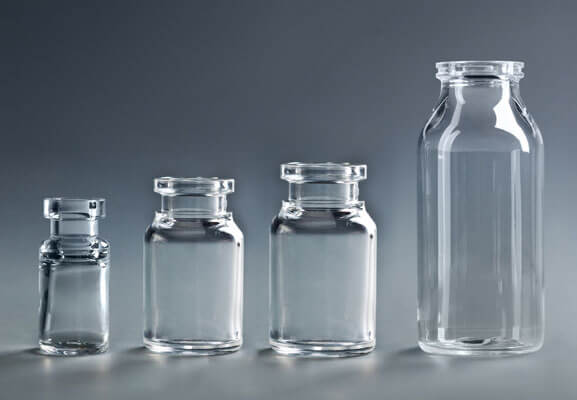
Comprehensive comparisons show that COP vials are significantly superior to traditional glass vials in terms of mechanical strength, sealing reliability, low adsorption characteristics, and final product activity retention. Through material-level innovation, it systematically solves the physical and chemical risks of deep cryogenic storage, providing a stable end-to-end guarantee for high-end biopharmaceuticals such as AAV, LV, and CAR-T from downstream of the production line to the clinical bedside.


Copyright © Shijiazhuang Xinfuda Medical Packaging Co., Ltd. All Rights
MAKE AN ENQUIRY