Why is ISO 11608 the industry's gold standard?
In the medical device field, standards are the common language of safety, effectiveness, and interoperability. For pen injectors (commonly known as injection pens), the ISO 11608 series of standards is precisely such a "technical constitution" widely adopted by global regulatory agencies and markets. It's not just a checklist for product testing, but a complete engineering system from design concepts and risk management to performance verification. Understanding and implementing ISO 11608 means gaining a universal key to unlocking major markets such as the EU, the US, and China for injection pen manufacturers; it's the essential path for products to move from the laboratory to the clinic and from domestic to global markets.
I. The Structure and Evolution of the ISO 11608 Series of Standards
1. Overview of the Standard System
ISO 11608 is a family of standards, with clearly defined divisions of labor among its parts, collectively constituting comprehensive requirements for injection pens. Its core components include:
ISO 11608-1: General Requirements and Performance Requirements - The Cornerstone of the System
Specifies the general requirements, core performance test methods, and acceptance criteria for injection pens (with or without needles). It is the fundamental part that all injection pens must comply with.
ISO 11608-3: Needle-Syringe Compatibility - Safety Locks for Connections
Specifically addresses the connection system between injection pens and needles (whether integrated or detachable). Ensures a secure, sterile, and reliable connection.
ISO 11608-4: Electronic and Electromechanical Systems Requirements - A Smart Scale
Specifies the functional, safety, reliability, and information security requirements for injection pens with electronic functions (such as dose memory, recording, and connection).
ISO 11608-5: Performance of Autoinjectors - Specifications for Automation Functions
Proposes specific performance and safety requirements for autoinjectors that automatically complete needle insertion, drug injection, and needle shielding/retraction.
Relevant Terminology Standards:
ISO 11608-2: Integrate into ISO 11608-1.
ISO 11608-6: Provides terminology and definitions related to injection pens, serving as a dictionary for understanding the entire standards system.
2. Key Evolution: From ISO 11608:2014 to ISO 11608-1:2022
The latest version, ISO 11608-1, released in 2022, replaces the 2014 version, bringing significant updates that reflect industry technological advancements and a deeper understanding of regulatory thinking:
Stricter Dosing Accuracy Requirements: Narrowed allowable error ranges for low doses (e.g., ≤5 IU), emphasizing protection for groups such as children and insulin-sensitive patients.
Enhanced Usability (Human Factors) Integration: Explicitly requires designs to consider user capabilities (e.g., vision, dexterity), and uses usability test results as input for risk assessment and performance verification.
Detailed Environmental Testing Conditions: More precise specifications for testing conditions such as temperature, humidity, and vibration, simulating real-world use and transportation scenarios.
Emphasizing the integration of risk management: All testing and validation activities must be closely integrated with the ISO 14971 (Medical Device Risk Management) process.
II. ISO 11608-1: Detailed Explanation of the Core Performance "Scale"
As a cornerstone, ISO 11608-1 defines the stringent performance tests that injection pens must pass, mainly covering the following dimensions:
1. Dosage Accuracy and Repeatability
This is the soul of the standard, directly related to patient safety and efficacy.
Test Method: Under specified conditions (such as different angles and temperatures), the actual mass of the drug solution dispensed by the injection pen in multiple consecutive applications is measured using a high-precision balance and compared with the set dose.
Acceptance Criteria: Error limits are usually given in the form of "± (the greater of X% or Y units)". For example, a typical requirement might be "average error ≤ ±3%, single-dose error ≤ ±5% or ±1 IU (whichever is greater)". The new standard has even stricter requirements for very small doses (such as 0.5 IU).
2. Operating Force Characteristics
Ensuring the injection pen can be used smoothly by users of varying physical abilities (including the elderly and arthritis patients).
Key Parameters:
Dosage Setting Force: The torque required to rotate the knob to select the dosage.
Injection Button Operating Force: The maximum force required to press the button to complete the injection.
Injection Duration Force: The force required to be maintained throughout the injection process.
Requirements: The force value should be within the specified range and fluctuate smoothly to avoid sudden changes that could cause user loss of control.
3. Environmental Adaptability and Durability
Simulating extreme conditions the product may encounter during storage, transportation, and daily use.
Climate Testing: High temperature and humidity, low temperature storage, temperature cycling, etc., to verify the stability of materials and performance.
Mechanical Testing:
Free Fall Test: After being dropped from a specified height (e.g., 1 meter) onto a hard surface, the function should remain intact, and the dosage accuracy must still meet requirements.
Vibration Test: Simulating vibration during transportation to ensure the internal structure does not loosen and performance remains unchanged.
Lifespan Test (Simulated Use): The pen's operation within its claimed lifespan (e.g., 3 years, or 3000 injections) is simulated using automated equipment. Performance must still meet standards after the test.
4. Dosage Display and Scale
Ensure users can clearly and accurately read and set the dosage.
Requirements: Scales and numbers must be clear, durable, and difficult to erase. The dosage window should prevent misreading (e.g., parallax error).
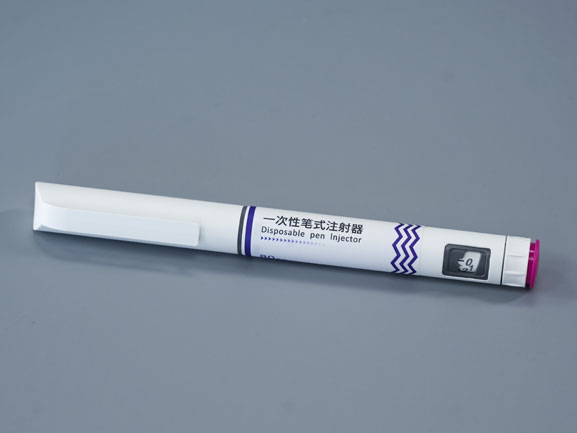
III. ISO 11608-3: The "Guardian" of Needle Connection Safety
For pens using detachable needles, the connection point between the pen and needle is a high-risk area. ISO 11608-3 specifically establishes safeguards against this.
1. Connection Tightness and Leakage Test
Axial Pull-Out Force: Tests the force required to accidentally pull the needle from the pen; it must be large enough to prevent detachment.
Torque: Tests the rotational force required to install and remove the needle, ensuring it can be tightened and removed smoothly.
Leakage Test: Under negative or positive pressure conditions, ensure no leakage of medication or gas at the connection points to guarantee sterility and accurate dosage.
2. Needle Breakage and Protection
Needle Breakage Force: Tests the force required for the needle tip to break when it undergoes lateral bending under the skin. This force must not be too small (otherwise it may break inside the body) nor too large (otherwise it may cause serious tissue damage); the standard sets a safe range.
Needle Cap Removal Force: Ensures the cap securely protects the needle tip while allowing for safe removal during use.
IV. ISO 11608-4 & -5: Future-Oriented Intelligent and Automation Standards
1. ISO 11608-4: "Traffic Rules" for Electronic Functions
With the rise of smart injection pens, Part -4 establishes independent requirements for electronic systems:
Basic Safety: Comply with electrical safety standards such as IEC 60601-1.
Functional Safety and Reliability: Ensure accurate and reliable dosage calculation, recording, and alert functions, preventing risks caused by software malfunctions.
Information Security: For networked pens capable of transmitting medical data, patient privacy and data integrity must be protected to prevent unauthorized access.
2. ISO 11608-5: "Operating Manual" for Autoinjectors
For one-button autoinjectors (commonly used for adrenaline and biologics):
Trigger Force and Accidental Trigger Protection: Ensure easy activation in emergencies without accidental triggering in pockets or bags.
Injection Kinetics: Requirements for consistent injection speed, time, and needle insertion depth ensure effective drug delivery.
Visual/Audio Verification: Clear signals (such as a click or window color change) must be provided to inform the user that the injection is complete.
Needle Safety Mechanism: Ensure the needle is automatically shielded or retracted after use to minimize needlestick injuries.
V. Practical Guidelines: How Manufacturers Can Apply ISO 11608
1. Design Input Phase
Integrate the relevant requirements of ISO 11608 (especially specific parameters such as dosing accuracy, operating force, and connection safety) into the product specification sheet as core design inputs. Simultaneously, initiate a risk management process based on ISO 14971 to identify all potential hazards.
2. Development and Validation Phase
Prototype Testing: Conduct testing on key items (such as dosing accuracy and operating force) early in development, iterating the design in a timely manner.
Design Validation: After product finalization, a full set of ISO 11608 compliance tests must be conducted by an independent laboratory with ISO/IEC 17025 accreditation, or by establishing an equivalent in-house laboratory, and a formal report must be issued.
Usability Validation: Conduct formative and summative usability testing according to the human factors requirements in ISO 62366-1 and ISO 11608.
3. Registration and Market Launch Phase
Core Technical Documentation: The ISO 11608 compliance test report is core evidence submitted to the FDA (US), Notified Bodies (EU CE), and NMPA (China).
Quality System Foundation: The entire design control and validation process must be conducted under a quality management system compliant with ISO 13485, ensuring process traceability and repeatable results.
4. Production and Post-Market Phase
Key tests (such as dosage accuracy and connection leakage) are included in factory inspections or periodic monitoring to ensure continuous compliance with standards across batches of products. Post-market data is collected for risk management and product improvement in accordance with standard requirements.
The ISO 11608 series of standards sets globally recognized baselines for the safety, effectiveness, and quality of injection pens. However, for manufacturers aspiring to become industry leaders, meeting these standards is only the starting point.


Copyright © Shijiazhuang Xinfuda Medical Packaging Co., Ltd. All Rights
MAKE AN ENQUIRY