In the development and clinical application of cell therapies, the integrity of cryopreservation packaging is crucial for maintaining the viability, safety, and efficacy of cell products. As a critical primary packaging material for cell therapy products, COP (cyclic olefin polymer) vials face significant challenges in long-term liquid nitrogen storage, particularly in preventing liquid nitrogen ingress and the consequent risk of vial pressure anomalies. A systematic solution is required, encompassing the inherent properties of the packaging material, precision design of the sealing system, strict manufacturing process control, and final quality verification.
Key Risk Factors and Corresponding Solutions
| Risk Area | Specific Manifestation | Core Solutions & Considerations |
| Material Thermal Contraction Mismatch | Micro-gaps form between the vial body and the stopper due to differing contraction rates during rapid temperature drops, creating a potential pathway for liquid nitrogen ingress. | Select a bromobutyl stopper with a Coefficient of Thermal Expansion (CTE) more closely matched to the COP vial (CTE ~60-70×10⁻⁶/℃) to minimize the differential contraction between the two components at -196°C. Ideally, the mismatch should be less than 0.5μm. |
| Stopper Failure at Low Temperatures | The stopper loses elasticity at deep cryogenic temperatures, failing to compensate for interface stresses and failing to rebound after thermal cycling. | Ensure the stopper's Compression Permanent Deformation (CPD) is ≤25% after 24 hours at -80°C to guarantee its resilience. Avoid using the stopper below its glass transition temperature (typically between -60°C and -70°C), as elasticity is drastically lost in this state. |
| Sealing Structure Defect | Physical sealing is compromised due to improper vial finish geometry, stopper dimension design, or incorrect aluminum seal crimping process. | Optimize the dimensional design of the vial finish and stopper to ensure compatibility. Precisely control crimping process parameters (e.g., torque) to provide uniform and sufficient clamping force. |
| Inadequate Pressure Management | Even with a perfect seal, trace amounts of intruded liquid nitrogen vaporize upon rewarming, expanding approximately 680-fold in volume and generating immense internal pressure. | For special vial designs (e.g., pre-filled syringes with Luer connectors), consider integrating a micro-venting structure. This requires rigorous validation to mitigate the risk of leakage. |

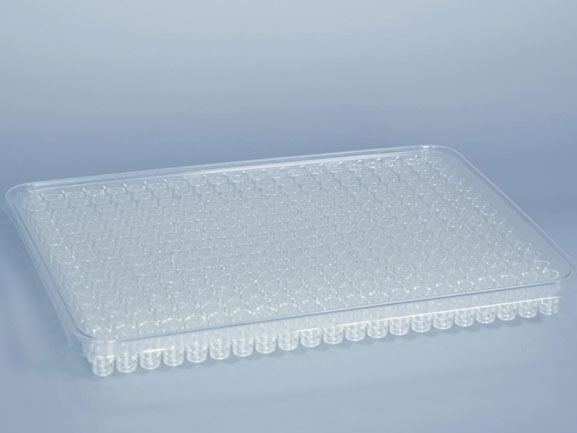
Polymer Vial 2ml 5ml 10ml for cell and gene therapies
Beyond Design: Critical Best Practices for Assured Integrity
1. Prioritize Ready-to-Use (RTU) COP Vial Systems
We strongly recommend utilizing supplier-provided RTU COP vial systems. These systems undergo rigorous pre-cleaning, sterilization (e.g., gamma irradiation), and integrity validation before shipment. The components (vial, stopper, seal) are pre-assembled and optimized for compatibility, significantly reducing the leakage risks associated with manual assembly errors.
2. Implement Rigorous Container Closure Integrity (CCI) Testing
This is the gold standard for verifying the effectiveness of your entire solution. Testing must simulate the harshest storage conditions:
Testing Method: Employ high-sensitivity methods such as helium mass spectrometry leak detection. Capable of detecting leaks as small as 1×10⁻⁶ mbar·L/sec, it is recognized by regulatory bodies like the FDA as the "gold standard" for ultra-low temperature CCI testing.
Testing Conditions: Test samples must be subjected to challenges including immersion in liquid nitrogen (-196°C) and multiple freeze-thaw cycles (e.g., 300 cycles) to simulate long-term storage and transport temperature fluctuations.
Acceptance Criteria: The leakage rate must meet relevant standards (e.g., USP <1207> Class 1), ensuring microbial ingress is prevented even under extreme conditions.
3. Ensure Precision in Manufacturing Process Control
Even with an ideal design, fluctuations in the production process can lead to sealing failures. On the filling line, it is essential to precisely control critical parameters such as stopper insertion depth and aluminum seal crimping torque. Establish validated control ranges for these Critical Process Parameters (CPPs) and implement real-time in-line monitoring to ensure consistent and reliable sealing quality for every single vial.
Conclusion
Ensuring the container closure integrity of COP vials throughout the cryopreservation lifecycle is not merely a matter of material selection. It is a multi-faceted engineering challenge requiring a holistic approach that integrates science-based component matching, design-for-manufacturability, validated RTU system adoption, gold-standard CCI testing, and stringent production controls. By addressing these aspects systematically, developers and manufacturers of advanced cell therapies can significantly mitigate risks, protect their valuable products, and ensure patient safety from the production facility all the way to the clinic.


Copyright © Shijiazhuang Xinfuda Medical Packaging Co., Ltd. All Rights
MAKE AN ENQUIRY