When selecting and using COP vials for different types of stem cell drugs, it is indeed necessary to carefully consider the cell characteristics, cryopreservation system, and clinical needs. The following is a summary of key considerations for major stem cell drug categories.
| Stem Cell Drug Type | Core Considerations | COP Vial Key Parameter Recommendations | Process and Regulatory Points |
| MSCs | Maintain multidirectional differentiation potential and paracrine function | Volume: Typically 5-10 mL specification, suitable for higher cell numbers (e.g., 1×10^7 cells/mL) Surface properties: Extremely low protein adsorption (<0.05 μg/cm²), protects cytokines Sealing: Laser welding, leakage rate <0.01% | Cryopreservation agent: DMSO concentration optimization (e.g., 5-10%) - Policy: Complies with the "Cell Therapy Product Production Quality Guidelines" for full-process sterility requirements |
| CAR-T/CAR-NK | Ensure cell killing activity and viral vector safety | Chemical inertness: Tolerant to pH 1-14, ensures viral vector (e.g., AAV) stability Sealing integrity: Prevents vector leakage, protects operators Material transparency: Light transmittance >92%, facilitates morphological observation | Quality control: Post-thaw cell viability >90%, no decay in killing efficiency - Automated filling: High-precision system (error ≤ ±0.1 mL) ensures batch uniformity |
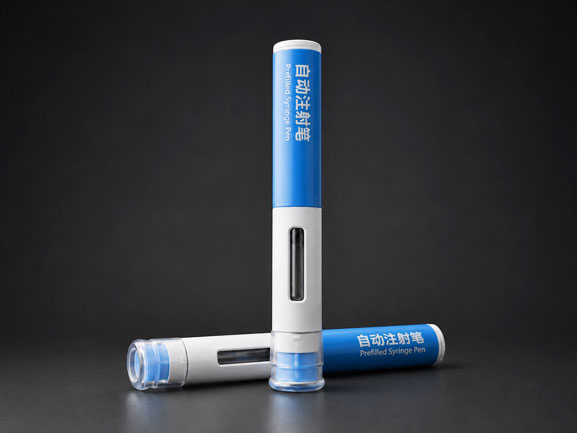
| Exosomes and Other Derivatives | Avoid adsorption and aggregation of active substances | Ultra-low protein adsorption: Prevents exosome residue on vial walls Pre-filled form: Ready-to-use (RTU), reduces secondary contamination risk | Regulatory compliance: Refer to CDE requirements for low adsorption of exosome preparation packaging |
| Universal (off-the-shelf) | Meet long-term storage and rapid clinical application | Mechanical strength: Compression resistance >50 MPa, tolerates liquid nitrogen transport Performance stability: Maintains functionality after multiple freeze-thaw cycles | Clinical integration: Pre-filled preparations delivered directly to clinics, shortening patient wait times |
Regardless of the cell type, the following process points are common core considerations:
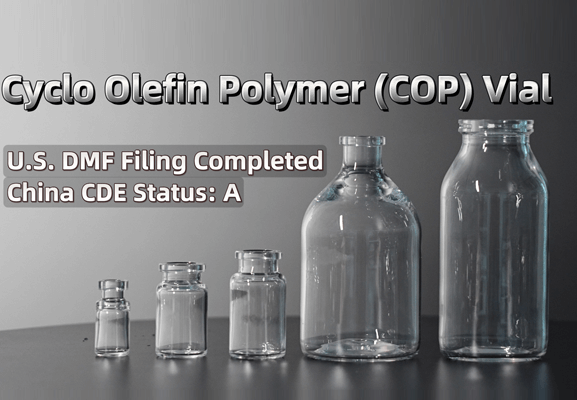
DMSO Tolerance is Fundamental: The excellent chemical inertness of COP material enables it to tolerate the 5-15% DMSO cryopreservation solution environment, with TOC (Total Organic Carbon) leachables potentially below 500 ppb. This is particularly important for chemically sensitive cells like CAR-T.
Programmable Cryopreservation Process: It is recommended to use a programmed freezer to control the cooling rate (e.g., -1°C/min to -3°C/min). The good thermal conductivity of COP vials (approximately 0.16 W/(m·K)) facilitates more uniform cooling, reducing intracellular ice crystal damage, which is crucial for larger-volume MSC preparations.
Automated Filling Process: Employing an automated filling system (such as the 3D FloTrix® vivaVIAL system) is critical. It can control filling volume accuracy within ≤ ±0.1 mL or ±5%, with cell density deviation RSD (Relative Standard Deviation) <5% and cell viability deviation <5%, thereby ensuring batch-to-batch consistency.
Container Closure Integrity (CCI) Verification: CCI verification is mandatory. The verification scope should cover the entire process from liquid nitrogen cryopreservation through transport to clinical thawing, ensuring the leakage rate remains at an extremely low and stable level (<0.01%) to prevent liquid nitrogen ingress or contaminant leakage.
Regulatory Requirements for Selecting and Using COP Vials:
Full-Process Sterility Assurance: Priority should be given to Ready-to-Use (RTU) COP vials. These are typically gamma-irradiated and sterilized, with endotoxin levels ≤0.25 EU/mL, allowing direct use in Grade A filling environments. This aligns with the core sterile process requirements of regulations such as the "Guidelines for Quality Management in the Production of Cell Therapy Products."
In summary, selecting COP vials for specific stem cell drugs is a multi-dimensional decision requiring comprehensive consideration of scientific, process, and regulatory factors. Precisely matching cell characteristics with COP vial parameters and strictly controlling upstream and downstream processes are key to ensuring that stem cell drugs maintain high quality, safety, and efficacy throughout the entire journey from production to the clinic.


Copyright © Shijiazhuang Xinfuda Medical Packaging Co., Ltd. All Rights
MAKE AN ENQUIRY