Abstract
This study systematically assessed the impact of 25 kGy gamma irradiation sterilization on the stability of a genetically modified bone morphogenetic protein-2 (BMP-2) lyophilized powder packaged in 2 mL cyclo olefin polymer (COP) vials during long-term ultralow-temperature storage.
1. Background and Objectives
Cyclo olefin polymer (COP) vials have become the primary packaging of choice for advanced biologics—such as proteins, cell and gene therapies—due to their excellent chemical inertness, low protein adsorption, and cryogenic resistance. Gamma irradiation is a widely adopted terminal sterilization method, but its high-energy radiation may affect both packaging materials and active pharmaceutical ingredients.
This study aimed to systematically verify the integrity and stability of COP vials containing lyophilized BMP-2 over 12 months of storage at –80 °C following 25 kGy gamma irradiation sterilization.
2. Materials and Methods
Drug and Packaging: Lyophilized genetically modified BMP-2 filled in 2 mL COP vials with bromobutyl rubber stoppers.
Sterilization Process: 25 kGy gamma irradiation.
Sample Groups (Key to attribution):
Test Group: BMP-2 lyophilized powder in COP vials, irradiated.
Packaging Material Control: Empty COP vials (with stoppers), irradiated.
Drug Product Negative Control: BMP-2 lyophilized powder in COP vials, non-irradiated.
Blank Control: Simulated solvent in COP vials, irradiated.
Storage Condition: –80 °C, monitored for up to 12 months.
Key Test Indicators and Methods:
| Category | Test Items | Methods & Frequency | Key Acceptance Criteria |
| Packaging Integrity | Appearance & Light Transmittance | Visual inspection; colorimeter/spectrophotometer (0, 3, 6, 12 months) | Transmittance >92%; no cracks or deformation |
| Container Closure Integrity | Helium leak test (0, 6, 12 months); removal torque after freeze-thaw cycling | Leak rate ≤1×10⁻⁶ mbar·L/s; removal torque 18–25 N·m | |
| Drug Product Quality Attributes | Content & Purity | HPLC (0, 3, 6, 12 months) | Main peak content change <2%; no new degradation products |
| Bioactivity | Cell proliferation assay (0, 6, 12 months) | Activity retention >95% | |
| Protein Adsorption | ELISA for protein concentration in solution | Protein adsorption ≤0.05 μg/cm²; recovery ≥98% | |
| Safety & Compatibility | Sterility | Direct inoculation (0, 12 months) | Meets pharmacopoeia sterility requirements |
| Bacterial Endotoxins | Kinetic chromogenic method | ≤0.25 EU/mL | |
| Leachables | GC‑MS screening of simulated solvent | Free monomer ≤0.1 ppm; no genotoxic impurities detected |
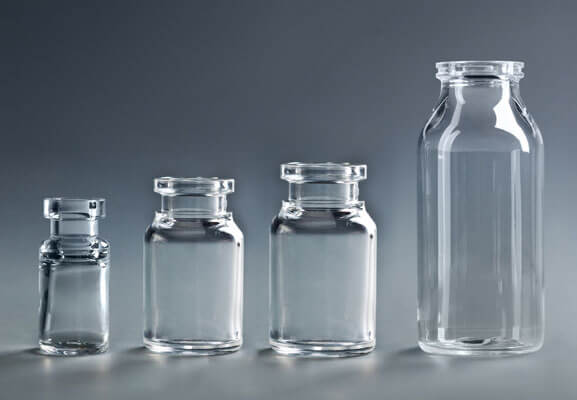
Polymer Vial 2ml 5ml 10ml for cell and gene therapies
3. Results and Discussion
Effect on Packaging Material: After irradiation, empty COP vials maintained light transmittance >92% with no significant decline throughout the study, and no physical defects were observed. Integrity testing confirmed that container closure integrity remained intact even after 300 freeze-thaw cycles at –80 °C. This confirms that COP material itself can withstand 25 kGy irradiation while preserving its physical barrier function.
Drug Stability Attribution – the core of the evaluation:
Chemical Stability: HPLC data showed that the difference in BMP-2 main peak content between the test (irradiated) and drug product negative control (non-irradiated) groups remained below 2%, with no new degradation peaks in the chromatograms.
Bioactivity Stability: Cell-based assays demonstrated that bioactivity retention in the test group exceeded 95%, with no statistically significant difference from the negative control.
Low Protein Adsorption Confirmed: ELISA results indicated minimal protein adsorption, ensuring accurate dosing.
Together, these data form a robust evidence chain proving that 25 kGy gamma irradiation did not induce chemical degradation or loss of bioactivity in BMP-2.
Safety and Compatibility: Sterility and endotoxin tests met specifications. Leachable studies revealed only trace levels of free monomers, well below safety thresholds, and no genotoxic impurities were detected, indicating good material compatibility.
4. Conclusion
By employing scientifically designed control groups, this study successfully attributed the effects of irradiation:
The packaging material control confirmed that changes in color and physical integrity of COP vials were negligible.
The stability data of critical drug quality attributes (content, purity, activity) served as the ultimate criterion. The equivalence between the test group and the non-irradiated drug product control conclusively demonstrated that the stability of the BMP-2 lyophilized powder was not adversely affected by the irradiation process.
In summary, the 25 kGy gamma irradiation sterilization process is suitable for the 2 mL COP vial‑packaged BMP-2 lyophilized powder. Under –80 °C storage for 12 months, the packaging system remained intact, and the drug product maintained stable quality, safety, and efficacy.


Copyright © Shijiazhuang Xinfuda Medical Packaging Co., Ltd. All Rights
MAKE AN ENQUIRY